Biofertilizer for Coffee: Boost Yield with Superior Microbes
Biofertilizer for coffee is the right solution for specialty coffee farmers who want to increase yield without fully relying on chemical fertilizers. By utilizing a superior microbial consortium, soil nutrient availability becomes optimal, plant roots are healthier, and coffee bean production increases. This article will discuss how the 5-in-1 liquid biofertilizer from Biosolution can be your mainstay.
Why is Biofertilizer Important for Specialty Coffee?
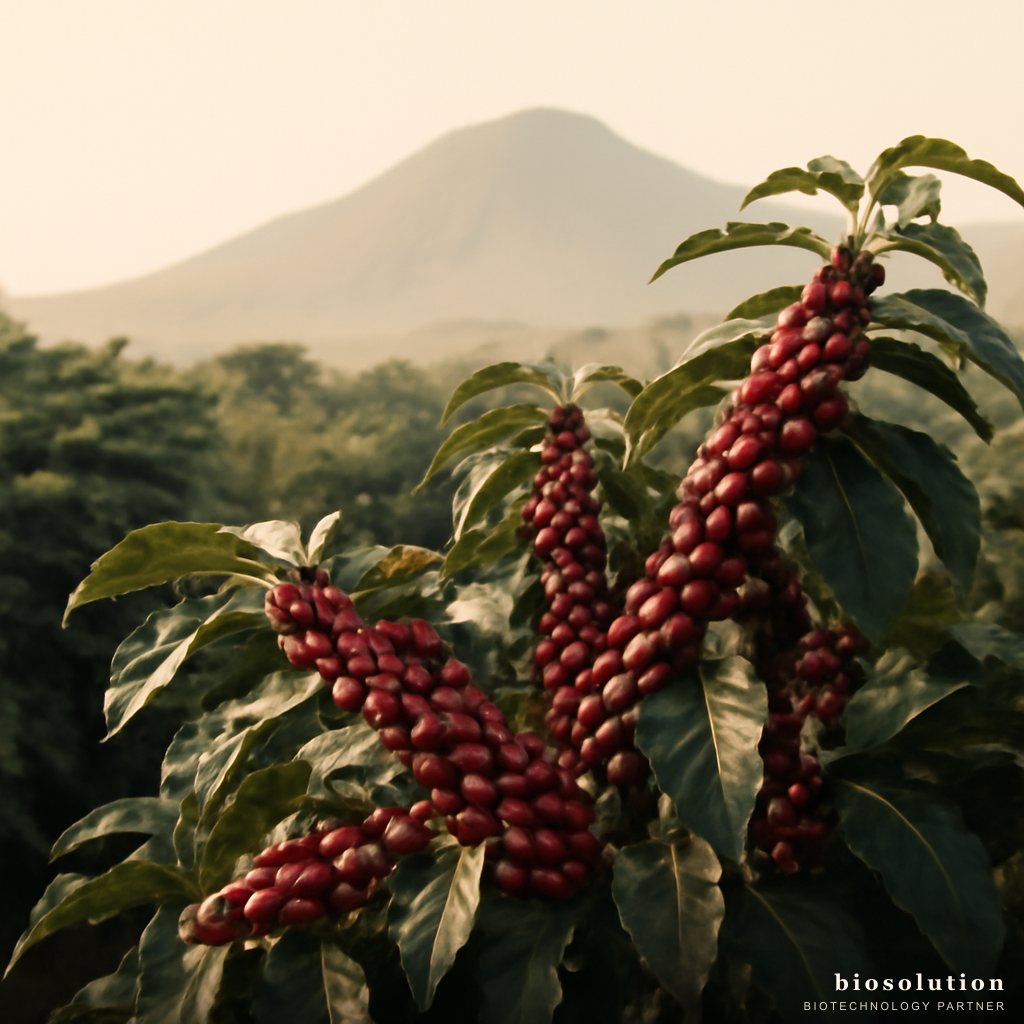
Coffee plants, especially specialty varieties like Arabica, require balanced nutrition to produce high-quality beans. Unfortunately, continuous use of chemical fertilizers can damage soil structure and reduce beneficial microbial activity. As a result, soil becomes hard, drainage is poor, and nutrient uptake decreases. This is where biofertilizer for coffee plays a role.
Biofertilizers contain living microbes that naturally improve soil fertility. For example, Rhizobium sp. and Azospirillum sp. can fix nitrogen from the air, while Bacillus subtilis and Pseudomonas fluorescens solubilize phosphate bound in the soil. Thus, coffee plants receive sufficient nitrogen and phosphorus throughout their growth cycle.
Additionally, Trichoderma sp. as a biocontrol agent can suppress the growth of pathogenic fungi such as Fusarium and Pythium that often attack coffee roots. The result is healthier roots, more efficient water and nutrient uptake, and plants more resistant to drought stress.
Superior Composition: 5 Microbial Strains in One Bottle
The Liquid 5-in-1 Biofertilizer Formula product from Biosolution contains five microbial strains with specific roles:
- Rhizobium sp. – Symbiotic nitrogen fixer, especially effective if coffee is intercropped with legumes.
- Bacillus subtilis – Phosphate solubilizer and producer of phytohormones (IAA) that stimulate root growth.
- Azospirillum sp. – Associative nitrogen fixer living around the root zone.
- Pseudomonas fluorescens – Antagonist of soil-borne pathogens and producer of siderophores that bind iron, depriving pathogens of Fe.
- Trichoderma sp. – Biocontrol of fungal pathogens and decomposer of organic matter, accelerating humus formation.
This consortium is formulated at a concentration of 10⁸ CFU/ml per strain, ensuring effectiveness from the first application. With a dosage of only 5–10 ml per liter of water, you provide enough microbial inoculant for 1 hectare of land.
How Biofertilizer Works to Increase Coffee Yield
Coffee yield is the percentage of dried coffee beans produced from fresh fruit. To increase it, the plant must be able to fill the beans perfectly. This is where the role of biofertilizer for coffee comes in through several mechanisms:
Nitrogen Fixation (N₂)
Rhizobium and Azospirillum convert atmospheric nitrogen (N₂) into ammonia (NH₃) that can be absorbed by plants. Nitrogen is a key component of proteins and chlorophyll, so leaves are greener, photosynthesis is optimal, and beans are fully filled.
Phosphate Solubilization (P)
Phosphorus is often bound in insoluble forms in soil. Bacillus subtilis produces organic acids that dissolve P bonds, making it available to plants. Phosphorus is important for flower and fruit formation, as well as carbohydrate translocation to beans.
Phytohormone Production
PGPR microbes such as Bacillus and Pseudomonas produce auxin (IAA), gibberellins, and cytokinins that stimulate root elongation and branching. More and longer roots mean wider nutrient uptake.
Pathogen Biocontrol
Trichoderma and Pseudomonas suppress soil-borne pathogens that can cause root rot or wilt. Disease-free plants have more energy for fruit production.
With regular application every 10–14 days, 3–5 times per growing season, coffee harvests can increase by 20–30% based on trials on rice and horticultural crops. In coffee, the yield increase is also significant because bean quality is more uniform and size is larger.
Case Study: Application in Coffee Plantations
Coffee farmers in West Java who applied biofertilizer for coffee for two growing seasons reported an increase in yield from 18% to 22%. Additionally, the need for NPK chemical fertilizers was reduced by up to 50% without decreasing productivity. The soil became looser and earthworm activity increased, indicating a healthy soil ecosystem.
Proper Application Guide
For maximum results, follow these application instructions:
- Application time: Morning before 10 AM or afternoon after 4 PM, avoid direct UV light that can kill microbes.
- Dosage: Mix 5–10 ml of product per liter of water. Stir well.
- Application method: Drench onto the root zone or spray onto the soil around the base of the stem. Ensure the soil is moist so microbes can colonize quickly.
- Frequency: Repeat every 10–14 days, at least 3 times during the rainy season or during active vegetative growth.
- Combination: For better results, use together with Granular Biofertilizer Formula for Large Areas as a base fertilizer at planting.
Advantages of Using Biofertilizer for Coffee
- Environmentally friendly: Leaves no chemical residues, safe for workers and consumers.
- Improves soil: Increases organic matter and long-term soil structure.
- Cost efficiency: Reduces chemical fertilizer purchases by up to 50%.
- Bean quality: Beans are fuller, flavor is more complex due to stimulated secondary metabolism.
Conclusion
Biofertilizer for coffee is a smart investment for specialty coffee farmers who want high yield and land sustainability. With a consortium of 5 superior microbial strains, the Liquid 5-in-1 Biofertilizer Formula from Biosolution can fix nitrogen, solubilize phosphate, stimulate root growth, and protect plants from disease. As a result, coffee beans are of higher quality and production increases by 20–30%. Don't hesitate to switch to biological agriculture now. Consult your needs with our team via WhatsApp to get the right recommendations.