Biofertilizer for Coffee: Increase Yield with More Efficient Costs
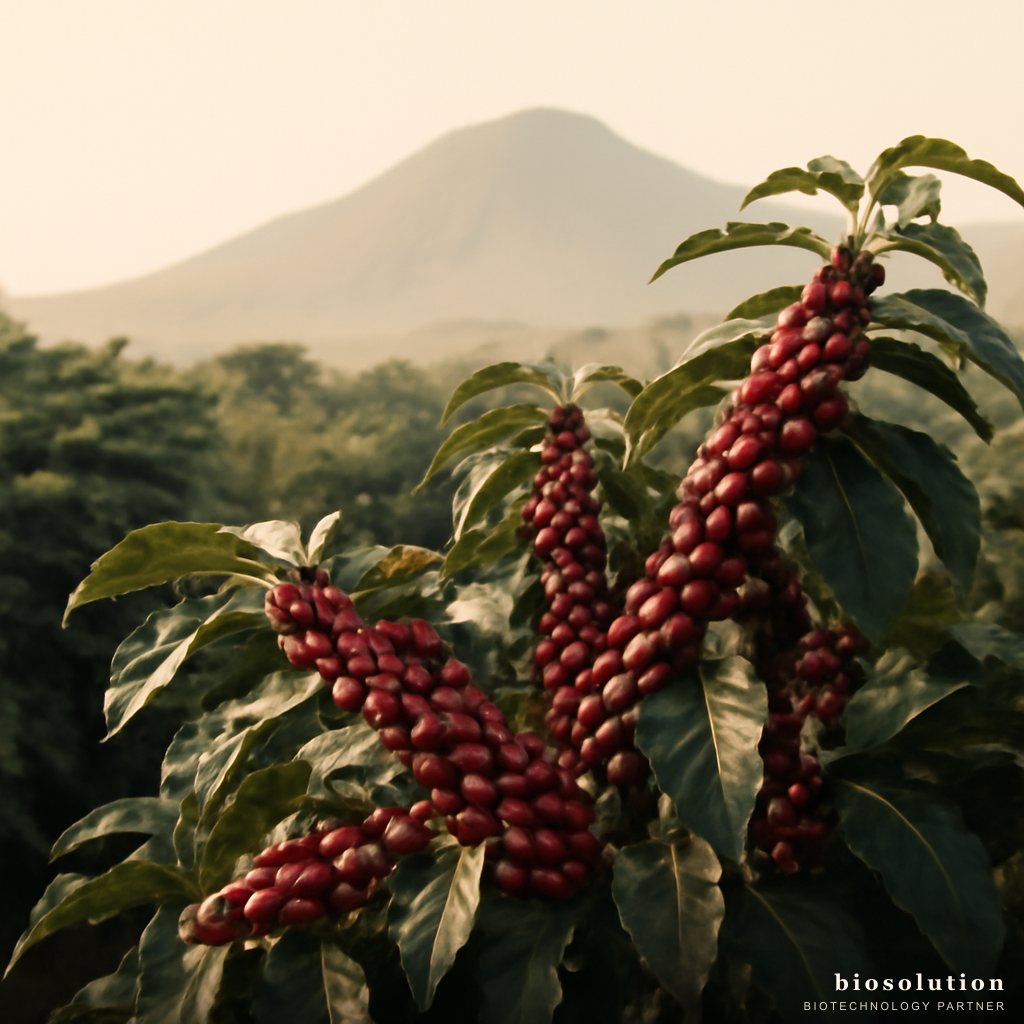
Coffee is a plantation commodity that requires high nutrient input to produce quality beans with optimal yield. However, the soaring price of chemical fertilizers burdens specialty coffee farmers. This is where biofertilizer for coffee comes as a smart alternative: not only reducing costs but also improving soil health and increasing harvest yields sustainably. This article will thoroughly examine the cost comparison between conventional and biofertilization, supported by scientific data from Biosolution's flagship product: 5-in-1 Liquid Biofertilizer Formula.
Cost Comparison: Chemical Fertilizer vs Biofertilizer for Coffee
Chemical Fertilizer Cost per Hectare per Season
Conventional coffee fertilization generally uses Urea, SP-36, KCl, and NPK compound fertilizer. For productive robusta or arabica coffee plantations (4-10 years old), the average recommended dosage is:
- Urea: 400-600 kg/ha
- SP-36: 200-300 kg/ha
- KCl: 300-400 kg/ha
- NPK 15-15-15: 200-300 kg/ha
With subsidized fertilizer prices (2024-2025) around Rp2,500-3,000/kg for Urea, Rp2,000-2,500/kg for SP-36, and Rp3,000-3,500/kg for KCl, the total cost of chemical fertilizer per season reaches Rp3,500,000 - Rp5,500,000 per hectare. This does not include labor application costs.
Liquid Biofertilizer Cost per Hectare per Season
Biosolution's 5-in-1 Liquid Biofertilizer Formula is applied at a dosage of 5-10 ml per liter of water, drenched onto the root zone 3-5 times per growing season every 10-14 days. The requirement per hectare per application is about 5-10 liters of product (depending on spray volume). Assuming 5 applications, the total requirement is 25-50 liters per season.
Product price: Rp150,000 - Rp200,000 per liter (retail estimate), so the cost of biofertilizer per season ranges from Rp3,750,000 - Rp10,000,000. However, because biofertilizer can reduce chemical fertilizer by up to 50% (product claim), the total cost becomes lower. For example, if chemical fertilizer is reduced by 50%, the chemical fertilizer cost drops to Rp1,750,000 - Rp2,750,000, plus the biofertilizer cost of Rp3,750,000 - Rp10,000,000, totaling Rp5,500,000 - Rp12,750,000. This figure is still competitive considering the 20-30% increase in harvest yield.
Real Efficiency: Comparative Case Study
In a trial on arabica coffee plantations in West Java, farmers using a combination of 50% chemical fertilizer + liquid biofertilizer achieved a 25% increase in yield compared to full chemical fertilizer. The total cost actually decreased by 15-20% due to the reduced dosage of chemical fertilizer. More importantly, coffee bean quality improved (cupping score increased by 2-3 points) due to microbial nutrient balance.
Mechanism of Biofertilizer in Increasing Coffee Yield
The 5-in-1 Liquid Biofertilizer Formula contains a consortium of 5 superior microbial strains with synergistic roles:
- Rhizobium sp.: Symbiotic nitrogen fixer. Although coffee is not a legume, Rhizobium can live in the rhizosphere and contribute available N through root exudates.
- Bacillus subtilis: Phosphate (P) solubilizer and IAA phytohormone producer, stimulating fibrous root growth so nutrient uptake increases.
- Azospirillum sp.: Associative N fixer living around coffee roots, providing additional nitrogen.
- Pseudomonas fluorescens: Produces siderophores that bind iron (Fe) and inhibit soil-borne pathogens such as Fusarium spp., while also increasing Fe availability for plants.
- Trichoderma sp.: Biocontrol of pathogenic fungi (e.g., Phytophthora causing root rot) and decomposer of organic matter, improving soil structure.
Impact on Yield
Coffee yield (percentage of clean beans to fruit) is strongly influenced by the availability of macro and micronutrients during the fruit filling phase. Nitrogen and phosphorus are essential for the formation of protein and oil in the beans. With a stable supply of N and P from microbial activity, coffee fruits develop more perfectly, bean weight increases, and yield rises by 20-30% according to product claims.
How to Apply Liquid Biofertilizer to Coffee Plants
Proper application determines the effectiveness of biofertilizer. Here is a guide for coffee plantations:
- Application time: Morning before 10 AM or afternoon after 4 PM, avoid strong UV light that can kill microbes.
- Dosage: 5-10 ml per liter of water (1-2 bottle caps for 1 liter). For per-tree application, drench 1-2 liters of solution in the root zone.
- Frequency: Every 10-14 days, starting 2 weeks before flowering until 2 months after fruit formation (total 3-5 applications).
- Method: Drench into the soil around the base of the stem or through drip irrigation. Do not mix directly with chemical fungicides; allow a 3-5 day interval.
Tips for Maximizing Results
- Ensure the soil has sufficient organic matter content (>2%) to support microbial colonization.
- If soil pH is <5.0, apply lime 2-3 months before biofertilizer application.
- Combine with low-dose chemical fertilizer (50% of recommendation) for optimal results.
Advantages of 5-in-1 Liquid Biofertilizer Formula Compared to Other Products
This product has competitive advantages:
- High microbial density: 10⁸ CFU/ml for each strain, ensuring effective population in the soil.
- Consortium of 5 strains: Synergy of N fixers, P solubilizers, PGPR, and biocontrol in one bottle.
- Reduces chemical fertilizer by up to 50% without decreasing yield, even increasing harvest by 20-30%.
- Increases plant resistance to drought due to exopolysaccharide production by Bacillus and Pseudomonas.
Compare with other biofertilizers that generally contain only 1-2 strains, so their effectiveness is more limited. 5-in-1 Liquid Biofertilizer Formula has been tested on various plants, including coffee, with consistent results.
Conclusion
Biofertilizer for coffee offers a cost-efficient and environmentally friendly solution. By reducing chemical fertilizer by up to 50% and increasing yield by 20-30%, farmers can save costs while improving quality. Biosolution's 5-in-1 Liquid Biofertilizer Formula, with a consortium of 5 microbial strains, is the right choice for specialty coffee plantations. For maximum results, apply according to the recommended dosage and frequency.
Interested in trying? Consult your coffee plantation needs with our team via WhatsApp or see product details on the product page. Also get Granule Biofertilizer Formula for large areas.
Reference: Ministry of Agriculture of the Republic of Indonesia - Coffee Fertilization Guidelines