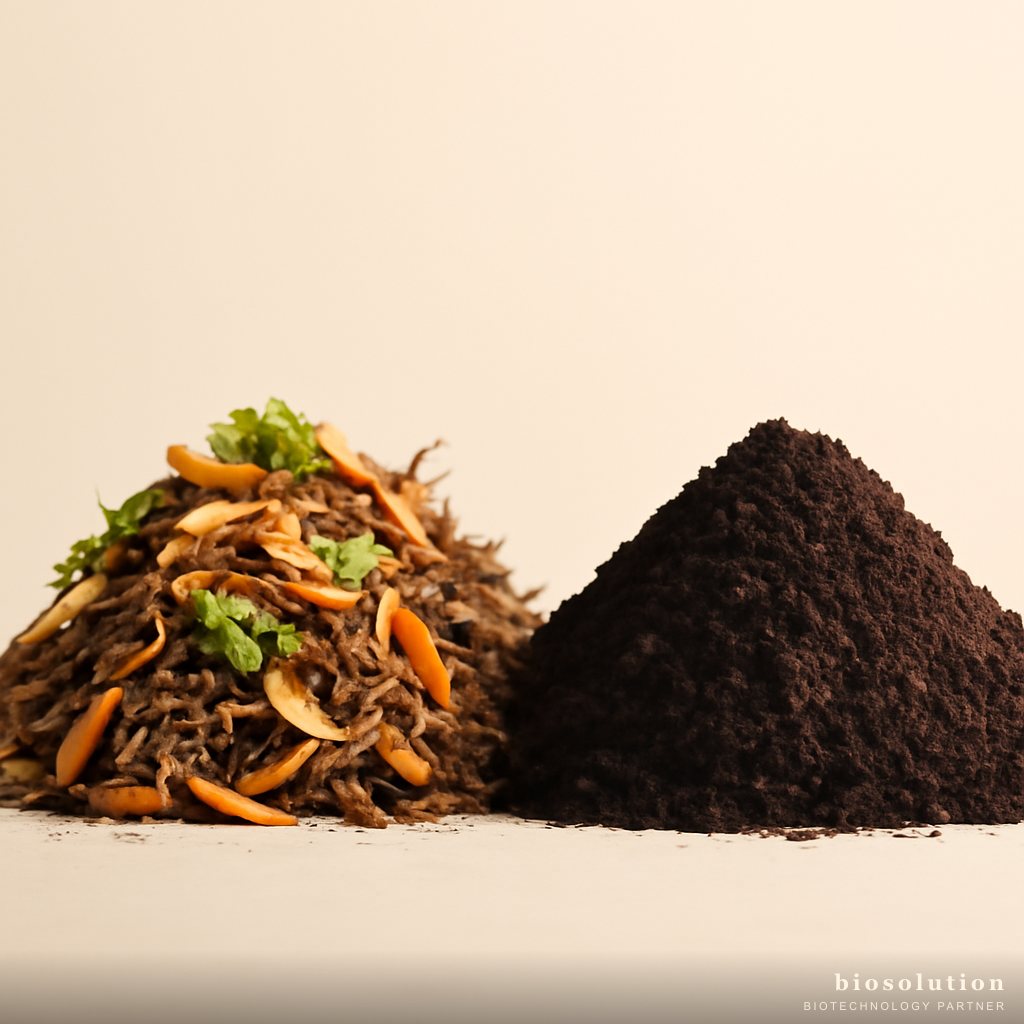
Biofertilizer for Corn: 5 Complete Plant Nutrient Formulas
Productivity of hybrid corn in Indonesia is often hampered by high chemical fertilizer costs and land degradation. Many farmers complain of stagnant yields despite increasing fertilizer doses. However, there is a more efficient and sustainable solution: biofertilizer for corn. By utilizing a consortium of superior microbes, liquid biofertilizer can naturally provide nutrients, reduce dependence on chemical fertilizers, and significantly increase yields. This article will thoroughly examine the cost comparison between conventional methods and the use of biofertilizer, and how the 5 complete plant nutrient formulas from Biosolution can be the answer for modern corn farmers.
What is Biofertilizer and Why is it Important for Corn?
Biofertilizer is a biological product containing living microorganisms beneficial to plants. Unlike chemical fertilizers that directly provide nutrients, biofertilizers work indirectly through biological mechanisms such as nitrogen fixation, phosphate solubilization, phytohormone production, and pathogen control. For corn, especially hybrid corn with high nutrient demands, biofertilizer is key to achieving maximum yield potential without damaging the soil.
Hybrid corn requires large amounts of nitrogen (N), phosphorus (P), and potassium (K). Unfortunately, most applied chemical fertilizers are not optimally absorbed because they are bound by the soil or lost through leaching. This is where the role of microbes in biofertilizer comes in. For example, Azospirillum sp. living around corn roots can fix nitrogen from the air and provide it to the plant. Similarly, Bacillus subtilis solubilizes bound phosphate, making it available to roots.
Additionally, biofertilizer improves soil structure, enhances soil microbiome activity, and reduces greenhouse gas emissions. Thus, using biofertilizer is not only economically beneficial but also environmentally friendly.
Cost Comparison: Conventional vs Biofertilizer for Corn
One of the main considerations for farmers is cost. Let's compare in detail the costs incurred for hybrid corn cultivation per hectare per growing season (about 4 months) between conventional methods and methods with biofertilizer.
Conventional Method
- Chemical fertilizers (Urea 300 kg, SP-36 200 kg, KCl 150 kg): IDR 4,500,000
- Chemical pesticides (insecticides, fungicides): IDR 1,500,000
- Application labor: IDR 1,000,000
- Total fertilizer and pesticide cost: IDR 7,000,000
- Average yield: 8 tons/ha at IDR 5,000/kg = IDR 40,000,000
- Profit: IDR 33,000,000
Biofertilizer Method (Biosolution 5-in-1 Formula)
- Chemical fertilizers reduced by 50% (Urea 150 kg, SP-36 100 kg, KCl 75 kg): IDR 2,250,000
- Biofertilizer 5 bottles (1 liter/bottle, sufficient for 1 ha): IDR 500,000
- Chemical pesticides reduced by 50% (due to antagonistic microbes): IDR 750,000
- Application labor (including drenching biofertilizer): IDR 1,200,000
- Total fertilizer, pesticide, and biofertilizer cost: IDR 4,700,000
- Yield increased by 25% (conservative assumption): 10 tons/ha x IDR 5,000 = IDR 50,000,000
- Profit: IDR 45,300,000
Profit difference: IDR 12,300,000 per hectare per season.
With biofertilizer, farmers save IDR 2,300,000 on input costs and gain an additional IDR 10,000,000 from increased yield. This shows that investing in biofertilizer is highly profitable.
5 Superior Microbial Strains in the Complete Plant Nutrient Formula
The 5-in-1 Liquid Biofertilizer Formula product from Biosolution contains a consortium of 5 microbial strains with specific roles:
- Rhizobium sp. – Symbiotic nitrogen fixer. Although better known for legumes, Rhizobium can also live in the corn rhizosphere and contribute to N supply through non-symbiotic mechanisms.
- Bacillus subtilis – Phosphate solubilizer and PGPR (Plant Growth Promoting Rhizobacteria). Produces organic acids that solubilize bound P, and produces the phytohormone IAA that stimulates root growth.
- Azospirillum sp. – Associative nitrogen fixer for grasses like corn. Lives on root surfaces and contributes up to 30% of the plant's N needs.
- Pseudomonas fluorescens – Antagonist of soil-borne pathogens. Produces siderophores that bind iron, causing pathogen iron deficiency. Also produces natural antibiotics.
- Trichoderma sp. – Biocontrol of fungal pathogens and decomposer of organic matter. Accelerates decomposition of plant residues into humus, and protects roots from Fusarium and Pythium attack.
Each strain has a minimum concentration of 10⁸ CFU/ml, ensuring sufficient microbial population for optimal effect. With 5 strains in one bottle, farmers get a complete solution without needing to mix multiple products.
How to Apply Liquid Biofertilizer on Corn
Applying biofertilizer is very easy and requires no special equipment. Here is a complete guide:
- Dosage: 5–10 ml per liter of water. For one hectare, 5 liters of biofertilizer dissolved in 500–1000 liters of water is needed.
- Method: Drench onto the root zone or spray onto the soil around the stem base. Avoid spraying on leaves because microbes are more active in the soil.
- Time: Morning before 10 AM or afternoon after 4 PM, when sunlight is not too intense. Microbes are sensitive to UV.
- Frequency: Every 10–14 days, starting from 7 days after planting (DAP) until the grain filling stage. Total 3–5 applications per season.
Ensure the soil is moist before application so that microbes adapt quickly. Do not mix biofertilizer with chemical fungicides or bactericides simultaneously; allow at least 3 days interval.
Economic and Agronomic Benefits of Using Biofertilizer
Besides significant cost savings, biofertilizer provides other benefits:
- Increased yield: Field trial data show a 20–30% increase in hybrid corn. At a selling price of IDR 5,000/kg, an additional 2 tons/ha is equivalent to IDR 10 million.
- Improved soil quality: Microbes increase organic matter content, porosity, and biological activity. Soil becomes looser and less prone to compaction.
- Drought tolerance: Phytohormones produced by microbes help plants regulate stomata and improve water use efficiency.
- Reduced pesticide use: Antagonistic microbes like Trichoderma and Pseudomonas suppress root and stem diseases, so fungicide applications can be reduced by 50%.
In the long term, healthy soil remains productive without requiring high chemical inputs. This aligns with the principles of sustainable agriculture.
Conclusion
Biofertilizer for corn, especially the 5-in-1 Liquid Biofertilizer Formula from Biosolution, offers a more efficient and profitable solution compared to conventional methods. With lower input costs and higher yields, farmers can gain additional profits of up to IDR 12 million per hectare per season. Moreover, soil fertility is maintained for subsequent growing seasons.
For corn farmers who want to transition to smarter and more sustainable agriculture, it's time to consider biofertilizer. For more information or free consultation, contact the Biosolution team via WhatsApp. Together, let's realize more productive and environmentally friendly Indonesian corn.