Biofertilizer for Durian: The Secret to Sweet & Aromatic Fruit
Premium durian cultivation is not only about superior varieties but also about soil nutrient balance and microbiology. Biofertilizer for durian is key to producing fruit with a sweet, rich taste and strong aroma. Behind every quality durian, there are billions of microbes working synergistically to provide nutrients, protect roots, and trigger secondary metabolism. This article will thoroughly explore how biofertilizer works, why it is important for regenerative agriculture, and how you can apply it to your durian orchard.
Why is Biofertilizer Important for Premium Durian?
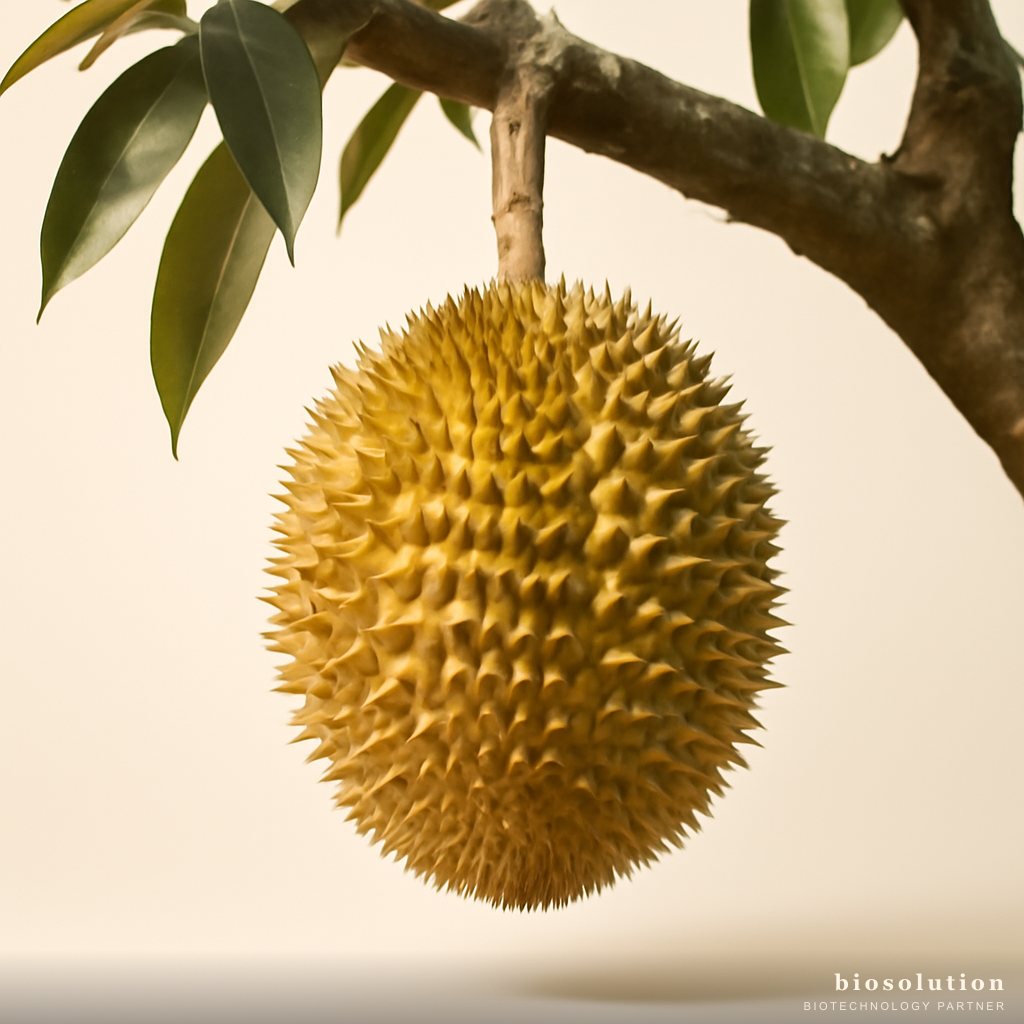
Durian (Durio zibethinus) is a nutrient-demanding plant, especially potassium (K) and phosphorus (P), which play a role in sugar formation and aroma compounds. Unfortunately, synthetic chemical fertilizers often leave residues that disrupt the soil microbial balance. As a result, the soil becomes hard, organic matter decreases, and fruit flavor is less than optimal. This is where biofertilizer comes in.
Biofertilizer contains living microbes such as Rhizobium sp., Bacillus subtilis, Azospirillum sp., Pseudomonas fluorescens, and Trichoderma sp.. Each has a specific function: nitrogen fixation, phosphate solubilization, phytohormone production, and pathogen control. When applied regularly, this consortium improves soil structure, increases nutrient availability, and triggers plants to produce secondary metabolites—including compounds responsible for aroma and sweetness.
Research in Thailand shows that using biofertilizer on durian can increase total soluble solids (Brix) by up to 15% compared to chemical fertilization alone. This means the fruit tastes sweeter. Additionally, the strong distinctive aroma of durian is also linked to microbial activity in producing precursors of sulfur compounds and esters.
Microbial Mechanisms in Enhancing Sweetness and Aroma
1. Nitrogen Fixation and Phosphate Solubilization
Rhizobium sp. and Azospirillum sp. fix nitrogen from the air and provide it in the form of ammonium, ready for root uptake. Meanwhile, Bacillus subtilis solubilizes bound phosphate in the soil into forms available to plants. Phosphate is crucial for ATP and reducing sugar formation, directly contributing to sweetness.
2. Phytohormone Production
Bacillus subtilis and Pseudomonas fluorescens produce auxin (IAA) and gibberellins that stimulate lateral root growth. More and healthier roots increase water and nutrient uptake, including potassium. Potassium plays a role in sugar translocation from leaves to fruit, making the fruit sweeter.
3. Pathogen Antagonism
Trichoderma sp. and Pseudomonas fluorescens suppress the growth of pathogenic fungi such as Fusarium and Phytophthora, which often cause root and fruit rot. Healthy plants can focus their energy on producing quality fruit rather than defending against disease.
4. Decomposition of Organic Matter
Trichoderma sp. also acts as a decomposer, breaking down plant residues into humus and humic acids. Humus increases the soil's cation exchange capacity, making nutrients more available. Humus-rich soil also supports the activity of other microbes, creating a sustainable nutrient cycle.
Application of Biofertilizer on Durian: A Practical Guide
For optimal results, biofertilizer should be applied regularly and consistently. Here is an application guide based on the 5-in-1 Liquid Biofertilizer Formula product from Biosolution:
Dosage and Application Method
- Dosage: 5–10 ml per liter of water.
- Method: Drench onto the root zone or spray onto the soil around the trunk.
- Frequency: Every 10–14 days, starting from the flowering stage until 2 months before harvest. Perform 3–5 times per growing season.
- Best Time: Morning before 10 AM or afternoon after 4 PM, when sunlight is not too intense to avoid killing the microbes.
Tips for Combination with Chemical Fertilizers
Biofertilizer can be combined with low-dose chemical fertilizers. For example, reduce NPK dosage by 50% and add biofertilizer. As a result, production remains high and even increases by 20–30%, as seen in trials on rice and corn. For durian, reducing chemical fertilizers also reduces the risk of nutrient leaching and maintains long-term soil health.
Additional Care
- Ensure the soil has adequate moisture; do not let it dry out completely after application.
- Avoid using chemical pesticides simultaneously as they can kill the microbes. Leave a gap of at least 3 days.
- If possible, apply organic mulch to maintain soil temperature and moisture.
Regenerative Agriculture and the Role of Biofertilizer
Regenerative agriculture is an approach aimed at restoring soil health, increasing biodiversity, and sequestering carbon. Biofertilizer is one of its main pillars. By relying on microbes, we not only provide nutrients to plants but also build a self-sustaining soil ecosystem.
In durian cultivation, regenerative agriculture means reducing chemical inputs, improving soil structure, and producing healthier, more aromatic fruit. Microbes such as Trichoderma and Bacillus help compost harvest residues, returning nutrients to the soil. This cycle keeps the land productive without degradation.
Data from the Ministry of Agriculture shows that land managed with regenerative principles has 30% higher organic matter content compared to conventional land. This directly impacts fruit quality. Durian from regenerative land tends to have thicker flesh, sweeter taste, and stronger aroma.
Case Study: Success of a Durian Farmer with Biofertilizer
Mr. Slamet, a durian farmer in East Java, has been using biofertilizer for two growing seasons. Initially, he was skeptical because he was accustomed to chemical fertilizers. However, after trying the 5-in-1 Liquid Biofertilizer Formula product, he saw significant changes. His durian tree roots were more abundant and white, leaves were greener, and the fruit was sweeter. "Usually I used 2 kg of chemical fertilizer per tree, now I only use 1 kg plus biofertilizer. The results are even better," he said.
Mr. Slamet also noticed that the soil in his orchard became looser and did not easily become waterlogged during rain. He no longer found symptoms of root rot that used to appear frequently. According to him, the investment in biofertilizer is worth the improvement in fruit quality, which leads to higher selling prices.
Conclusion
Biofertilizer for durian is not just a trend but a scientific solution for producing premium fruit. Through mechanisms of nitrogen fixation, phosphate solubilization, phytohormone production, and pathogen control, the microbial consortium in biofertilizer can naturally enhance the sweetness and aroma of durian. Regenerative agriculture that prioritizes soil health is the foundation for sustainable durian cultivation. If you want to switch to a more environmentally friendly and profitable method, start by applying biofertilizer regularly. For further consultation, contact the Biosolution team via WhatsApp or check out the 5-in-1 Liquid Biofertilizer Formula product to get the best durian harvest.
FAQ
Is biofertilizer safe for the environment?
Yes, biofertilizer is made from natural microbes that do not leave harmful residues. On the contrary, it improves soil structure and increases microbial biodiversity, making the environment healthier.
How long does it take to see the effects of biofertilizer on durian?
Changes are usually visible after 2–3 applications (about 1–2 months). Leaves become greener, shoot growth is faster, and roots are more abundant. In the first harvest season, fruit sweetness and aroma begin to improve.
Can biofertilizer be mixed with chemical fertilizers?
Yes, but it is recommended to reduce the chemical fertilizer dosage by up to 50%. Mix biofertilizer with water first, then apply separately with a 1–2 day gap to avoid microbial death due to high salt concentration.
Is biofertilizer effective for all durian varieties?
Yes, all durian varieties can benefit from biofertilizer. However, the best response is usually seen in superior varieties such as Monthong, Musang King, and Bawor, which require high nutrients.
How should biofertilizer be stored properly?
Store in a shaded place at a temperature of 15–30°C, avoid direct sunlight. Do not freeze. Opened bottles should be used within 1 month to maintain microbial viability.