Biofertilizer for Oil Palm: Efficient Solution for Peatland
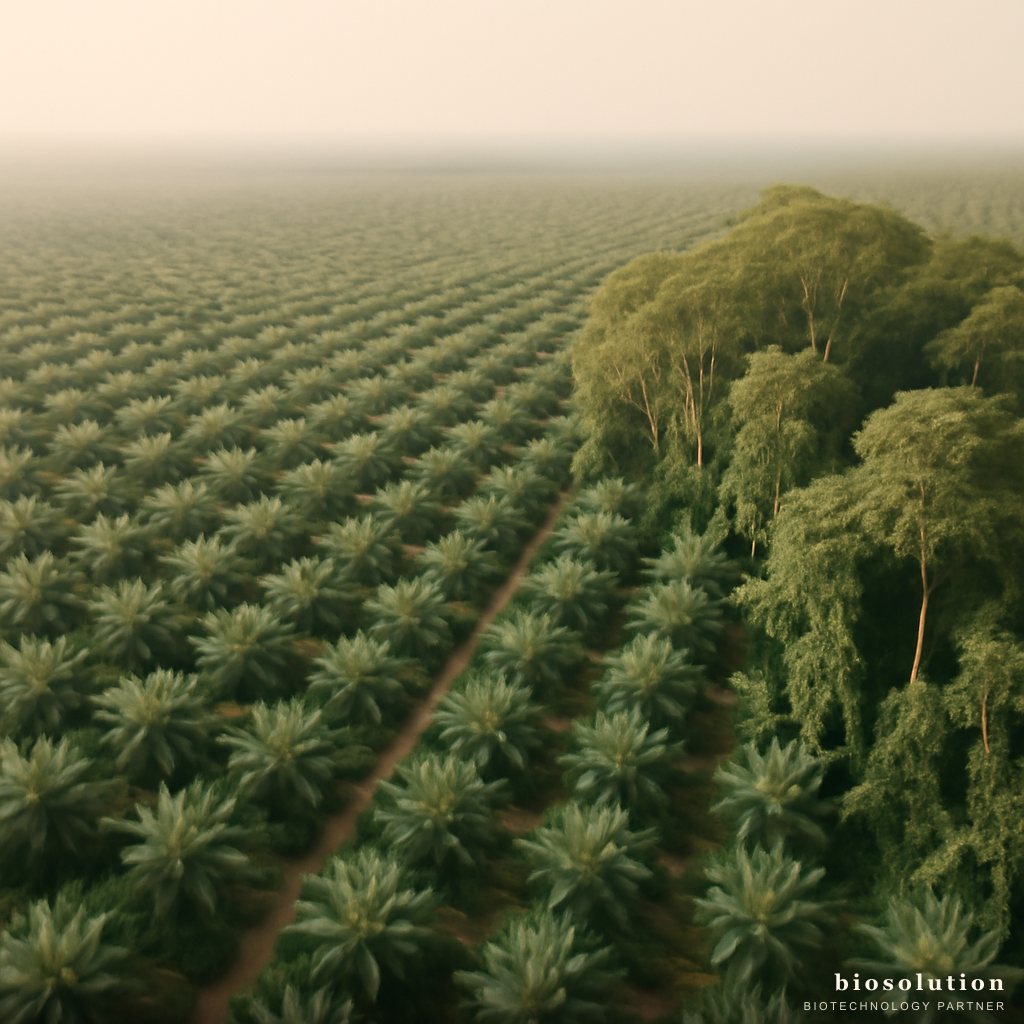
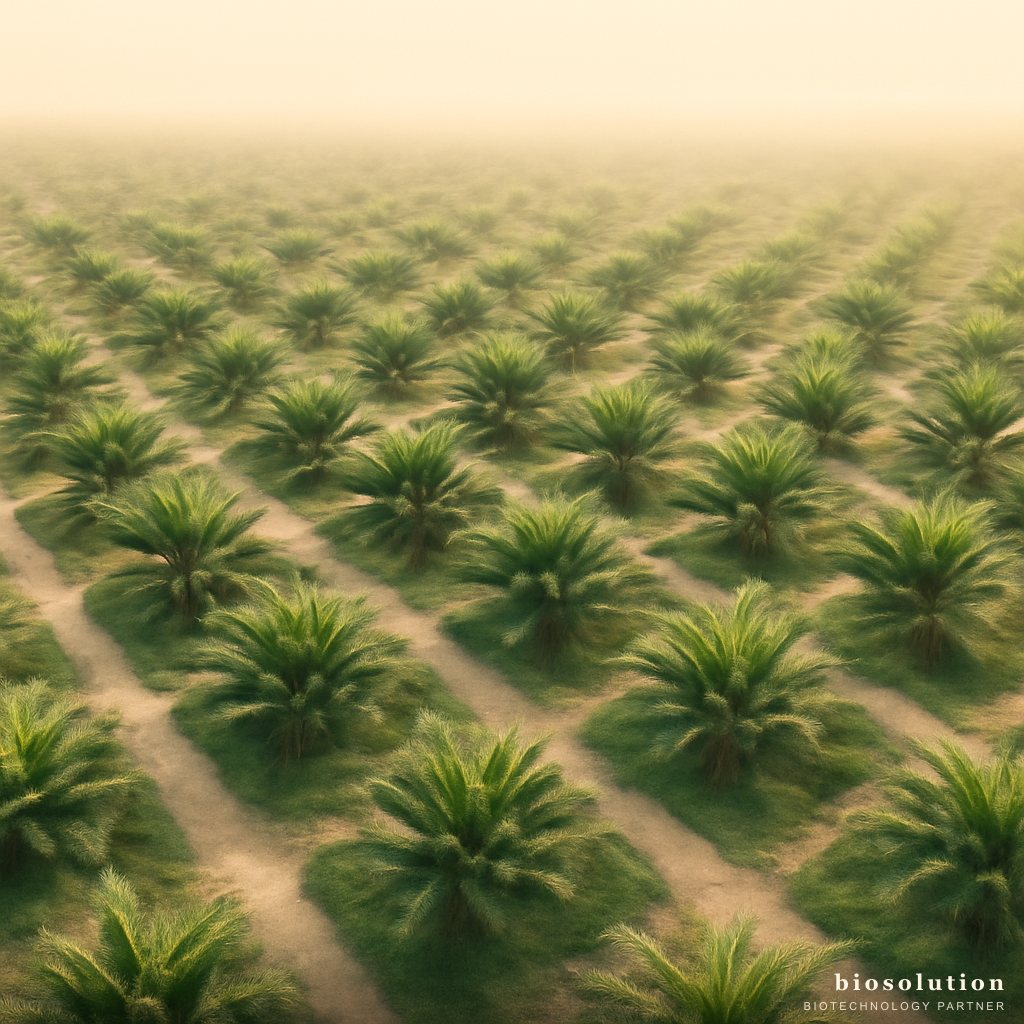
Oil palm plantations on peatland face unique challenges: acidic soil, nutrient-poor, and susceptible to root diseases such as Ganoderma. So far, farmers have relied on high-dose chemical fertilizers to pursue production, but costs continue to swell and environmental impacts become increasingly apparent. This is where biofertilizer for oil palm comes as a smart alternative. By utilizing superior microorganisms, biofertilizer not only reduces fertilization costs by up to 30% but also naturally improves peat soil quality. This article will thoroughly examine the cost comparison between conventional and biofertilizer approaches, and how Biosolution's specific formula can be a solution for your plantation.
Why Peatland Requires a Special Approach?
Peatland has different physicochemical characteristics from mineral soils. High organic matter content, low pH (3-4), and large cation exchange capacity cause nutrients to be easily bound and unavailable to plants. As a result, applied chemical fertilizers are often inefficient—most are leached or fixed. In addition, poor drainage and high humidity create an ideal environment for soil-borne pathogens such as Ganoderma boninense, the main cause of basal stem rot (BSR) disease that causes losses of billions of rupiah per year.
The conventional approach typically uses high-dose NPK fertilizers (15-20 kg/tree/year) and chemical fungicides. However, these costs continue to rise with fluctuating prices of imported raw materials. On the other hand, biofertilizers containing functional microbes can address two problems at once: gradually supplying nutrients and suppressing pathogens. For example, Trichoderma harzianum in Biosolution products not only controls Ganoderma as a biocontrol agent but also promotes root growth (PGPR). Azotobacter sp. fixes nitrogen from the air, crucial in N-poor peat, while Bacillus subtilis solubilizes bound phosphate and produces growth hormones. All three work synergistically to create a healthy rhizosphere.
Cost of Conventional Fertilization vs. Biofertilizer: Direct Comparison
To provide a real picture, let's calculate the cost per hectare per year on mature oil palm plantations on peatland. Assumption: 136 trees/ha.
Conventional Scheme
- NPK 15-15-15 fertilizer: 15 kg/tree/year = 2,040 kg/ha. Average price Rp2,500/kg = Rp5,100,000/ha.
- Supplementary fertilizers (Mg, B, Cu): Rp500,000/ha.
- Chemical fungicide (for Ganoderma): 2 applications/year, Rp600,000/ha.
- Application labor: 2 man-days/ha/application × 4 applications = 8 man-days × Rp100,000 = Rp800,000.
- Total: Rp7,000,000/ha/year (excluding transportation and depreciation).
Biofertilizer Scheme (Biosolution)
- Biofertilizer Oil Palm Formula: 20 ml/tree/application, 4 applications/year = 10.88 liters/ha. Price Rp75,000/liter = Rp816,000.
- Reduction of chemical fertilizer by 30%: NPK becomes 10.5 kg/tree = 1,428 kg × Rp2,500 = Rp3,570,000.
- Supplementary fertilizers remain: Rp500,000.
- Chemical fungicide not needed (due to Trichoderma biocontrol): Rp0.
- Labor: drench application is faster, 1 man-day/ha/application × 4 = 4 man-days × Rp100,000 = Rp400,000.
- Total: Rp5,286,000/ha/year.
Savings: Rp1,714,000/ha/year or 24.5%. Not to mention long-term benefits such as improved peat structure and increased FFB production by 10-15% reported by Biosolution users.
Mechanism of Biofertilizer: The Science Behind Efficiency
Biofertilizer works through three main mechanisms: biofertilizer, biostimulant, and biocontrol. Trichoderma harzianum in Biosolution products produces chitinase enzymes that degrade Ganoderma cell walls, while also triggering lateral root growth through auxin production. Azotobacter sp. is a non-symbiotic nitrogen-fixing bacterium that converts atmospheric N₂ into ammonium, available to plants. On N-poor peat, Azotobacter's contribution can reach 20-30 kg N/ha/year. Meanwhile, Bacillus subtilis solubilizes inorganic phosphate (such as rock phosphate) and produces phytohormones, enhancing nutrient uptake and plant resistance.
The combination of the three creates a synergistic effect: Trichoderma provides a "home" for bacteria through its mycelium, Azotobacter supplies N, and Bacillus supplies P and protects against pathogens. As a result, plants are healthier, roots are deeper, and fertilization efficiency increases. This is why chemical fertilizer use can be reduced by 30% without decreasing productivity, and even tends to increase.
Long-Term Economic and Environmental Benefits
Besides direct savings, biofertilizer provides cumulative benefits. Peat soil continuously improved by microbes will increase water and nutrient holding capacity, reducing fertilization frequency. Increased FFB production by 10-15% is equivalent to additional income of around Rp3-5 million/ha/year (assuming FFB price Rp1,500/kg and production 20 tons/ha). If total benefit is calculated: cost savings + increased production = Rp4.7-6.7 million/ha/year.
From an environmental perspective, reducing chemical fertilizer by 30% means lowering greenhouse gas emissions (N₂O) and water pollution. The use of Trichoderma also reduces dependence on toxic chemical fungicides. This aligns with sustainable plantation trends (RSPO) and global market demand for environmentally friendly palm oil.
Proper Application of Biofertilizer
For optimal results, biofertilizer application must follow recommendations. Biosolution products are applied using the drench method on the palm circle, at a dose of 20 ml per tree every 3 months (4 times a year). The best time is morning or late afternoon to avoid direct UV light that can kill microbes. Ensure the soil is moist before application, and do not mix with chemical fungicides at the same time. For highly acidic peatland, initial liming (dolomite) is recommended to raise pH to the range of 5-6, so that microbes can work optimally.
Conclusion
Biofertilizer for oil palm has proven economically more efficient than conventional fertilization on peatland. With cost savings of up to 24.5% per year, increased FFB production by 10-15%, and significant environmental benefits, switching to biofertilizer is a strategic step. Biosolution's formula containing Trichoderma harzianum, Azotobacter sp., and Bacillus subtilis is specifically designed to overcome peatland challenges. Feel free to consult with our team for free or check out the products Biofertilizer Formula for Oil Palm and Liquid 5-in-1 Biofertilizer Formula for a complete solution for your plantation.
FAQ
1. Is biofertilizer safe for the peat environment? Yes, biofertilizer actually improves peat quality by enhancing natural microbial activity, improving soil structure, and reducing greenhouse gas emissions. The microbes used are non-pathogenic strains that have been tested.
2. How long does it take to see results from using biofertilizer? Improvement in soil conditions usually starts to be visible after 3-6 months, indicated by greener leaf color and more root growth. Increased FFB production generally occurs after 1-2 fertilization cycles (1 year).
3. Can biofertilizer be combined with chemical fertilizers? Yes, it is even recommended to gradually reduce chemical doses. However, do not mix them directly in one tank; apply separately with at least a 3-day interval to avoid toxic effects on microbes.
4. Is biofertilizer effective in controlling Ganoderma? Trichoderma harzianum in Biosolution products has been proven effective in suppressing Ganoderma boninense growth through competition and antibiosis. However, for severely infected plants, additional curative measures are needed.
5. How should biofertilizer be stored properly? Store in a cool, dry place at 4-30°C, avoid direct sunlight. Do not freeze. Liquid products have a shelf life of 6 months in sealed packaging. Once opened, use within 1 month.