Biofertilizer for Shallots: Complete Guide to Big Bulbs and Long Storage
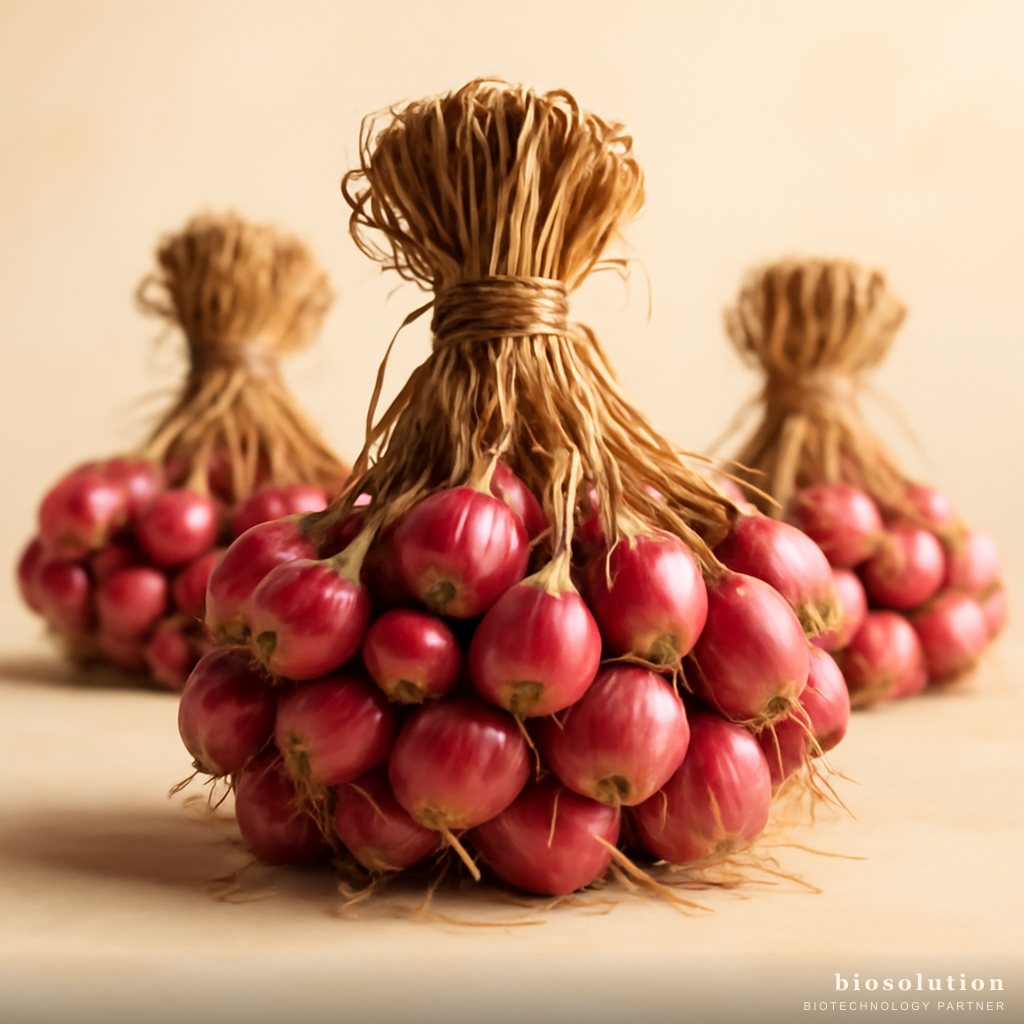
Shallot farmers in Brebes often face problems of small bulbs, easy rot, and short shelf life. Yet market demand continues to increase, especially for export-quality bulbs. One solution now widely adopted is the use of biofertilizer for shallots which can naturally stimulate bulb growth and improve storage durability. This article will discuss common causes of suboptimal bulbs, symptoms to watch out for, and how the microbial consortium in Biosolution products can be the answer.
Why Are Shallot Bulbs Often Small and Quick to Rot?
Many factors cause shallot bulbs not to reach optimal size. From fertilization errors, soil-borne pathogen attacks, to growth hormone imbalance. Here are some main causes:
1. Low Micronutrient Availability
Micronutrients such as zinc (Zn), boron (B), and manganese (Mn) are very important in the bulb formation process. Soil poor in micronutrients makes it difficult for bulbs to enlarge. Chemical fertilizers usually only provide macronutrients (N, P, K) so micronutrient needs are often overlooked.
2. Soil-Borne Pathogen Attack
Fungi such as Fusarium oxysporum and bacteria Ralstonia solanacearum can cause bulb rot and wilt. These pathogens persist in the soil and attack roots, inhibiting nutrient absorption.
3. Growth Hormone Imbalance
Bulb formation is triggered by cytokinin and auxin hormones. If the hormone ratio is unbalanced, the plant focuses more on leaf growth than bulbing. Environmental stress such as drought or waterlogging also triggers this imbalance.
4. Improper Fertilization Practices
Excessive nitrogen application during the bulbing phase actually stimulates vegetative growth, so bulbs do not enlarge. Conversely, lack of potassium and phosphorus during this phase also inhibits bulbing.
Symptoms of Shallot Plants Unresponsive to Fertilizer
Farmers need to recognize early symptoms so they can take immediate action. The following signs often appear when plants lack microbial or nutritional support:
- Yellowing or pale leaves even though nitrogen fertilizer has been applied. This indicates nutrient uptake disruption due to unhealthy roots.
- Lush leaf growth but small bulbs. Indication of excess nitrogen or potassium deficiency.
- Soft bulbs and easy rot at harvest. Could be caused by pathogen infection or calcium and boron deficiency.
- Many flowers drop or fruit not set. Indicates micronutrient or hormone deficiency.
- Brown and short roots. Healthy roots should be white and long. Brown roots indicate pathogen attack or anaerobic conditions.
If these symptoms appear, it's time to evaluate the fertilization program and consider using biofertilizers containing decomposing and growth-promoting microbes.
The Role of Biofertilizer in Improving Bulb Quality
Biofertilizer contains beneficial microorganisms that live in the rhizosphere and help plants absorb nutrients, produce hormones, and suppress pathogens. The Formula POC Kualitas Umbi product from Biosolution is specially formulated for the shallot bulbing phase. Its composition consists of:
- PGPR (Plant Growth Promoting Rhizobacteria) Consortium: Bacteria such as Pseudomonas fluorescens and Bacillus subtilis that produce auxin and cytokinin hormones, and solubilize phosphate and potassium.
- Seaweed extract: Natural source of cytokinin that stimulates bulb cell division and increases size.
- Humic and fulvic acids: Increase soil cation exchange capacity, help release bound nutrients, and stimulate root growth.
This combination works synergistically: PGPR provides nutrients and hormones, seaweed extract stimulates cell division, and humic acids ensure nutrient availability. The result is bulbs that form simultaneously, larger in size, and with increased shelf life due to denser bulb tissue.
Proper Application of Formula POC Kualitas Umbi
For optimal results, application must be done at the right time and dosage. Here are technical guidelines for using Formula POC Kualitas Umbi:
- Application time: Start when plants are 3-4 weeks after planting, i.e., the beginning of the bulbing phase. Repeat every 7-10 days until 2 weeks before harvest.
- Dosage: Mix 3-5 ml of product per liter of water. For drench application, use 200-300 ml of solution per plant. For foliar spray, spray all leaf surfaces until evenly wet.
- Application method: Spray in the morning before 10 am or in the afternoon after 4 pm to avoid evaporation. Ensure the spray nozzle produces fine droplets for maximum absorption.
- Combination with base fertilizer: This biofertilizer can be combined with low-dose NPK chemical fertilizer. Avoid mixing directly with chemical pesticides; leave at least a 2-day interval.
Farmers in Brebes who have applied this method report an increase in bulb weight of up to 15-25% and a reduction in flower drop of up to 30%. Additionally, bulbs are harder and have a longer shelf life of up to 2-3 months longer.
Additional Benefits: Improving Shelf Life and Post-Harvest Quality
One advantage of biofertilizer is its ability to improve post-harvest quality. The resulting bulbs have more balanced water content, thicker skin, and higher sugar content. This makes bulbs less prone to shriveling or sprouting during storage. According to data from the Agency for Agricultural Research and Development, the use of PGPR on shallots can reduce storage weight loss by up to 20%.
This mechanism occurs because PGPR triggers the production of secondary metabolite compounds such as phenols and chitinase that strengthen bulb cell walls. Humic acids also act as antioxidants that protect bulb tissue from oxidative damage. Thus, bulbs are not only large at harvest but also remain high quality in storage.
Conclusion
Biofertilizer for shallots, especially Formula POC Kualitas Umbi from Biosolution, offers a comprehensive solution to overcome the problems of small bulbs and short shelf life. With its content of PGPR consortium, seaweed extract, and humic acids, this product stimulates simultaneous bulbing, increases bulb weight, and extends storage life. Shallot farmers in Brebes can adopt this technology as part of sustainable, environmentally friendly, and profitable cultivation.
For more information or direct consultation, contact the Biosolution team via WhatsApp. Get fertilization recommendations tailored to your land conditions.