Broad-Area Granular Biofertilizer: Case Study of Javanese Farmers Successfully Boosting Plantation Productivity
Broad-area granular biofertilizer is an innovative solution for large-scale plantations seeking to improve fertilization efficiency while maintaining soil health. Unlike liquid biofertilizers that require repeated applications and specialized equipment, granular biofertilizer can be broadcast directly using a spreader, saving time and labor. This article presents a real case study of farmers in Java who successfully adopted Biosolution's Broad-Area Granular Biofertilizer Formula, proving that microbiological technology can be integrated into modern agricultural systems without disrupting productivity.
Challenges of Applying Biofertilizer to Large Areas
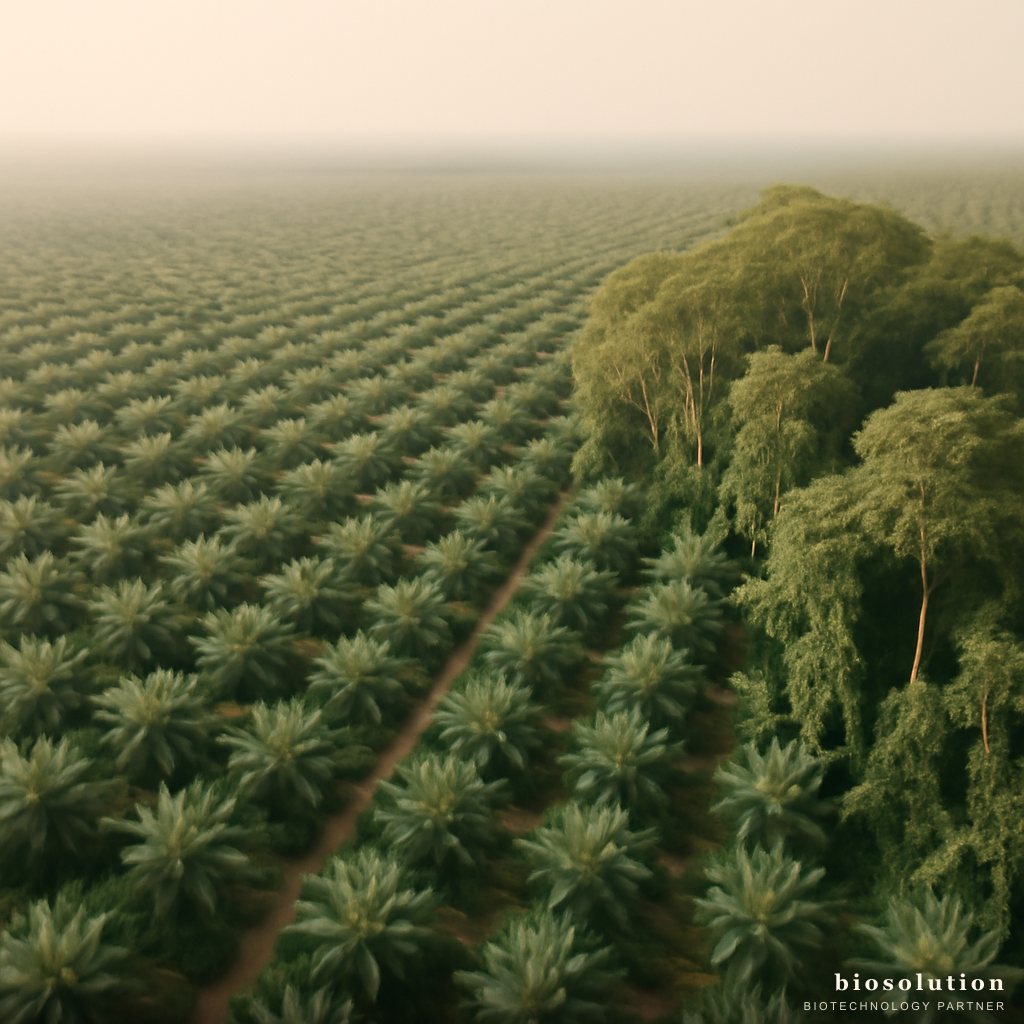
Fertilization in large plantation areas—such as sugarcane, oil palm, or rubber—faces significant logistical constraints. Liquid biofertilizers require tanks, pumps, and frequent applications, making them impractical for areas spanning tens to hundreds of hectares. Additionally, conventional chemical fertilizers often cause long-term soil degradation, such as a decline in organic carbon and beneficial microbial populations. This is where broad-area granular biofertilizer offers advantages: single application with a spreader, gradual nutrient release, and organic matter content that improves soil structure. However, adopting this technology requires understanding the proper formulation, especially regarding microbial viability and compatibility with spreader mechanisms.
Broad-Area Granular Biofertilizer Formula: Composition and Mechanism of Action
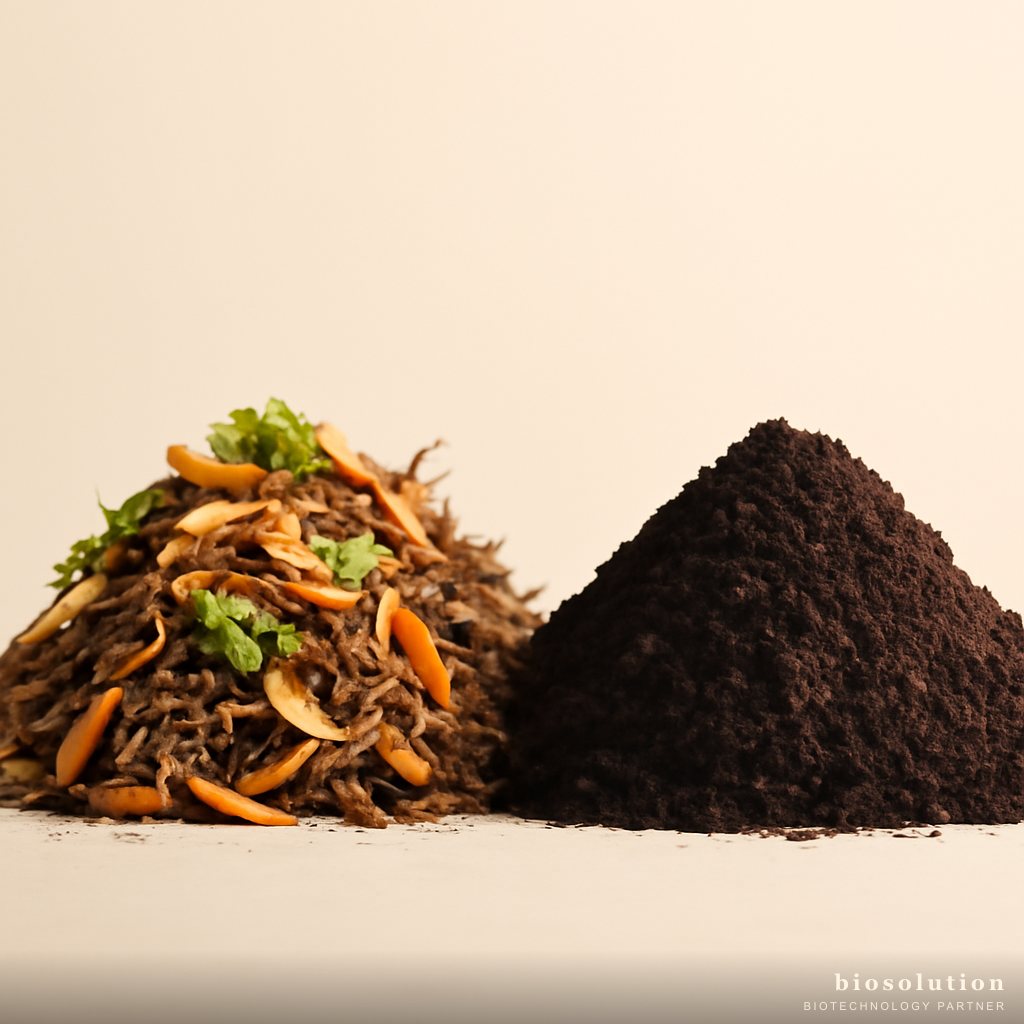
Biosolution developed the Broad-Area Granular Biofertilizer Formula containing five superior microbial strains with a minimum density of 10⁹ CFU per gram of granule. The 2–4 mm granule size is designed to be compatible with most fertilizer spreaders, so farmers do not need to invest in new equipment. The following is the composition and role of each microbe:
Rhizobium sp. – Nitrogen Fixer for Legumes
Rhizobium sp. symbiotically associates with legume roots (e.g., soybeans, peanuts) to fix atmospheric nitrogen into ammonia usable by plants. In rubber or oil palm plantations intercropped with leguminous cover crops, Rhizobium sp. helps supply N naturally, reducing urea fertilizer needs by 30–50%.
Bacillus subtilis – Phosphate Solubilizer and Biocontrol
Bacillus subtilis produces phosphatase enzymes and organic acids that solubilize bound phosphorus in the soil, making it available to plants. This strain also produces antimicrobial compounds such as iturin and surfactin that suppress soil pathogens like Fusarium and Rhizoctonia.
Azospirillum sp. – Associative Nitrogen Fixer
Azospirillum sp. lives around the roots of non-legume plants (sugarcane, corn, oil palm) and fixes nitrogen associatively. This microbe also produces phytohormones such as auxin that stimulate root growth.
Pseudomonas fluorescens – Antagonist of Soilborne Pathogens
Pseudomonas fluorescens produces siderophores that bind iron, depriving pathogens of this element. Additionally, this bacterium produces antibiotics such as 2,4-diacetylphloroglucinol, effective against Ganoderma in oil palm and Xanthomonas in sugarcane.
Trichoderma sp. – Biocontrol of Soil Fungi
Trichoderma sp. is an antagonistic fungus that colonizes the rhizosphere and suppresses pathogens through mycoparasitism, competition, and antibiosis. It is highly effective for controlling root rot and wilt diseases.
This combination of microbes works synergistically: N-fixing and P-solubilizing bacteria provide nutrients, while biocontrol agents protect plants from disease. Thus, this granular biofertilizer not only partially replaces chemical fertilizers but also reduces fungicide use.
Case Study: Sugarcane Farmer in East Java
Mr. Sutrisno, a sugarcane farmer with 50 hectares in Malang Regency, East Java, faced stagnant productivity and rising chemical fertilizer costs. Ten years of monoculture sugarcane had caused soil compaction, low organic carbon (0.8%), and frequent Fusarium disease attacks. Before using granular biofertilizer, he spent IDR 4 million per hectare per season on NPK fertilizer and fungicides, with an average sugarcane yield of 70 tons per hectare.
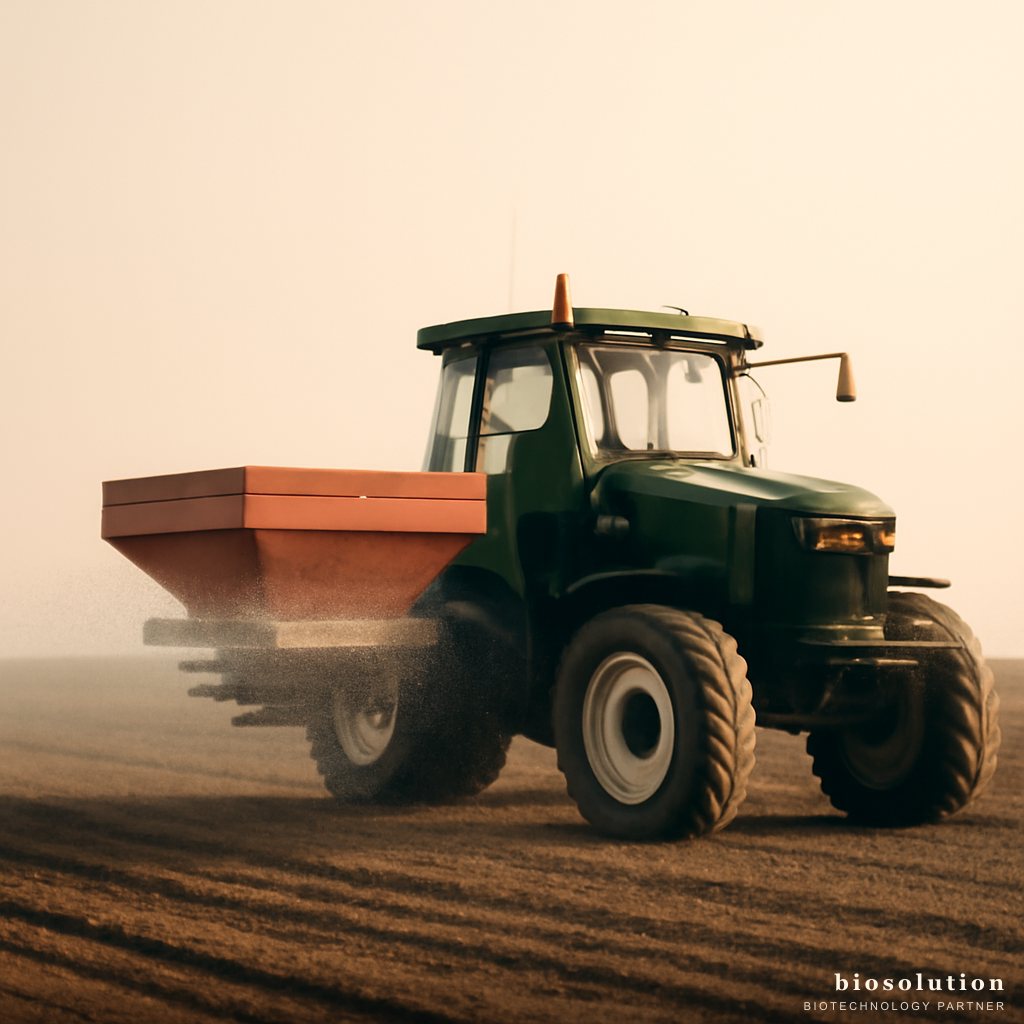
At the start of the 2024 planting season, Mr. Sutrisno tried Biosolution's Broad-Area Granular Biofertilizer Formula at a dosage of 150 kg per hectare, broadcast using a centrifugal spreader during land preparation. Chemical fertilizer was reduced by 40% to 200 kg NPK/ha. Results: at harvest, sugarcane production increased to 85 tons per hectare (up 21%), input costs dropped by 35%, and Fusarium disease intensity decreased drastically. Post-harvest soil analysis showed an increase in organic carbon to 1.2% and a significant rise in soil microbial populations.
Success Factors
This success was supported by:
- 2–4 mm granule size compatible with spreaders, ensuring even distribution.
- Gradual microbial release because the granule matrix protects microbes from UV and drought.
- Organic matter content from the granules that improves soil structure.
- Synergy among microbes that suppresses pathogens and provides nutrients.
Application of Granular Biofertilizer with a Spreader: Practical Guide
For large areas, applying broad-area granular biofertilizer is most efficient using a spreader. Here are the steps:
- Calibrate the Spreader: Adjust the flow rate according to the dosage (100–250 kg/ha). For sugarcane, 150 kg/ha is usually ideal.
- Application Timing: Broadcast during land preparation or at the start of the rainy season so microbes become active immediately.
- Broadcasting Method: Spread evenly on the soil surface, then immediately cover with light tillage (harrowing) to avoid direct sunlight exposure.
- Frequency: Once per growing season for annual crops, or twice for perennial crops (early and mid-season).
Advantages of Granular Biofertilizer Compared to Liquid Biofertilizer
| Aspect | Granular Biofertilizer | Liquid Biofertilizer |
|---|---|---|
| Ease of application | Broadcast with spreader | Requires tank, pump, more frequent applications |
| Shelf life | 24 months at room temperature | 6–12 months, needs refrigeration |
| Microbial viability | Protected by granule matrix | Susceptible to temperature and UV |
| Labor cost | Low (1-2 workers) | High (4-5 workers) |
| Compatibility | Can be mixed with chemical fertilizers (non-chlorine) | Cannot be mixed directly |
Conclusion
Biosolution's broad-area granular biofertilizer has proven effective in increasing sugarcane plantation productivity in East Java, with yields up 21% and input costs down 35%. The main advantages of this product lie in its granule formulation compatible with spreaders, content of 5 superior microbial strains (10⁹ CFU/g), and 24-month shelf life. For B2B plantations seeking to adopt sustainable agriculture without sacrificing efficiency, the Broad-Area Granular Biofertilizer Formula is the right choice. Consult your land needs with the Biosolution team via WhatsApp to get appropriate dosage and application recommendations.
FAQ
1. What is the difference between granular biofertilizer and granular chemical fertilizer? Granular biofertilizer contains live microbes beneficial to soil and plants, not chemical nutrients. Its function is to enhance natural nutrient availability, suppress pathogens, and improve soil structure, not to supply nutrients directly. Therefore, granular biofertilizer should be used together with chemical fertilizers at lower doses.
2. How long do the microbes in the granules survive in the soil? After application, microbes become active within 1–2 weeks if soil moisture is adequate. The population persists for 2–3 months, depending on organic matter availability and moisture. For optimal effect, reapplication can be done each growing season.
3. Is granular biofertilizer safe for livestock or humans? Very safe. All microbes used are non-pathogenic and have been isolated from natural environments. This product also contains no harmful chemicals, making it safe for operators and the environment.
4. Can granular biofertilizer be mixed with chemical fertilizers? Yes, but avoid mixing with fertilizers containing chlorine (KCl) or highly acidic/alkaline compounds, as they can reduce microbial viability. It is best to apply separately or mix just before use.
5. How should granular biofertilizer be stored properly? Store in a dry, cool place at room temperature (25–30°C), away from direct sunlight. Do not store in humid places as it can activate microbes before application. Shelf life reaches 24 months in tightly sealed packaging.