Common Mistakes in Using Premium Gourami Pond Probiotics During Long Rearing Periods
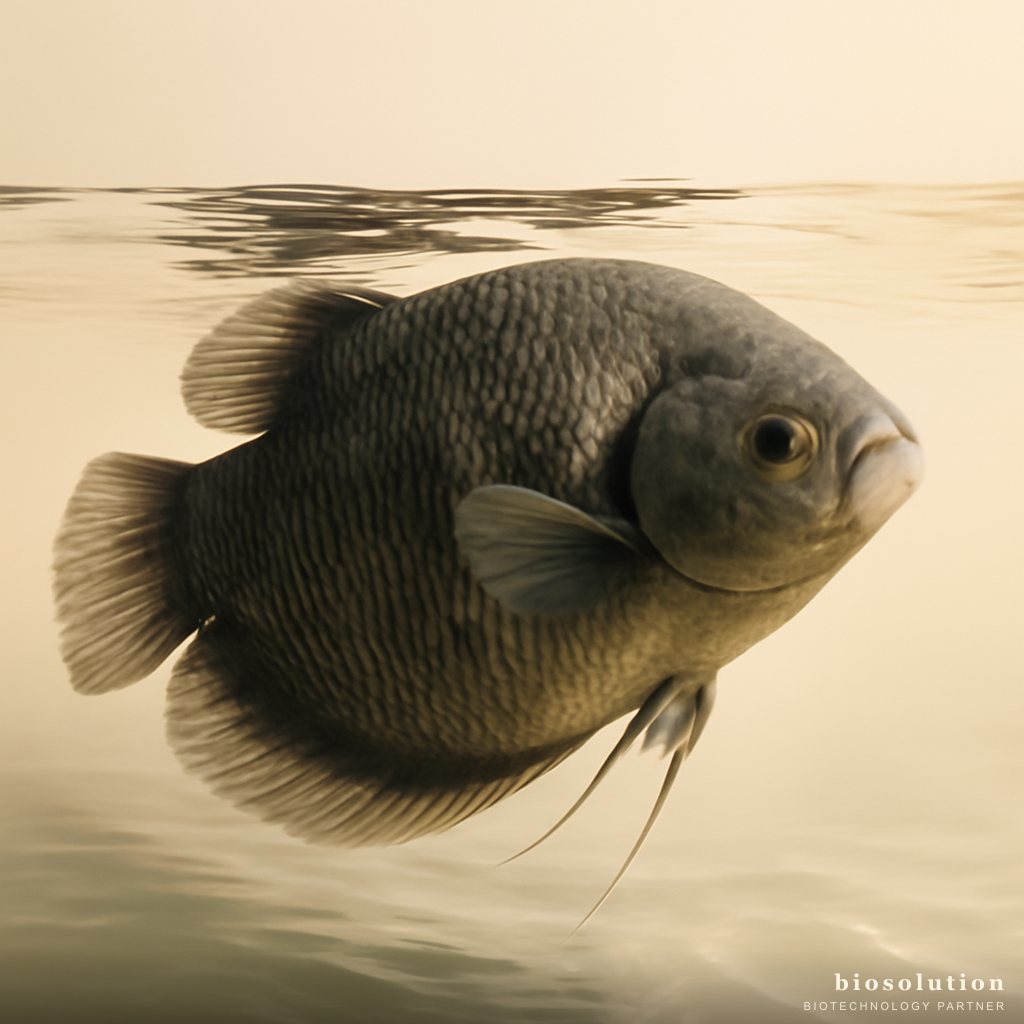
Premium gourami cultivation demands extra attention to water quality, especially during long rearing periods (up to 8–12 months) to achieve premium size. Premium gourami pond probiotics are relied upon to maintain a stable pond ecosystem, but many farmers make fatal mistakes that prevent the probiotics from working optimally. This article thoroughly discusses these mistakes and provides appropriate microbiology-based solutions.
1. Incorrect Probiotic Dosage: Too Little or Too Much
The most common mistake is applying probiotics without considering pond water volume. Too low a dose will not sufficiently dominate pathogenic bacterial populations, while excessive doses can cause water turbidity and bacterial blooms that trigger a drop in dissolved oxygen.
For premium gourami pond probiotics, the recommended dosage is 2 L per 1000 m³ of water every 10 days. Application should be done in the morning so that aerobic bacteria like Bacillus subtilis and Nitrosomonas sp. get enough oxygen to work. Accurately measuring pond volume is a first step often overlooked.
2. Wrong Application Time: Afternoon or Night
Many farmers apply probiotics at any time. In fact, the probiotic bacteria contained in Premium Gourami Pond Probiotic Formula are aerobic and require high oxygen for metabolism. Application in the afternoon or night when natural oxygen levels drop will render the bacteria inactive and they die before they can work.
The solution: always apply in the morning, ideally between 06:00–08:00, when oxygen from phytoplankton photosynthesis begins to increase. This ensures that decomposer bacteria like Bacillus subtilis can efficiently break down organic matter.
3. Not Performing Routine Water Quality Maintenance
Probiotics are not a substitute for good water management. A fatal mistake is relying entirely on probiotics without monitoring water parameters such as ammonia, nitrite, pH, and temperature. During long rearing periods, accumulation of feed residue and feces is very high. If not balanced with adequate water circulation or aeration, probiotics cannot keep up with the organic load.
Use probiotics as part of a system: ensure aeration runs 24 hours, perform 10-20% water changes per week, and measure parameters every 3 days. This way, Nitrosomonas sp. can optimally oxidize ammonia into nitrite.
4. Mixing Probiotics with Disinfectants or Chemicals
Some farmers mix probiotics with lime, chlorine, or antibiotics simultaneously. This is a major mistake because these chemicals will kill the probiotic bacteria before they can work.
Important rule: allow at least 48 hours after disinfectant application before adding probiotics. If using lime, ensure pH is stable in the range of 6.5–8.0. Bacillus subtilis and Nitrosomonas sp. are very sensitive to drastic pH changes.
5. Ignoring Dissolved Oxygen (DO) Levels
Aerobic probiotics require a minimum DO of 4 mg/L. In premium gourami ponds with high stocking density, oxygen is often a limiting factor. Without sufficient aeration, probiotics are ineffective and can even cause foul odors due to dominant anaerobic bacteria.
Ensure you have adequate aerators: at least 1 HP for every 500 m² of pond. Or use a venturi system. Do not rely solely on paddlewheels if the pond is too deep. With optimal DO, premium gourami pond probiotics will work maximally.
6. Inconsistent Application Frequency
Probiotics are not a one-time fix. To maintain dominance of beneficial bacteria, application must be routine every 10 days. Many farmers only apply probiotics when water starts to become turbid or when gourami are stressed. By then, it is too late.
Consistency is key. Create an application schedule and record it. With Premium Gourami Pond Probiotic Formula specifically formulated for gourami cultivation, routine application will maintain premium water quality throughout the long rearing period.
7. Overlooking Probiotic Quality Itself
Not all probiotics are the same. Products with low bacterial concentration or strains not specific to freshwater ponds will not yield optimal results. Choose probiotics containing Bacillus subtilis as a decomposer and Nitrosomonas sp. as an ammonia oxidizer. These two strains are proven effective for premium gourami ponds.
Biosolution presents Premium Gourami Pond Probiotic Formula with standardized bacterial density and synergistic formulation. Each liter contains billions of CFU of ready-to-work bacteria. Do not be tempted by low prices if quality is not guaranteed.
Conclusion
The mistakes above often occur due to a lack of understanding of pond microbial ecology. By avoiding these 7 mistakes and correctly applying premium gourami pond probiotics, you can maintain premium water quality throughout the long rearing period, reduce disease risk, and achieve a harvest of grade A gourami with high market value.
Want further consultation on probiotic application for your gourami pond? Contact the Biosolution technical team via WhatsApp for recommendations tailored to your pond conditions.