Durian Biofertilizer: Secrets to Sweet Fruit & Premium Aroma
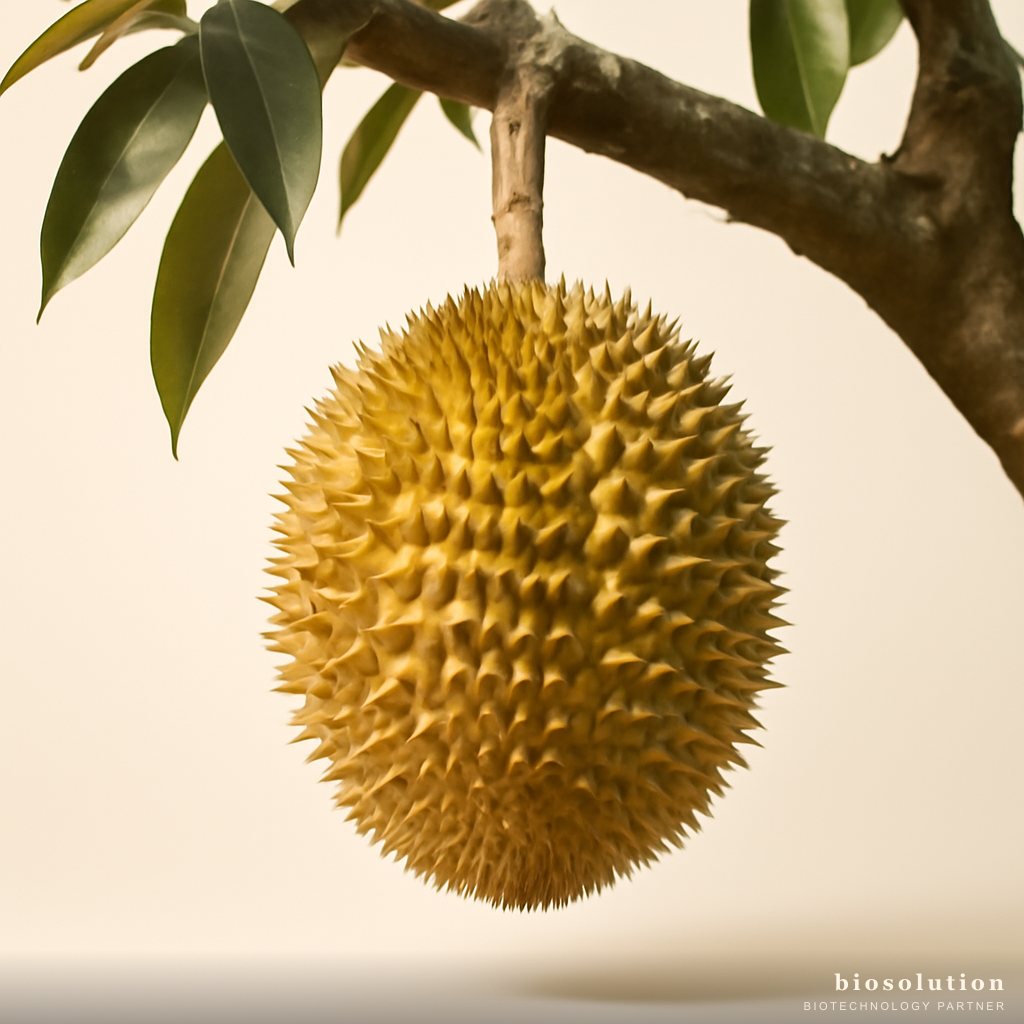
Biofertilizer for durian is a solution for farmers who want to produce premium fruit with sweet taste and strong aroma. Durian, as the king of fruits, requires balanced nutrition, especially macro and micro elements, as well as soil microbes that support optimal nutrient absorption. Excessive use of chemical fertilizers often reduces taste and aroma quality. Through an agricultural microbiology approach, farmers in Java have successfully overcome this challenge by utilizing superior microbial consortia. This article presents a real case study and the scientific mechanisms behind this success.
Why Biofertilizer is Important for Premium Durian?
Premium durian cultivation demands attention to three aspects: sweetness, flesh texture, and distinctive aroma. The main influencing factors are the availability of nutrients, especially potassium (K) and magnesium (Mg) for sugar formation, and phosphorus (P) for root and flower development. Synthetic chemical fertilizers indeed provide quick nutrients, but in the long term they can damage soil structure, suppress beneficial microbial populations, and cause residue accumulation that disrupts plant metabolism.
Biofertilizers contain living microbes that work synergistically with plant roots. Microbes such as Bacillus subtilis and Pseudomonas fluorescens can dissolve bound phosphate in the soil, making it available to plants. Rhizobium sp. and Azospirillum sp. fix nitrogen from the air, reducing the need for chemical N fertilizers. Additionally, Trichoderma sp. acts as a decomposer of organic matter and a controller of soil pathogens. Thus, biofertilizers not only nourish plants but also improve soil health sustainably.
The Role of Potassium and Microbes in Sweetness Formation
Potassium acts as an enzyme activator that converts starch into sugar. Without sufficient potassium, durian fruit tends to be bland. Biofertilizers containing Bacillus subtilis not only dissolve P but also produce organic acids that help release fixed potassium. Furthermore, Azospirillum sp. produces the phytohormone IAA (auxin) which stimulates root growth, thereby increasing the uptake of potassium and other nutrients.
Case Study of a Javanese Farmer: Durian Quality Transformation with 5-in-1 Liquid Biofertilizer Formula
Mr. Sutrisno, a durian farmer in Mojokerto Regency, East Java, manages a 2-hectare plot with Monthong and Musang King durian varieties. Before using biofertilizer, he complained of often bland fruit, weak aroma, and root fungus attacks causing plant wilting. Production per tree was only about 30–40 fruits per season, with grades B and C.
In the 2024 growing season, Mr. Sutrisno began applying 5-in-1 Liquid Biofertilizer Formula from Biosolution. He followed the recommended dosage: 5–10 ml per liter of water, drenched into the root zone every 10–14 days, starting from the flowering phase until 2 weeks before harvest. As a comparison, he continued using NPK chemical fertilizer but reduced it by 50% from the usual dose.
The results were surprising: in the first harvest, production increased to 50–60 fruits per tree, with 70% grade A. The fruit was sweeter (sugar content increased from 28°Brix to 35°Brix), aroma stronger, and flesh thicker. Additionally, plants were more resistant to drought stress and Phytophthora attacks decreased drastically. Mr. Sutrisno reported saving up to 40% on chemical fertilizer costs.
Mechanism of Microbial Consortium Action
This success is inseparable from the role of each strain in the 5-in-1 Liquid Biofertilizer Formula:
- Rhizobium sp.: Fixes free nitrogen and provides it to plants slowly.
- Bacillus subtilis: Dissolves bound phosphate and potassium, and produces growth hormones.
- Azospirillum sp.: Fixes associative nitrogen and produces auxin.
- Pseudomonas fluorescens: Inhibits root pathogens such as Fusarium and Pythium through siderophore and antibiotic production.
- Trichoderma sp.: Decomposes organic matter and controls soil pathogenic fungi.
The combination of these five strains creates synergy that improves the rhizosphere environment, increases nutrient availability, and stimulates root growth. Healthy and extensive roots can absorb water and nutrients more efficiently, ultimately improving fruit quality.
Proper Application of Biofertilizer for Durian
For biofertilizer to work optimally, application must be done correctly. Here is a guide based on Mr. Sutrisno's experience:
- Application time: Morning before 10 AM or afternoon after 4 PM to avoid UV rays that kill microbes.
- Dosage: Mix 5–10 ml of biofertilizer per liter of water. For mature trees, use 5–10 liters of solution per tree.
- Frequency: Every 10–14 days, starting from flowering until fruit filling. Apply 3–5 times per season.
- Method: Drench the solution into the root zone (not directly on the trunk). Ensure the soil is moist before application.
- Combination with chemical fertilizers: Reduce chemical fertilizer dosage by up to 50% to avoid excess nutrients that can disrupt microbial activity.
Additional Tips for Maximum Results
- Use organic mulch to maintain soil moisture and provide organic matter for microbes.
- Avoid using broad-spectrum chemical pesticides that can kill microbes. If pest control is needed, use botanical pesticides or biopesticides.
- Conduct regular soil tests to monitor pH and organic matter content. Ideal pH is 5.5–6.5.
Advantages of 5-in-1 Liquid Biofertilizer Formula Compared to Other Biofertilizers
The 5-in-1 Liquid Biofertilizer Formula product has advantages that make it suitable for premium durian:
- Consortium of 5 strains with a concentration of 10⁸ CFU/ml per strain, ensuring sufficient microbial population for root colonization.
- Multidimensional mechanism: N fixation, P and K solubilization, phytohormone production, and pathogen biocontrol.
- Reduces chemical fertilizer by up to 50% without decreasing yield, even increasing yield by 20–30%.
- Increases plant resistance to abiotic stress (drought) and biotic stress (disease).
Data from trials on various crops show consistent yield increases. In durian, besides quantity improvement, fruit quality also significantly increases.
Long-Term Impact of Biofertilizer Use on Durian Fields
Sustainable use of biofertilizer improves soil structure, increases cation exchange capacity (CEC), and enriches microbial biodiversity. Land previously damaged by years of chemical fertilizer use can recover naturally. This is important for the sustainability of premium durian production.
Additionally, biofertilizer helps reduce greenhouse gas emissions from agricultural land by reducing the use of synthetic nitrogen fertilizers that produce N₂O. This aspect aligns with the low-carbon agriculture program promoted by the Ministry of Agriculture (source: Ministry of Agriculture - Low Carbon Agriculture).
Conclusion
Biofertilizer for durian is an effective solution for producing sweet and premium aromatic fruit. The case study of a Javanese farmer proves that 5-in-1 Liquid Biofertilizer Formula can improve harvest quality and quantity while reducing dependence on chemical fertilizers. With proper application, farmers can achieve higher profits and healthier land.
Interested in trying? Consult your land needs with the Biosolution team via WhatsApp. Get dosage recommendations and application schedules tailored to the specific conditions of your durian orchard.