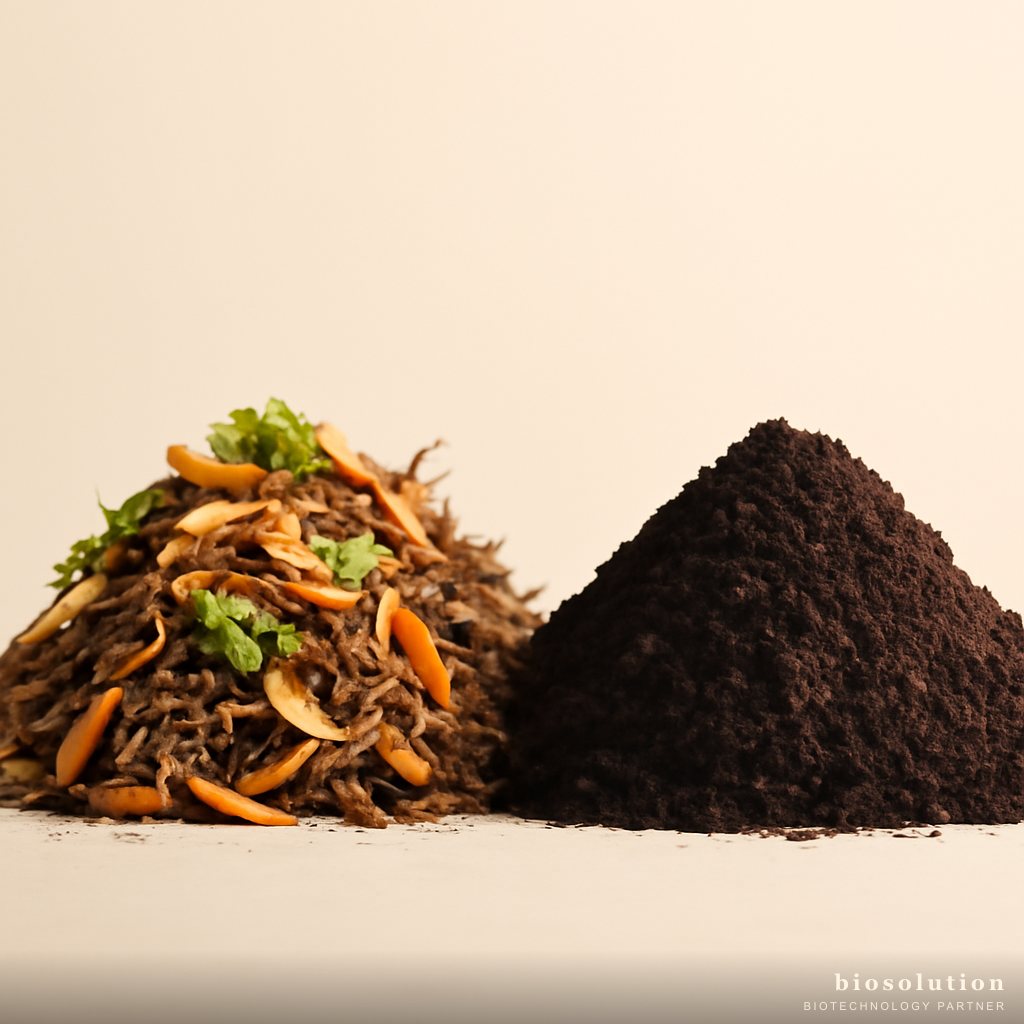
Economical Biofertilizer for Farmer Groups: 4 Application Formulas for Subsidy Programs
Economical biofertilizer is the right solution for farmer groups who want to increase land productivity without burdening the budget. With subsidy programs continuously rolled out by the government, the use of economical biofertilizer for farmer groups can reduce production costs while naturally improving soil fertility. This article provides a complete guide on how to apply the Economical Biofertilizer Formula from the Assistance Program—from dosage, frequency, to application timing—for optimal benefits.
Why is Economical Biofertilizer Important for Farmer Groups?
Farmer groups often face the challenge of marginal land that is nutrient-poor and prone to soil pathogens. Subsidized chemical fertilizers do help, but over-reliance can degrade soil quality in the long term. This is where economical biofertilizer plays a role. Products like Economical Biofertilizer Formula contain superior microorganisms that work synergistically: Bacillus subtilis as a PGPR and phosphate solubilizer, Azotobacter sp. as a non-symbiotic nitrogen fixer, and Trichoderma sp. as a biocontrol agent for soil pathogens. Together, they help provide nutrients, increase plant resistance, and reduce the need for chemical fertilizers by up to 30-50%.
Subsidy programs from the Ministry of Agriculture or local governments often require the use of environmentally friendly and economical agricultural inputs. Economical biofertilizer meets these criteria because it is affordable, easy to apply, and compatible with local compost. With proper socialization, farmer groups can adopt this technology independently.
Correct Dosage: 10 ml per Liter of Water
One of the advantages of economical biofertilizer is its simple and easy-to-remember dosage. For the Economical Biofertilizer Formula from the Assistance Program, the recommended dosage is 10 ml per liter of water. This measurement applies to both root drench and soil spray methods.
Why 10 ml/L? This concentration has been tested to provide an optimal microbial population (minimum 10⁸ CFU/ml) without causing overpopulation that could trigger competition among microbes. On marginal land with low organic matter content, this dosage is sufficient to initiate colonization of Bacillus subtilis and Azotobacter sp. in the rhizosphere. Meanwhile, Trichoderma sp. at this dosage is effective in suppressing the growth of pathogenic fungi such as Fusarium and Rhizoctonia.
Application tips:
- Use clean water (not well water with high chlorine content). If using tap water, let it sit overnight to allow chlorine to evaporate.
- Stir the solution until homogeneous before application.
- For 1 hectare of land (requiring 400-500 liters of solution), prepare 4-5 liters of product.
Application Frequency: Every 14 Days
The application frequency of economical biofertilizer does not need to be too frequent. Every 14 days during the plant growth period is sufficient. This interval allows microbes to multiply and form stable colonies in the soil.
Scientific explanation: Bacillus subtilis and Azotobacter sp. have a generation time of about 20-30 minutes under ideal conditions. Within 14 days, their population can peak and begin to decline due to nutrient limitations. Reapplication every two weeks ensures the population remains high, especially during critical plant phases (early vegetative and flowering).
Example application schedule for rice:
- 7 DAP (days after planting): first application
- 21 DAP: second application
- 35 DAP: third application
- 49 DAP: fourth application (if needed)
For secondary crops or vegetables, application can start from seeding or transplanting, and be repeated every 14 days until harvest.
Best Application Time: Morning or Evening
Microorganisms in biofertilizer are very sensitive to UV light and extreme temperatures. Therefore, the recommended application time is morning (before 09:00) or evening (after 15:00). Cooler soil temperature and higher humidity at these times support microbial survival.
Why not midday? Direct UV light can kill up to 90% of bacterial populations within 30 minutes. Soil temperatures above 40°C also inactivate Trichoderma sp. Morning or evening application minimizes this risk and gives microbes time to penetrate soil pores before maximum heat exposure.
Weather conditions: Avoid application during heavy rain as microbes will be washed away. If light rain, application can still be done, but preferably after the rain stops. Ideal soil moisture (field capacity) actually helps microbial movement.
Application Methods: Root Drench or Soil Spray
The Economical Biofertilizer Formula from the Assistance Program can be applied in two ways:
- Root drench: Pour the 10 ml/L solution onto the root zone of the plant. This method is most effective because microbes are placed directly in the rhizosphere. Suitable for plants in polybags, beds, or legowo row planting systems.
- Soil spray: Spray the solution onto the soil surface around the plants. This method is faster for large areas, but ensure even spray and no puddling.
Advantages of root drench:
- Direct contact with roots accelerates colonization.
- Reduces microbial loss due to wind or evaporation.
- More economical because the solution volume can be adjusted per plant.
For farmer groups with land >1 hectare, a combination of soil spray at the beginning of the season and root drench during the vegetative phase can be an efficient strategy.
Benefits for Subsidy Programs and Farmer Groups
Economical biofertilizer has a direct impact on cost savings and yield improvement. Based on data from several assisted farmer groups, the use of the Economical Biofertilizer Formula from the Assistance Program can:
- Reduce chemical fertilizer use by up to 50% without decreasing productivity.
- Increase crop yields by 15-20% on marginal land.
- Suppress root and wilt diseases thanks to Trichoderma sp.
Government subsidy programs, such as Subsidized Fertilizer or Village Funds, can be allocated for purchasing economical biofertilizer because of its relatively low price. One liter of product is enough for 100 liters of solution, equivalent to 0.25 hectares per application. With 4-5 applications per season, the cost per hectare is only around IDR 200,000-300,000 — much lower than chemical fertilizers.
Also read: Sustainable agriculture solutions for farmer groups and related article on biofertilizer formulation.
Conclusion
Economical biofertilizer for farmer groups is the answer to the need for cheap, effective, and environmentally friendly agricultural inputs. By following the correct application guidelines — dosage 10 ml/L, frequency 14 days, morning/evening timing, and root drench or soil spray method — farmer groups can maximize the benefits of subsidy programs. The Economical Biofertilizer Formula from the Assistance Program by Biosolution is ready to support national food security through applied microbiology technology.
For further consultation on biofertilizer application on your land, contact the Biosolution team via WhatsApp. We are ready to assist farmer groups and cooperatives in the transition to sustainable agriculture.
FAQ
Is economical biofertilizer safe to mix with chemical fertilizers?
Yes, economical biofertilizer is compatible with chemical fertilizers such as urea, SP-36, and KCl, as long as they are not mixed directly in one container. It is best to apply chemical fertilizers 2-3 days before or after biofertilizer application to avoid osmotic effects that can kill microbes. For optimal results, use chemical fertilizers at lower doses (50% of recommendation) and combine with organic fertilizer.
How long can economical biofertilizer be stored?
The product in sealed packaging can be stored for up to 12 months at room temperature (25-30°C), away from direct sunlight. Once opened, it should be used within 1 month. Store in a cool, dry place. Do not freeze or heat the product as it can damage microbial cells.
Is economical biofertilizer suitable for all types of plants?
Yes, economical biofertilizer is universal because it contains microbes that work generally in the rhizosphere. It is very suitable for rice, corn, soybeans, vegetables, and horticultural crops. For fruit plants, regular application every 14 days helps maintain soil fertility and reduce root pathogen attacks.
How to know if biofertilizer is still active?
Simple method: take 10 ml of product, mix with 100 ml of sugar water (5% sugar), store in a warm place (30°C) for 24 hours. If gas bubbles and a sour aroma appear, the microbes are still active. Alternatively, test on a handful of moist soil: if after 3 days the soil emits a characteristic forest soil smell, it indicates high microbial activity.
Are there any side effects of using economical biofertilizer?
There are no negative side effects for plants, soil, or humans. Economical biofertilizer actually improves soil structure and increases microbial biodiversity. However, at the beginning of application, there may be a decrease in native microbial populations due to competition, but it will stabilize within 2-3 weeks. Ensure the dosage follows recommendations to avoid waste.