Effective Application Method for Pond Bottom Sludge Degrader Formula for Intensive Farmers
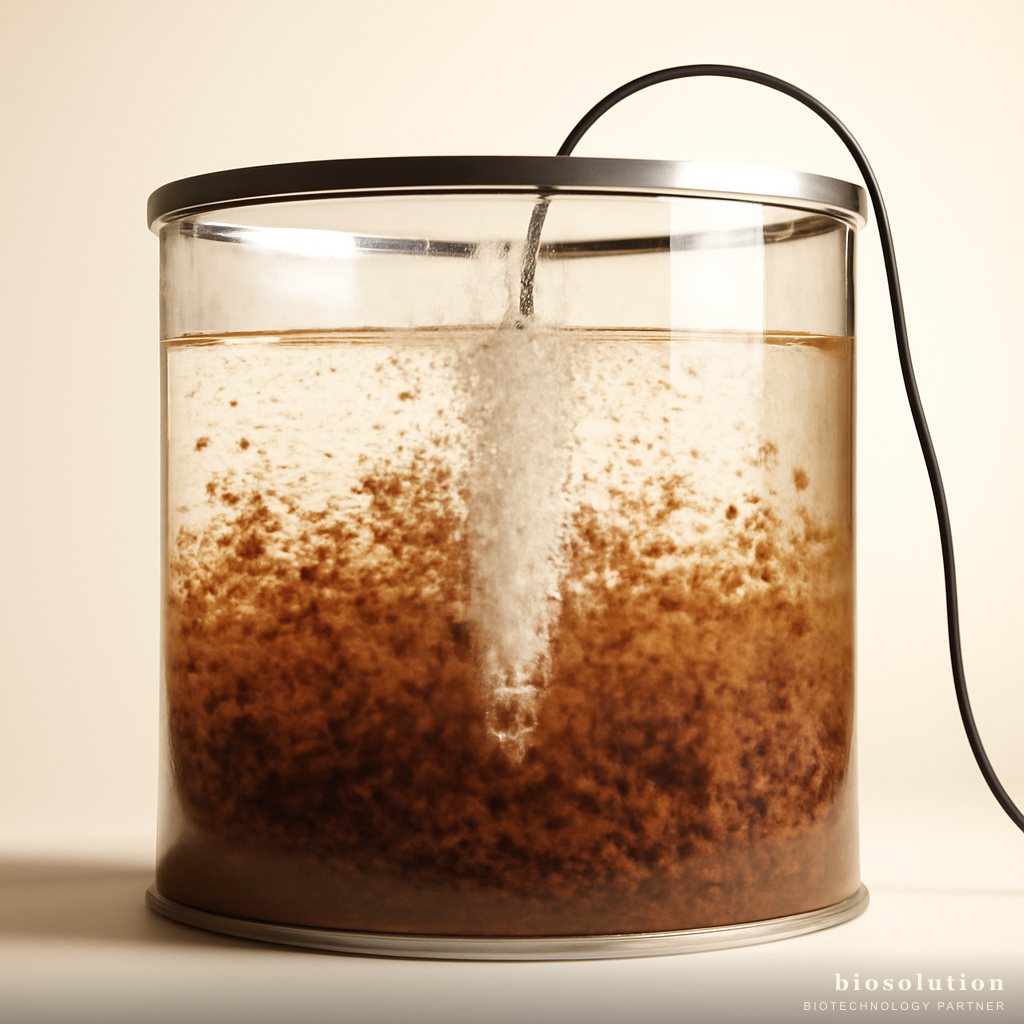
Organic sludge settling at the pond bottom is a classic problem for intensive farmers. Accumulation of feed residue, feces, and dead plankton forms a sludge layer that triggers ammonia increase, degrades water quality, and becomes a pathogen source. Without proper treatment, natural pond bottom sludge degradation is very slow, forcing farmers to periodically drain ponds. However, with agricultural biotechnology from Biosolution, you can degrade pond bottom sludge without draining. This article will technically guide you on how to apply the Pond Bottom Sludge Degrader Formula, from dosage per hectare, frequency, to optimal application time.
Why Pond Bottom Sludge Needs to Be Degraded Biologically?
Pond bottom sludge consists of complex organic materials that are difficult to decompose naturally. If left unchecked, this layer becomes anaerobic and produces toxic compounds such as ammonia (NH₃), hydrogen sulfide (H₂S), and methane. This condition not only suppresses shrimp or fish growth but also increases disease risk. Pond draining is an instant solution but requires high costs, labor, and time that disrupts the production cycle.
A biological approach using probiotic microorganisms is a more efficient choice. The Pond Bottom Sludge Degrader Formula contains Bacillus subtilis and Bacillus licheniformis, superior decomposer bacteria. These two strains produce extracellular enzymes such as protease, amylase, lipase, and cellulase that break down proteins, carbohydrates, fats, and fibers in sludge. These enzymes accelerate sludge decomposition 3-5 times faster than natural degradation. As a result, sludge is broken down into simple compounds that can be utilized by plankton as nutrients, making the pond nutrient cycle healthier.
Composition of Pond Bottom Sludge Degrader Formula: Synergy of Bacteria and Enzymes
The advantage of the Pond Bottom Sludge Degrader Formula lies in the synergistic formulation of probiotic bacteria and extracellular enzymes. Here are the details of its composition:
- Bacillus subtilis: This Gram-positive bacterium is known as a highly effective organic decomposer. B. subtilis can survive in extreme environmental conditions, including low oxygen levels and fluctuating pH at the pond bottom. This bacterium produces various enzymes that degrade complex organic compounds and produces antimicrobial compounds that suppress pathogenic bacteria growth.
- Bacillus licheniformis: This strain excels in producing large amounts of extracellular enzymes, especially protease and amylase. B. licheniformis also has the ability to form spores, making it resistant to dry conditions or high temperatures during storage. Synergy with B. subtilis significantly accelerates the sludge decomposition process.
- Extracellular enzymes: A combination of protease, amylase, lipase, and cellulase enzymes stabilized in tablet form. These enzymes directly work to break down large organic molecules into smaller molecules that are more easily absorbed by bacteria and plankton.
With this composition, each tablet can evenly degrade organic sludge within a certain radius. The recommended dosage is 1 tablet per 50 m² of pond bottom area, equivalent to 200 tablets per hectare for ponds with standard depth.
Correct Dosage of Pond Bottom Sludge Degrader Formula per Hectare
Determining the correct dosage is key to successful sludge degradation. Based on field trial results and Biosolution technical recommendations, the standard dosage for intensive ponds is:
- Base dosage: 1 tablet per 50 m² of pond bottom area.
- Conversion per hectare: 10,000 m² / 50 m² = 200 tablets per hectare.
- Initial dosage (first treatment): For ponds with thick sludge layer (>10 cm), the dosage can be increased to 1 tablet per 40 m² (250 tablets/ha) for the first application.
- Maintenance dosage: After sludge is degraded, the dosage returns to 1 tablet per 50 m² every 14 days.
It is important to consider the actual pond bottom area, not the water surface area. If the pond is irregularly shaped, measure the average length and width, then multiply to get the bottom area. Too low a dosage will slow decomposition, while excessive dosage provides no additional benefit and wastes product.
Optimal Application Frequency: Every 14 Days
The application frequency of the Pond Bottom Sludge Degrader Formula is every 14 days. This interval is chosen based on bacterial growth cycles and the rate of organic sludge accumulation. Here is the scientific explanation:
- Bacterial adaptation time: After application, Bacillus sp. takes about 2-3 days to adapt and start producing enzymes. Peak decomposition activity occurs on days 5 to 10.
- Sludge accumulation rate: In intensive ponds with high stocking density, organic sludge increases by about 1-2 cm per week. With application every 14 days, decomposition balances the accumulation rate so the sludge layer does not thicken.
- Enzyme effectiveness: Extracellular enzymes released by bacteria have a half-life of about 7-10 days in the pond environment. Reapplication every 14 days ensures optimal enzyme availability.
If water quality shows increased ammonia or high turbidity, frequency can be accelerated to every 10 days until conditions normalize. Conversely, in ponds with low organic load, frequency can be extended to 21 days.
Best Application Time: Morning
The recommended application time is in the morning, between 06:00 and 09:00. Technical reasons include:
- Dissolved oxygen (DO) levels: In the morning, oxygen levels at the pond bottom are still relatively high after phytoplankton photosynthesis begins. Bacillus sp. is facultatively anaerobic, but enzymatic activity is more optimal under aerobic conditions.
- Water temperature: Morning water temperature ranges from 27-30°C, which is the optimal range for Bacillus growth (25-35°C). Application during midday when temperatures are too high can cause stress to the bacteria.
- Tablet distribution: Tablets will slowly sink and begin to dissolve at the pond bottom. In the morning, water currents are usually calmer, so tablets are not carried away and remain in the target area.
- Synergy with feeding: Application should be done 1-2 hours before the first feeding. This gives bacteria time to become active before feed adds organic load.
Step-by-Step Application Method
Here is a practical guide to applying the Pond Bottom Sludge Degrader Formula:
- Calculate tablet requirement: Measure the pond bottom area (length x width). Divide by 50 to get the number of tablets per application. Example: pond 40 m x 25 m = 1,000 m², then tablets needed = 1,000 / 50 = 20 tablets.
- Prepare a boat or spreading tool: For large ponds, use a small boat or manual spreader. Ensure tablets are not broken before spreading.
- Spread tablets evenly: Throw tablets over the entire pond surface with a distance between points of about 7-8 meters (equivalent to the working radius of one tablet). Avoid piling tablets in one spot.
- Apply in the morning: Do this between 06:00-09:00. If the weather is cloudy or rainy, postpone until sunny because bacteria need indirect sunlight for optimal activity.
- Repeat every 14 days: Record the application date and schedule regularly. Monitor water quality changes (ammonia, nitrite, pH) as indicators of success.
Measurable Benefits: Ammonia Decreases, Sludge Degraded, Costs Saved
Consistent application of the Pond Bottom Sludge Degrader Formula provides real benefits for farmers:
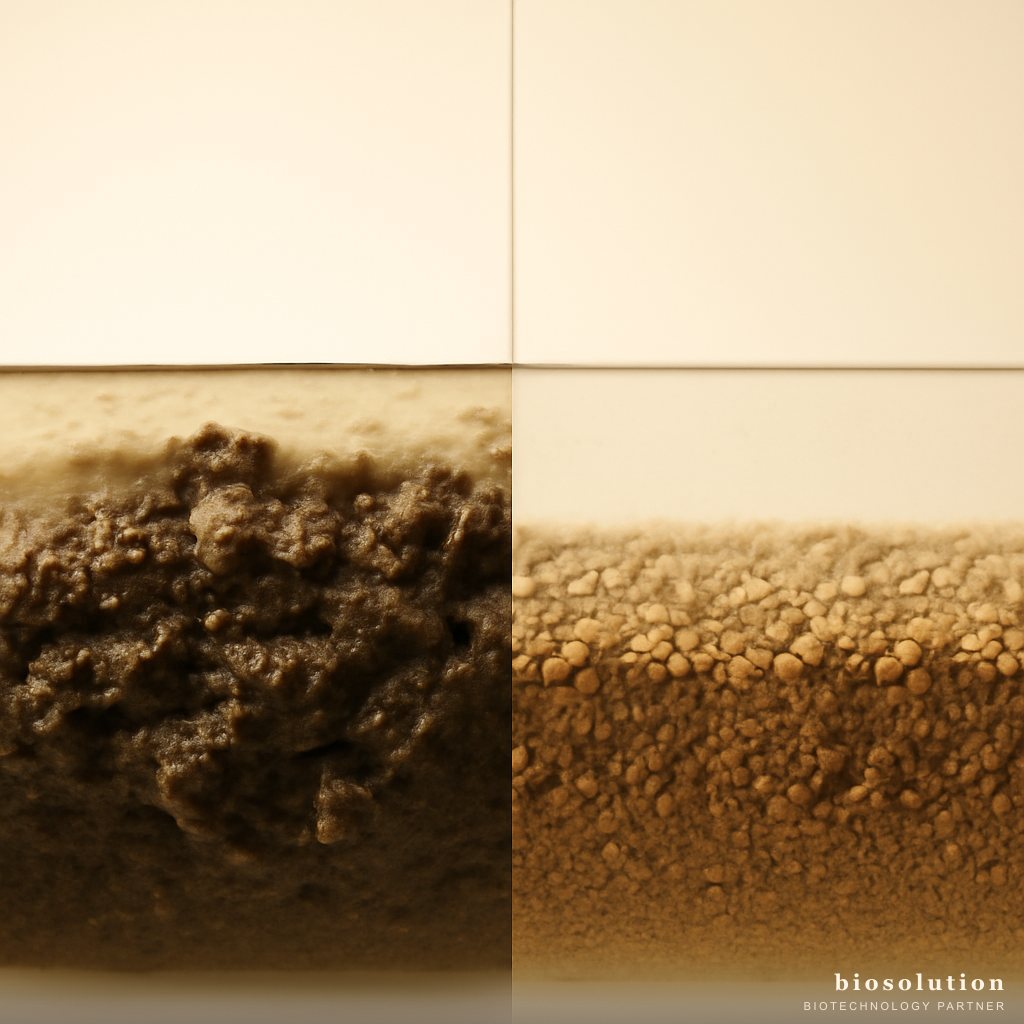
- Pond bottom sludge degraded: Within 2-3 application cycles (28-42 days), the sludge layer is reduced by 40-60%. The pond bottom becomes harder and not slippery.
- Ammonia significantly decreases: Total ammonia nitrogen (TAN) can decrease by 30-50% within the first 2 weeks, as bacteria convert ammonia into biomass and safer nitrogen compounds.
- No need to drain ponds: With biological degradation, farmers can extend water usage up to one full cycle without draining. This saves water costs, pump electricity, and labor.
- Operational cost savings: The cost of purchasing tablets is much lower than draining costs (pumping, sludge disposal, refilling water). Estimated savings reach 30-50% of water management operational costs.
Conclusion
Managing pond bottom sludge biologically using Biosolution's Pond Bottom Sludge Degrader Formula is a smart and environmentally friendly solution. By following the dosage guide of 1 tablet per 50 m² (200 tablets/ha), frequency every 14 days, and morning application, farmers can degrade organic sludge without draining, reduce ammonia, and save operational costs. The content of Bacillus subtilis, Bacillus licheniformis, and extracellular enzymes works synergistically to break down sludge effectively. Apply regularly and monitor water quality for optimal results. For further consultation or product orders, contact the Biosolution team via WhatsApp or visit the product page Pond Bottom Sludge Degrader Formula.