Foliar Biofertilizer: 7 Common Mistakes When Using Liquid Organic Fertilizer in the Vegetative Phase for Greener and Thicker Leaves
Foliar biofertilizer has become a favorite among leafy vegetable farmers. When plants enter the vegetative phase, the need for nutrients and growth hormones increases dramatically. The right foliar biofertilizer not only provides nutrients but also triggers the production of natural hormones such as cytokinins and auxins. However, many farmers still make application errors that lead to suboptimal results. This article discusses the 7 most common mistakes when using liquid organic fertilizer (POC) in the vegetative phase for greener and thicker leaves, complete with solutions based on Biosolution products.
1. Wrong Application Time: Morning vs Afternoon
The first mistake is improper spraying time. Many farmers spray foliar biofertilizer during the hot midday sun, even though high temperatures and UV rays can damage beneficial microbes. Microbes such as Lactobacillus acidophilus and PGPR (Plant Growth-Promoting Rhizobacteria) consortia are very sensitive to UV radiation.
Solution: Foliar application should be done in the morning before 10 AM. At that time, leaf stomata are wide open, temperatures are not yet too high, and humidity is still good. Products like Leaf Growth POC Formula from Biosolution are designed for morning application at a dose of 3–5 ml per liter of water every 7–10 days. The PGPR consortium inside will work optimally when environmental conditions are supportive.
2. Excessive Dosage: More Is Not Always Better
The principle "more is definitely good" often backfires. Excessive doses of foliar biofertilizer can cause phytotoxicity, leaf burn, or abnormal growth. High concentrations of microbes and organic compounds can disrupt the osmotic balance of leaf cells.
Solution: Follow the recommended dosage. For vegetative phase POC, 3–5 ml per liter of water is sufficient. Biosolution recommends regular application at the correct dose to stimulate the vegetative phase uniformly. If you want to increase effectiveness, combine it with an appropriate organic base fertilizer, not by increasing the spray dose.
3. Ignoring Water Quality
Water with high chlorine content or extreme pH can kill the microbes in foliar biofertilizer. Many farmers use well water containing iron or chlorine without checking its quality.
Solution: Use clean water with neutral pH (6–7). It is recommended to let the water sit overnight to allow chlorine to evaporate. For optimal results, mix the foliar biofertilizer with water and let it sit for 15–30 minutes before spraying. This gives the microbes time to adapt.
4. Not Considering Plant Condition
Foliar biofertilizer is not a cure-all. Plants stressed by drought, pest attacks, or severe deficiencies need to have the main problem addressed first. Applying POC to wilted plants can actually worsen the condition.
Solution: Ensure plants are adequately hydrated and free from severe stress. If deficiency symptoms are present, applying foliar biofertilizer as a soil drench can be more effective because PGPR works directly in the root zone. Read our article on soil drench application techniques for a complete guide.
5. Careless Mixing with Chemical Fertilizers
Mixing foliar biofertilizer with high-dose chemical fertilizers, especially those containing chlorides or sulfates, can kill microbes. Ionic interactions can also precipitate organic compounds, making them unavailable for absorption.
Solution: If chemical fertilizers are necessary, apply them separately with a gap of at least 2–3 days. Biosolution recommends using Leaf Growth POC Formula as an organic supplement that is safe to combine with organic base fertilizers. Avoid direct mixing in the spray tank.
6. Inconsistent Application Frequency
Foliar biofertilizer works gradually. If applied only once or infrequently, the effect is not optimal. Microbes need time to colonize the leaf surface and produce hormones.
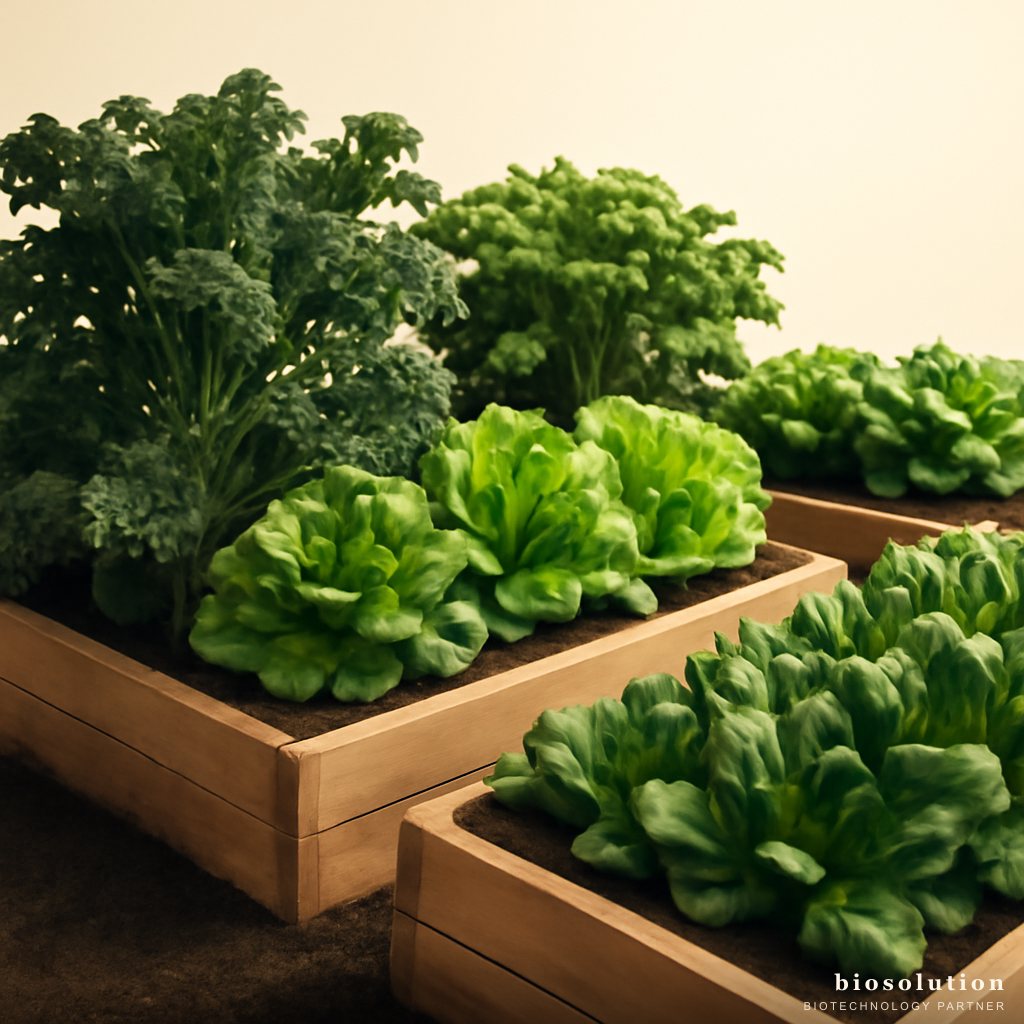
Solution: Apply regularly every 7–10 days during the vegetative phase. For leafy vegetables such as water spinach, spinach, or mustard greens, start application from 7 days after planting until just before harvest. Consistency is key to achieving greener and thicker leaves.
7. Not Considering Weather Conditions
Heavy rain after spraying will wash off the foliar biofertilizer from the leaf surface. Strong winds also cause drift and reduce efficiency.
Solution: Monitor the weather forecast. Ideal application is when the weather is clear and there is no rain for at least 4–6 hours after spraying. If rain falls within 2 hours, repeat the application on the next scheduled day. Biosolution products contain seaweed extract that helps natural adhesion to leaves, making them more resistant to light rain.
Conclusion
Foliar biofertilizer is a smart solution to boost the vegetative phase of leafy vegetables. By avoiding the 7 mistakes above, you can maximize the benefits of vegetative phase POC for greener and thicker leaves. The key points: correct timing, proper dosage, clean water, and consistency. The Leaf Growth POC Formula from Biosolution, with its PGPR consortium, seaweed extract, and humic acid, is designed to meet these needs. Want further consultation? Contact our team via WhatsApp for recommendations specific to your land.
FAQ
1. Can foliar biofertilizer be used for all types of vegetables?
Yes, foliar biofertilizer is suitable for leafy vegetables such as mustard greens, spinach, water spinach, lettuce, and also fruit vegetables like chili and tomatoes during the vegetative phase. However, dosage and frequency need to be adjusted according to the plant type. For leafy vegetables, more frequent application (every 7 days) is recommended.
2. How long does it take to see the effect of foliar biofertilizer?
Initial effects are usually visible within 3–7 days after application, indicated by greener and fresher leaves. An increase in harvest weight is only seen after 2–3 regular applications. Consistency is very important.
3. Can foliar biofertilizer be mixed with pesticides?
It is best not to mix directly, especially with chemical pesticides. If simultaneous application is necessary, use organic or botanical pesticides and conduct a compatibility test first. Biosolution recommends a gap of 2–3 days between biofertilizer and pesticide applications.
4. Is foliar biofertilizer safe for organic certification?
Yes, Biosolution products such as Leaf Growth POC Formula use natural organic ingredients and non-genetically engineered microbes. They are very safe for organic farming programs and can help with certification because they leave no chemical residues.
5. How should foliar biofertilizer be stored properly?
Store in a cool, shaded place at 15–25°C, away from direct sunlight. Do not freeze. Keep tightly closed after use. With proper storage, the product can last up to 12 months.