Foliar Biofertilizer: Case Study of POC Formula for Vegetative Phase for Greener and Thicker Leaves
Leaf vegetable farmers often face problems of pale, thin leaves and slow growth during the vegetative phase. Yet this phase is crucial for determining harvest quality. In Java, a group of farmers successfully overcame these issues by switching to a foliar biofertilizer based on Plant Growth Promoting Rhizobacteria (PGPR) and seaweed extract. The Formula POC Pertumbuhan Daun from Biosolution became the solution that transformed their fields. This article presents a real case study, complete with the scientific mechanisms behind the microbial technology and natural compounds that make leaves greener and thicker.
Why the Vegetative Phase Determines Leaf Quality?
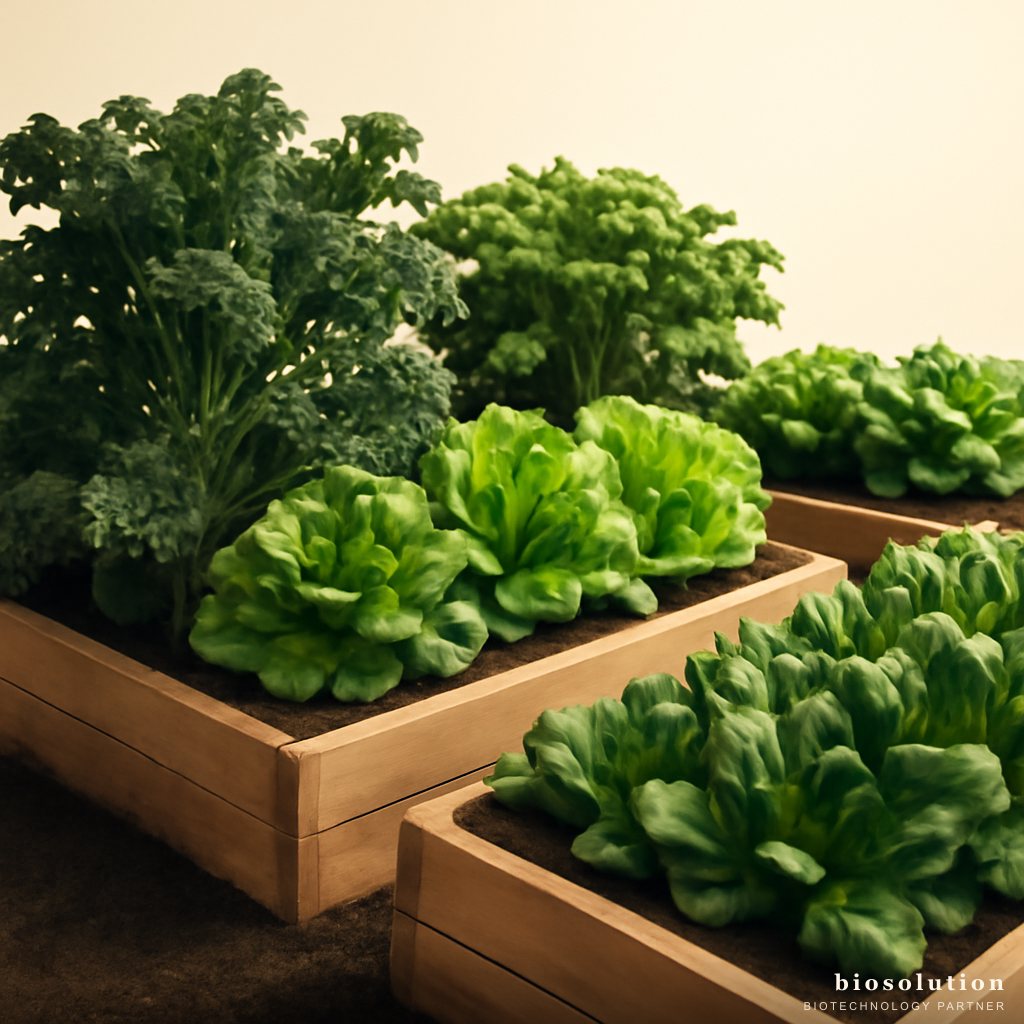
The vegetative phase is the period of root, stem, and leaf growth. For leafy vegetables like mustard greens, water spinach, spinach, and lettuce, harvest quality depends heavily on leaf area and thickness. Wide, thick leaves indicate optimal photosynthesis, thus storing more nutrients. However, many factors hinder this phase: nitrogen deficiency, water stress, or low soil microbial activity.
Synthetic chemical fertilizers respond quickly, but their effects are short-term and can damage soil structure. In contrast, foliar biofertilizers work biologically, improving the rhizosphere and providing natural growth hormones. Formula POC Pertumbuhan Daun contains a consortium of PGPR that produce phytohormones such as auxins, gibberellins, and cytokinins. Auxins stimulate leaf cell elongation, gibberellins promote cell division, and cytokinins delay leaf senescence. The result: leaves grow wider, greener, and do not yellow quickly.
Case Study: Leaf Vegetable Farmers in Java
Mr. Budi, a mustard green farmer on the slopes of Mount Merapi, complained that his mustard greens were curly and pale despite urea fertilization. Soil analysis showed low pH and a minimal population of phosphate-solubilizing bacteria. He then tried Formula POC Pertumbuhan Daun at a dose of 4 ml per liter of water, sprayed every 7 days in the morning.
Application and Results
- Weeks 1-2: Leaves began to show a darker green color, leaf blades widened.
- Weeks 3-4: Leaf thickness increased, stems became sturdier, and growth was uniform.
- Harvest: Weight per plant increased by 20% compared to control, leaves did not wilt easily after harvest.
Mr. Budi saved up to 40% on chemical fertilizer costs because the PGPR in Formula POC can solubilize phosphate and potassium already present in the soil. Additionally, seaweed extract provides natural cytokinins that accelerate leaf cell division.
Scientific Mechanism of Formula POC Pertumbuhan Daun
Formula POC Pertumbuhan Daun combines three synergistic main components:
PGPR Consortium
PGPR (Pseudomonas sp., Bacillus sp., Azospirillum sp.) produce growth hormones and phosphatase enzymes. They also suppress root pathogens through competition and siderophore production. With healthy roots, nutrient uptake increases, making leaves greener.
Seaweed Extract
Rich in cytokinins (zeatin), auxins, and micronutrients such as Zn, Mn, Fe. Cytokinins trigger leaf cell division, while auxins stimulate cell elongation. This combination makes leaves wider and thicker.
Humic and Fulvic Acids
Act as natural chelators, increasing micronutrient availability. Humic acid also improves soil structure, enhances cation exchange capacity, and stimulates lateral root growth. More roots absorb water and nutrients, supporting optimal leaf growth.
Application Guide: The Right Way to Boost the Vegetative Phase
For maximum results, follow this application guide:
- Method: Spray evenly over the entire leaf surface (top and bottom) until wet. Can also be drenched into the root zone.
- Dosage: 3–5 ml per liter of water. For 1 hectare, about 200–300 liters of spray solution is needed.
- Frequency: Every 7–10 days, starting from 7 days after planting.
- Time: Morning before 10 AM or afternoon after 3 PM. Avoid application during intense heat or rain.
- Tips: Mix with an organic sticker (e.g., 1 ml organic liquid soap per liter) to improve adhesion.
Comparison with Chemical Foliar Fertilizers
| Aspect | Chemical Fertilizer | Formula POC Pertumbuhan Daun |
|---|---|---|
| Nutrient source | Inorganic N, P, K | PGPR + natural hormones + micronutrients |
| Side effects | Soil acidification, pest resistance | Improves soil, environmentally safe |
| Post-harvest shelf life | Wilt faster | Stay fresher longer (cytokinins) |
| Long-term cost | Expensive due to repeated applications | More efficient, reduces chemical fertilizers |
Economic and Environmental Benefits
Using foliar biofertilizer not only improves harvest quality but also reduces production costs. Based on trial data, fertilization efficiency increased by 30% because nutrients are more available. Additionally, chemical residues decrease, making vegetable products safer for consumption and potentially eligible for organic certification.
Farmers in Java who switched to Formula POC reported a reduction in flower/fruit drop by up to 30% (although for leafy vegetables drop is rare, for fruit crops like chili this is significant). Post-harvest shelf life also increased by 2-3 days due to cytokinin content delaying senescence.
Conclusion
Foliar biofertilizers like Formula POC Pertumbuhan Daun offer a science-based solution to boost the vegetative phase naturally. Through a PGPR consortium, seaweed extract, and humic acid, leaves become greener, thicker, and harvests increase. The case study of Javanese farmers proves its effectiveness. If you want to optimize leafy vegetable growth, try Formula POC Pertumbuhan Daun. For further consultation, contact the Biosolution team via WhatsApp.
This article is supported by research from FAO and Universitas Gadjah Mada.