Foliar Biofertilizer: Vegetative POC Application Schedule for Greener, Thicker Leaves
For leafy vegetable farmers, the vegetative phase is a crucial period that determines the quantity and quality of the harvest. Green, wide, and thick leaves are not only visually appealing but also indicate healthy and productive plants. However, achieving optimal growth is often hindered by unbalanced nutrient availability or environmental stress. This is where the role of foliar biofertilizer becomes very important. The Foliar Growth POC Formula from Biosolution is a microbiology-based and natural nutrition solution specifically designed for the vegetative phase. This article presents the correct application schedule so you can maximize the potential of your leafy vegetable plants.
Why Does the Vegetative Phase Require a Special Foliar Biofertilizer?
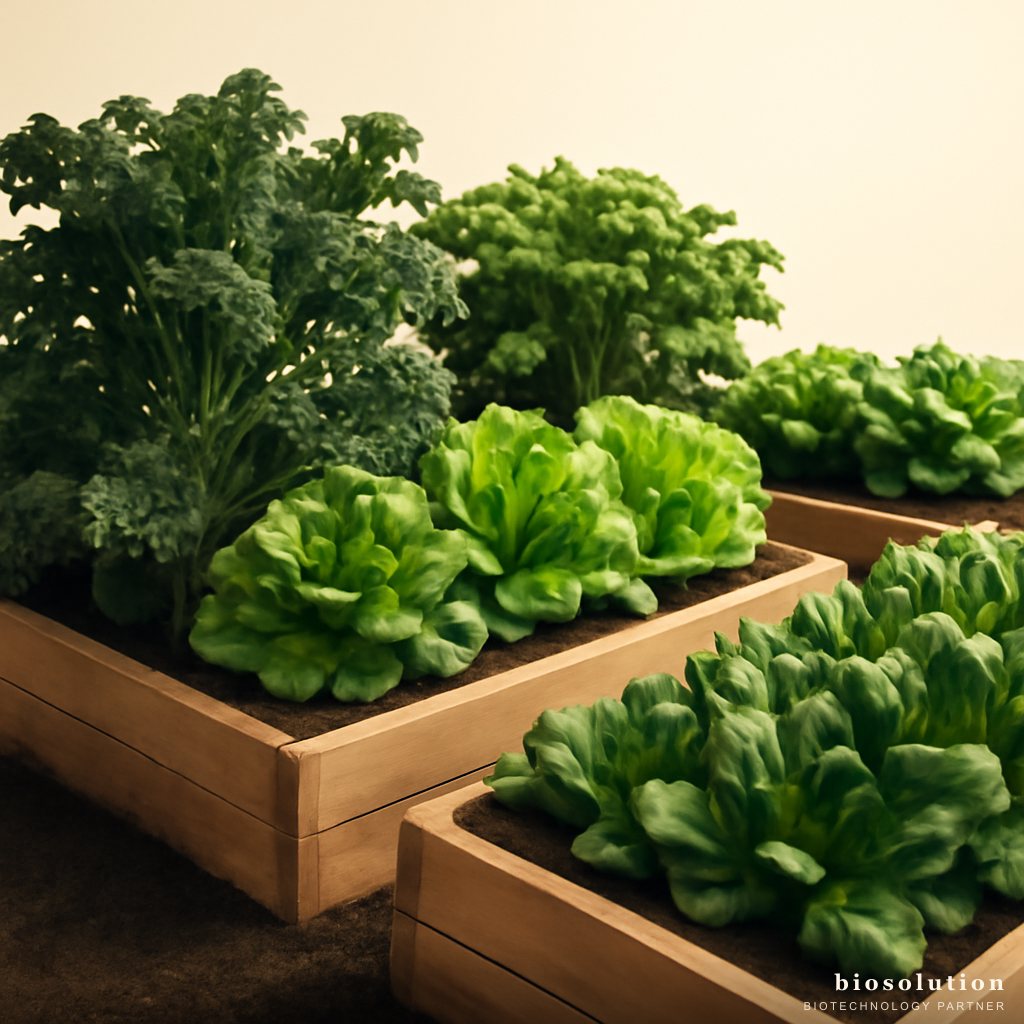
During the vegetative phase, leafy vegetable plants such as mustard greens, spinach, water spinach, lettuce, and bok choy require high nitrogen intake for chlorophyll and protein formation. However, excessive chemical fertilization can lead to nitrate accumulation, soil degradation, and pest susceptibility. Foliar biofertilizer offers a more balanced approach. The Foliar Growth POC Formula contains a consortium of Plant Growth-Promoting Rhizobacteria (PGPR) that stimulate the production of growth hormones such as auxins and gibberellins, and increase micronutrient availability through nitrogen fixation and phosphate solubilization. Combined with seaweed extract rich in natural cytokinins and humic & fulvic acids as nutrient carriers, this product works synergistically to accelerate leaf cell division, increase leaf surface area, and thicken the mesophyll tissue. The result: leaves that are naturally greener, wider, and thicker.
Application Schedule of the Foliar Growth POC Formula per Growth Phase
To be effective, the application of foliar biofertilizer must be adjusted to the plant growth stages. Here is the recommended schedule for leafy vegetables:
1. Land and Seed Preparation (D-7 to D-0)
Before planting, prepare the growing media or land by applying the Foliar Growth POC Formula as a soil drench. Mix 5 ml of product per liter of water, then water the beds or polybags. This helps activate PGPR microbes in the rhizosphere and provides initial nutrients. For seeds, soak them in a solution of 3 ml per liter of water for 15 minutes before sowing to accelerate germination.
2. Seedling Stage to 7 DAP (Days After Planting)
At 0–7 DAP, plants are still vulnerable and require light nutrition. Spray a solution of 3 ml per liter of water every 7 days. Focus on the leaf and stem areas. PGPR begins to stimulate fibrous root development, while seaweed extract encourages the formation of sturdy first leaves. Avoid spraying during intense sunlight; do it in the morning before 10 AM.
3. Early Vegetative Phase (7–21 DAP)
This is the critical period for leaf growth. Increase the dosage to 5 ml per liter of water, foliar application every 7 days. Leaves will absorb nutrients faster through stomata. Observe development: leaves will appear darker green and wider within 3–5 days after spraying. If chlorosis symptoms appear, increase application frequency to every 5 days. Also, drench the root area with the same dosage to strengthen the root system.
4. Late Vegetative Phase (21–35 DAP, Approaching Harvest)
At this stage, plants begin to form mature leaves. The goal is to maintain vigor and prevent premature aging. Continue application at 5 ml per liter of water every 7–10 days. Seaweed extract rich in cytokinins helps delay senescence, keeping leaves fresh and green longer. Stop application 3–5 days before harvest to avoid residues. Ensure no water pooling on leaf surfaces to prevent fungal diseases.
5. Post-Harvest (Crop Rotation)
After harvest, do not discard plant residues. Spray a solution of 5 ml per liter of water onto remaining roots and straw to accelerate decomposition and enrich the soil. PGPR will continue to work improving soil structure for the next growing season.
Technical Advantages of the Foliar Growth POC Formula
This product has three superior components that distinguish it from other foliar biofertilizers:
- PGPR Consortium: Consists of several bacterial strains such as Bacillus subtilis and Pseudomonas fluorescens that produce IAA hormone, solubilize phosphate, and fix nitrogen. Trial data shows an increase in yield per plant of +15–25% and a reduction in flower/fruit drop by −30% (although for leafy vegetables, drop is rare, this indicator shows hormone effectiveness).
- Seaweed Extract: Contains natural cytokinins (zeatin) and auxins, as well as micronutrients like iron, zinc, and manganese essential for chlorophyll synthesis. This is what makes leaves quickly green and thick.
- Humic & Fulvic Acids: Act as chelating agents that increase nutrient uptake, while also stimulating lateral root development. Healthy roots = lush leaves.
With regular application, this product also helps reduce chemical N fertilizer use by up to 30% because PGPR already provides biological nitrogen.
Proper Application Method: Foliar Spray vs. Soil Drench
Although this product can be applied in two ways, for leafy vegetables, foliar spray is more recommended as it directly targets the leaves. Some tips:
- Use a pressurized sprayer for fine, even droplets.
- Spray from the underside of leaves upward to reach more stomata on the lower surface.
- Mix with a non-ionic surfactant if water is hard.
- Do not spray when temperature >30°C or humidity <60%.
- Store leftover solution for no more than 24 hours due to active microbes.
For soil drench, ensure the soil is moist so the solution penetrates optimally. Drench dosage is the same as foliar, but with more volume until the soil is saturated.
Case Study: Increased Productivity of Mustard Greens in Paddy Fields
In a trial in rainfed paddy fields in West Java, application of the Foliar Growth POC Formula every 7 days on caisim mustard greens showed:
- Fresh weight per plant increased by 22% compared to control (standard chemical fertilizer).
- Number of leaves per plant: 12 leaves vs. 9 leaves (control).
- Leaf color greener with SPAD chlorophyll index 38 vs. 32.
- Harvest time 3–5 days earlier.
These results prove that foliar biofertilizer is not only environmentally friendly but also effective in increasing productivity.
Conclusion
Foliar biofertilizer such as the Foliar Growth POC Formula is a smart solution for leafy vegetable farmers who want optimal yields naturally. By following the application schedule per growth phase—from seedling to pre-harvest—you can ensure plants receive the right nutrition and hormonal stimulation. Leaves become greener, wider, thicker, and harvest is faster. For further consultation on specific dosages according to your vegetable type, contact the Biosolution team via WhatsApp. Also see the product Foliar Growth POC Formula for more detailed information.
FAQ
1. What is foliar biofertilizer? Foliar biofertilizer is a liquid organic fertilizer containing beneficial microbes (such as PGPR) and natural nutrients applied to plant leaves. Its function is to stimulate vegetative growth, increase chlorophyll, and thicken leaves without synthetic chemicals. Products like the Foliar Growth POC Formula from Biosolution are examples of effective foliar biofertilizers for leafy vegetables.
2. When is the best time to apply foliar biofertilizer? The best time is in the morning before 10 AM or in the afternoon after 4 PM, when leaf stomata are wide open. Avoid application during rain or direct sunlight. For leafy vegetables, application every 7–10 days during the vegetative phase gives maximum results.
3. Is foliar biofertilizer safe for vegetables consumed raw? Yes, very safe. The Foliar Growth POC Formula is made from organic materials and natural microbes that do not leave harmful residues. In fact, this product helps reduce nitrate residues from chemical fertilizers. However, still wash vegetables before consumption as a standard procedure.
4. Can foliar biofertilizer be mixed with chemical pesticides? It is best not to mix them directly because chemical pesticides can kill PGPR microbes. If pesticide application is necessary, allow a gap of at least 2–3 days after or before biofertilizer application. Alternatively, use more environmentally friendly botanical pesticides.
5. What is the correct dosage for leafy vegetables? The recommended dosage is 3–5 ml per liter of water. Use 3 ml for seedlings, 5 ml for mature plants. Frequency every 7–10 days. If plants appear nutrient deficient, it can be increased to every 5 days, but do not exceed 5 ml/liter to avoid waste.