Granular Biofertilizer for Large Areas: 7 Common Mistakes and Solutions
Granular biofertilizer for large areas has become a top choice for modern plantations that rely on efficiency and effectiveness. With the ability to be applied using spreader machines, granular biofertilizer enables even distribution of beneficial microbes across very large areas. However, many farmers and plantation managers still make mistakes in its use, so the potential for increased crop yields is not achieved. This article discusses 7 common mistakes when using granular biofertilizer for large areas and the right solutions based on Biosolution product data.
1. Not Understanding the Microbial Composition in the Granules
The first mistake is assuming all granular biofertilizers are the same. In fact, each product has a different microbial composition and is intended for specific functions. For example, the Granular Biofertilizer Formula for Large Areas from Biosolution contains five superior strains: Rhizobium sp., Bacillus subtilis, Azospirillum sp., Pseudomonas fluorescens, and Trichoderma sp..
Rhizobium sp. acts as a nitrogen fixer in legumes and pulses, while Azospirillum sp. fixes N₂ associatively for non-legume plants. Bacillus subtilis solubilizes phosphorus and controls soil pathogens, Pseudomonas fluorescens is antagonistic to soil-borne pathogens, and Trichoderma sp. controls soil fungi. Without understanding the role of each, application becomes inaccurate.
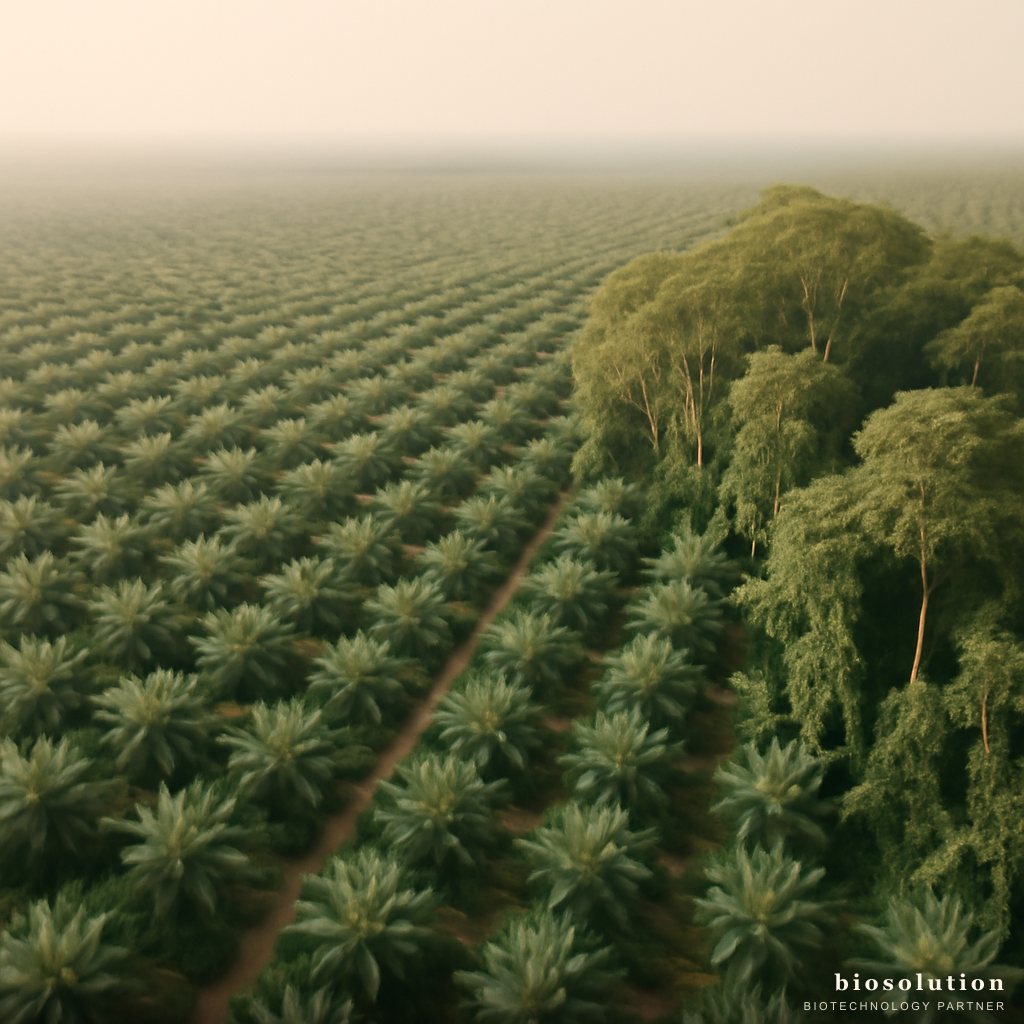
Solution: Choose a granular biofertilizer that matches the plant type and land needs. For oil palm plantations, for example, dominance of Azospirillum sp. and Bacillus subtilis is very beneficial as it helps provide nitrogen and phosphorus.
2. Incorrect Dosage: Too Low or Too High
The second mistake is using a dosage outside the recommendation. Some plantations use too low a dosage due to cost concerns, so the microbial population is insufficient to provide a significant effect. Conversely, some use excessive dosage assuming more is better, even though it can cause competition among microbes or waste.
Based on Biosolution product data, the recommended dosage is 100–250 kg per hectare, depending on plant type and soil conditions. On low-fertility land, a dosage of 250 kg/ha is more recommended. Application is done 1–2 times per growing season, during tillage or at the start of the rainy season.
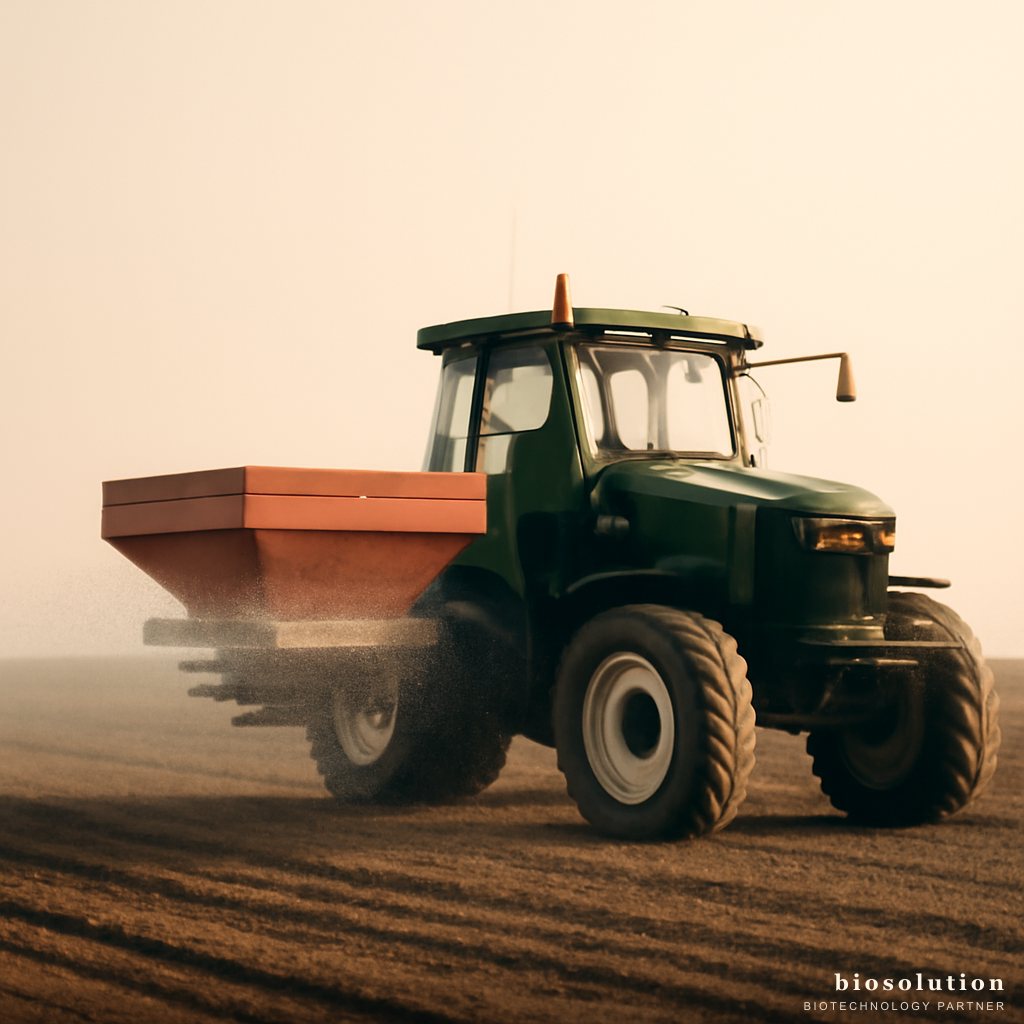
Solution: Conduct a soil test first to determine specific needs. Follow the dosage instructions on the packaging. For large areas, use a calibrated spreader machine to ensure even distribution.
3. Wrong Application Timing
Application timing greatly affects microbial viability. Granular biofertilizer contains live microbes that are susceptible to UV light, extreme temperatures, and drought. A common mistake is spreading granules in the middle of the hot day or when the soil is dry. The microbes die before they can colonize.
Solution: Application should be done in the morning or evening, or during cloudy weather. Ideally, spread granules at the start of the rainy season so soil moisture is maintained. If using a spreader machine, adjust the speed so granules are not thrown too far and exposed to direct sunlight.
4. Ignoring Granule Quality: Size and Shelf Life
Not all biofertilizer granules are suitable for spreader machines. Granules that are too small or too large can cause clogging or uneven distribution. Additionally, product shelf life is important. Microbes in granules have limited viability.
The Granular Biofertilizer Formula from Biosolution has a granule size of 2–4 mm, ideal for various types of spreader machines. With a shelf life of up to 24 months at room temperature, this product remains effective if stored in a dry and shaded place.
Solution: Ensure you buy a product with granule specifications suitable for your spreader machine. Store in a cool place (temperature 15–30°C) and avoid direct sunlight exposure. Use before the expiration date.
5. Not Integrating Wisely with Chemical Fertilizers
Many plantations still use high doses of chemical fertilizers and consider biofertilizer an unnecessary supplement. In fact, granular biofertilizer can reduce the need for chemical fertilizers by 30–50% if applied correctly. Conversely, excessive use of chemical fertilizers can kill microbes due to salinity effects or extreme pH.
Solution: Apply integrated nutrient management (INM) by combining granular biofertilizer and chemical fertilizers. Apply the biofertilizer first, then apply chemical fertilizers a few days later. Avoid direct mixing in one application because chemicals can damage microbial cells.
6. Not Paying Attention to Soil Conditions
Microbes in granular biofertilizer require supportive soil conditions to thrive. Soil that is too acidic (pH <5), too dry, or low in organic matter will hinder colonization. A common mistake is applying biofertilizer without first improving soil conditions.
Solution: Apply lime if soil pH is low. Increase soil organic matter content by adding compost or manure. Granular biofertilizer itself contains organic matter that can gradually increase soil C-organic, so regular application will improve soil quality in the long term.
7. Not Monitoring and Evaluating
The last mistake is not monitoring the effectiveness of the application. Many plantations use granular biofertilizer without recording changes in soil microbial populations, nutrient uptake, or crop yields. As a result, they do not know whether the product is working or not.
Solution: Take soil samples before and after application to measure microbial populations (e.g., using the plate count method). Also record plant growth, leaf color, and crop yields. With this data, you can evaluate effectiveness and adjust dosage or application frequency.
Conclusion
Granular biofertilizer for large areas is the right solution for modern plantations that want efficiency and sustainability. By avoiding the 7 common mistakes above, you can maximize the benefits of products like the Granular Biofertilizer Formula from Biosolution. Remember to choose a product with the right microbial composition, correct dosage, optimal application timing, and good storage care. Do not hesitate to consult with the Biosolution technical team for more specific recommendations. See the Granular Biofertilizer Formula product or free consultation via WhatsApp.
FAQ
What is granular biofertilizer?
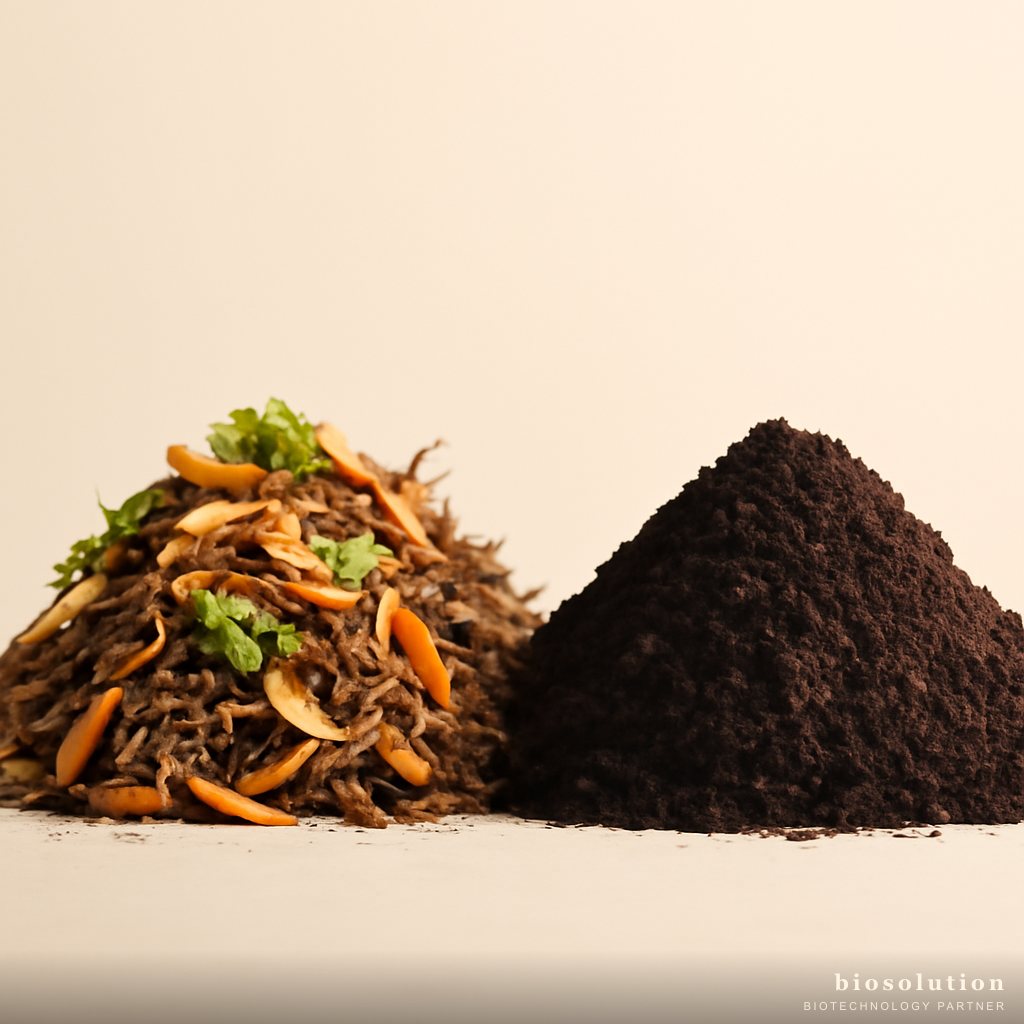
Granular biofertilizer is a fertilizer containing beneficial live microbes such as nitrogen-fixing bacteria, phosphate solubilizers, and biocontrol agents, formulated in granules with a size of 2–4 mm. These granules are easily applied with spreader machines on large areas.
What is the dosage of granular biofertilizer for oil palm?
The general dosage for oil palm is 200–250 kg per hectare per season, applied 1–2 times a year. However, the dosage can be adjusted based on plant age and soil conditions. Consult with an agronomist for precise recommendations.
Can granular biofertilizer be mixed with chemical fertilizers?
It is best not to mix them directly because chemicals can kill the microbes. Apply the biofertilizer first, then apply chemical fertilizers 3–5 days later. This time gap allows the microbes to colonize.
How long is the shelf life of granular biofertilizer?
The shelf life of Biosolution granular biofertilizer is up to 24 months if stored in a dry and shaded place at a temperature of 15–30°C. Avoid direct sunlight exposure and extreme temperatures.
How to apply granular biofertilizer with a spreader machine?
Ensure the spreader machine is calibrated according to the granule size (2–4 mm). Adjust the rotation speed for even distribution. Apply in the morning or evening, or during cloudy weather, to avoid UV light that damages the microbes.