Granular Biofertilizer for Large Areas: Microbial Solution for Large-Scale Plantations
Large-scale plantations face unique challenges in fertilization: application efficiency, even distribution, and soil sustainability. Granular biofertilizer for large areas comes as the answer to these needs. Unlike liquid biofertilizers that require sprayers and large amounts of water, granular biofertilizer can be spread directly using a spreader machine, saving time and labor. This article will thoroughly discuss the causes, symptoms, and microbial solutions in using granular biofertilizer, and how the Granular Biofertilizer Formula product from Biosolution is the right choice for your plantation.
Why is Granular Biofertilizer Important for Large Plantations?
Granular biofertilizer offers significant advantages over liquid or powder forms, especially on land over 10 hectares. Here are the main reasons why large plantations are switching to granular formulations:
Ease of Application with Spreader Machines
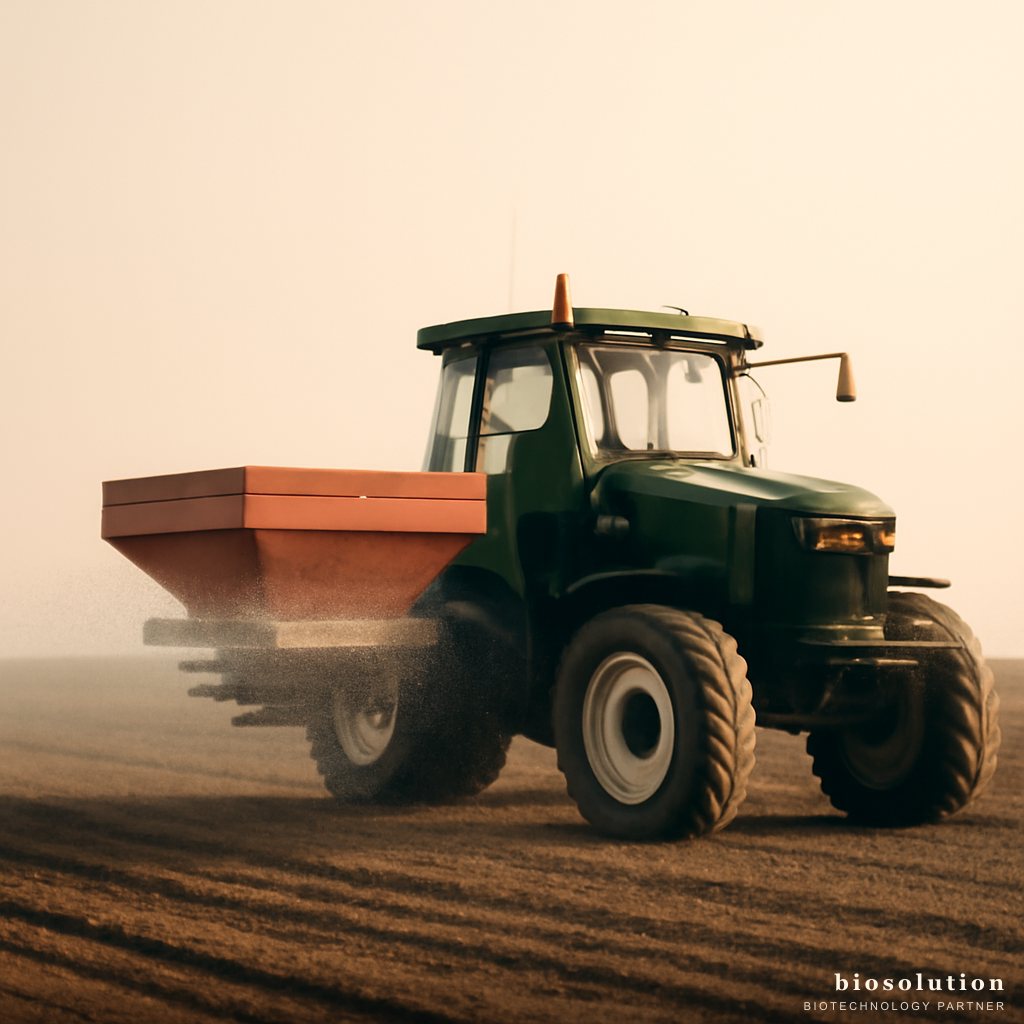
Granules with a size of 2–4 mm are suitable for all types of spreader machines commonly used in oil palm, rubber, or sugarcane plantations. No need to dissolve or mix, just fill the machine hopper and spread evenly. This reduces labor costs by up to 50% compared to manual application.
Gradual Nutrient Release
The granules are designed to release microbes and nutrients slowly, following plant needs. This reduces the risk of nutrient leaching due to heavy rain, which often occurs with chemical or liquid biofertilizers.
Increases Soil Organic Carbon
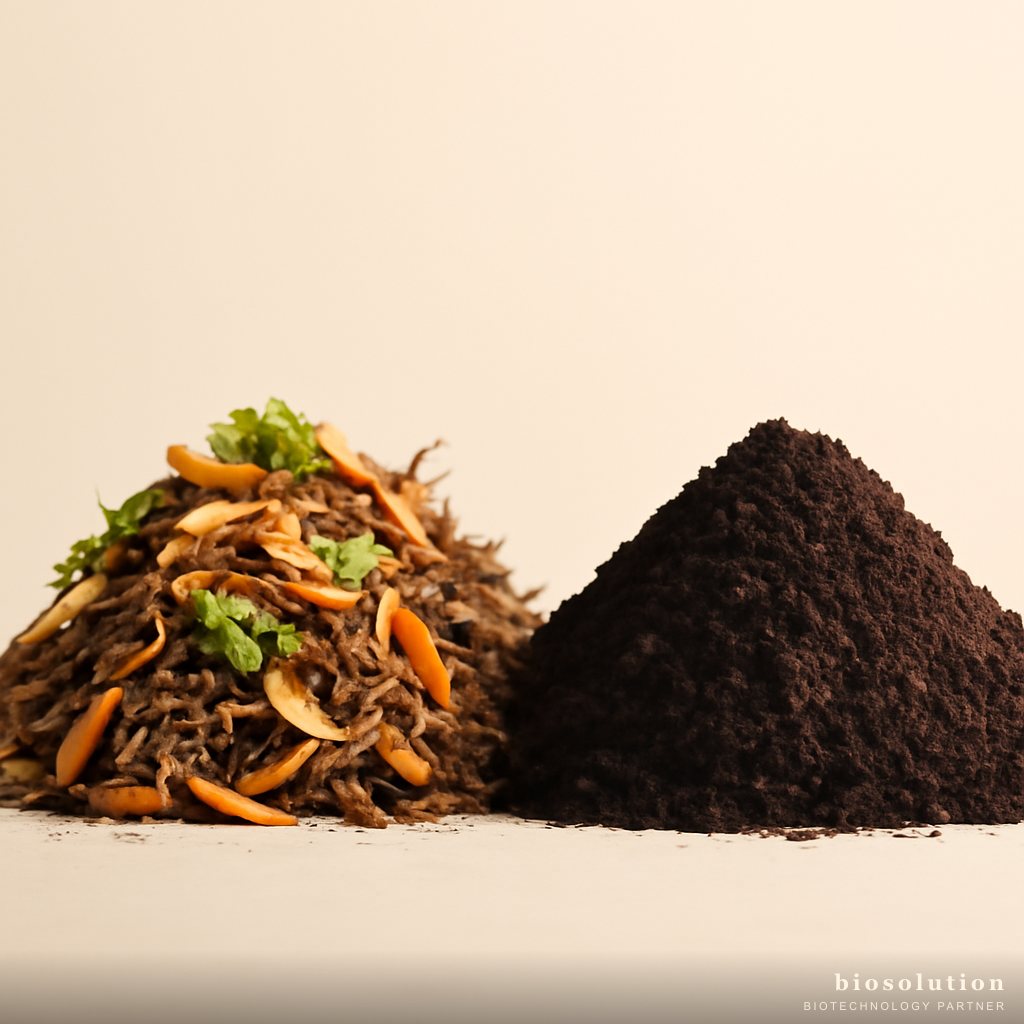
The carrier material of the granules, rich in organic matter, contributes to increasing soil organic carbon. In the long term, this improves soil structure, increases water holding capacity, and supports soil microbial life.
Logistics Efficiency
Granules are denser and more stable than liquid biofertilizers, resulting in lower transportation and storage costs. A shelf life of up to 24 months at room temperature makes them ideal for seasonal stock.
Causes and Symptoms of Problems in Granular Biofertilizer Application
Although practical, there are several obstacles often faced by plantations when using granular biofertilizer. Understanding the causes and symptoms is the first step to overcoming them.
Common Causes
- Low Granule Quality: Granules that are not uniform in size or easily crumble cause uneven distribution and reduce effectiveness.
- Microbial Contamination: Non-sterile production processes can contaminate granules with pathogens or competitor microbes.
- Improper Storage: Exposure to direct sunlight, temperatures above 40°C, or high humidity can reduce microbial viability.
- Application in Extreme Soil Conditions: Very dry or waterlogged soil inhibits microbial activity.
- Interaction with Chemical Fertilizers: Concurrent use with high-dose chemical fertilizers, especially those with bactericidal properties, can kill microbes.
Symptoms That Appear
- Plants still lack nutrients despite fertilization (e.g., yellowing leaves due to N deficiency).
- Uneven plant growth in the same area.
- High soil pathogen populations persist (e.g., root fungal attacks).
- Granules do not dissolve or remain intact after weeks.
- Unpleasant odor or color change in granules indicates contamination.
Microbial Solution: Granular Biofertilizer Formula for Large Areas
Biosolution presents the Granular Biofertilizer Formula for Large Areas, specially designed to overcome the above obstacles. With a density of 10⁹ CFU/g granule, this product contains five superior microbial strains that work synergistically:
- Rhizobium sp.: Symbiotically fixes nitrogen from the air in legume plants, reducing N fertilizer needs by up to 30%.
- Bacillus subtilis: Solubilizes bound phosphate in soil and produces antimicrobial compounds to suppress pathogens such as Fusarium and Rhizoctonia.
- Azospirillum sp.: Associatively fixes N₂ in the root zone of non-legume plants, increasing N availability for plants.
- Pseudomonas fluorescens: Produces siderophores that bind iron, causing pathogens to lack Fe and inhibiting their growth.
- Trichoderma sp.: Antagonistic microbe that colonizes roots and protects against soil-borne fungal pathogen attacks.
Mechanism of Action
After application, the granules absorb soil moisture and release microbes gradually. The microbes then colonize the rhizosphere and trigger plant growth through:
- Nitrogen Fixation: Rhizobium and Azospirillum convert N₂ into ammonia that plants can absorb.
- Phosphate Solubilization: Bacillus subtilis produces phosphatase enzymes that release P from Al/Fe bonds.
- Biocontrol: Pseudomonas and Trichoderma produce antibiotics and lytic enzymes that destroy pathogen cell walls.
- Phytohormone Production: All strains produce auxins, gibberellins, and cytokinins that stimulate root and shoot growth.
Product Advantages
- Ideal Granule Size: 2–4 mm, compatible with all spreader machines.
- Precise Dosage: 100–250 kg per hectare, depending on plant type and soil conditions.
- Application Frequency: Only 1–2 times per growing season, applied during soil preparation or early rainy season.
- Long Shelf Life: 24 months at room temperature, without significant viability decline.
- Tested Formula: Each batch is tested for microbial viability and purity.
Guide to Applying Granular Biofertilizer with a Spreader Machine
For optimal results, follow these steps:
- Equipment Preparation: Ensure the spreader machine is clean from chemical fertilizer residues. Calibrate the dosage according to needs (100–250 kg/ha).
- Application Time: Apply when the soil is moist (after rain or irrigation) so the granules break down quickly. Avoid application when the soil is very dry or during heavy rain.
- Spreading Method: Spread the granules around the plant root zone or along planting rows. For row crops, adjust the spreading width according to plant spacing.
- Post-Application: If possible, cover the granules with a thin layer of soil using a rake or light tillage to accelerate contact with roots.
- Combination with Chemical Fertilizers: If necessary, apply chemical fertilizers 1–2 weeks after the biofertilizer to avoid direct contact that kills microbes.
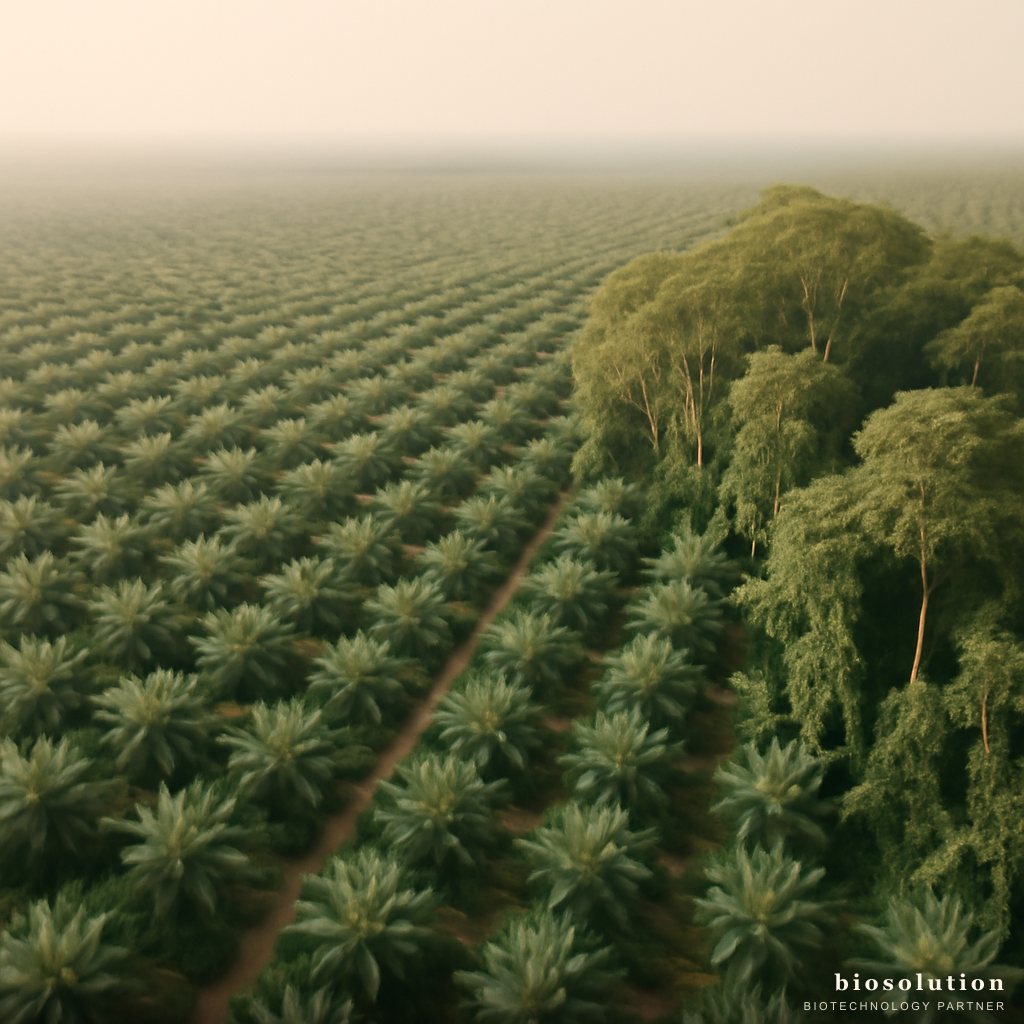
Case Study: Effectiveness in Oil Palm Plantations
A trial on a 50-hectare oil palm plantation in Riau showed that application of the Granular Biofertilizer Formula for Large Areas at 150 kg/ha was able to:
- Increase leaf number and leaf surface area by 15% compared to the control.
- Reduce Ganoderma attack intensity by 40% thanks to the activity of Trichoderma and Pseudomonas.
- Reduce the use of chemical NPK fertilizer by 25% without decreasing FFB production.
These results prove that granular biofertilizer is not just a supplement, but a main solution for sustainable agriculture.
Conclusion
Granular biofertilizer for large areas is an innovation that combines ease of application, microbial effectiveness, and soil sustainability. By understanding the causes and symptoms of problems and choosing quality products like the Granular Biofertilizer Formula from Biosolution, your plantation can achieve optimal productivity while maintaining soil health. For further consultation on dosage and application, contact the Biosolution technical team via WhatsApp.