Granular Biofertilizer for Large Areas: The Right Solution for Modern Plantations
Granular biofertilizer for large areas has become a mainstay solution for large plantations seeking application efficiency and optimal results. With a special formulation, this fertilizer not only biologically enriches the soil but is also easy to apply using spreader machines, saving time and labor. In this article, we will discuss the criteria for choosing the best granular biofertilizer, the role of certification, and recommendations for superior formulas for your plantation land.
Why Granular Biofertilizer is Suitable for Large Areas?
Plantations spanning tens to thousands of hectares require efficient and consistent fertilization methods. Granular biofertilizer offers advantages over liquid or powder forms:
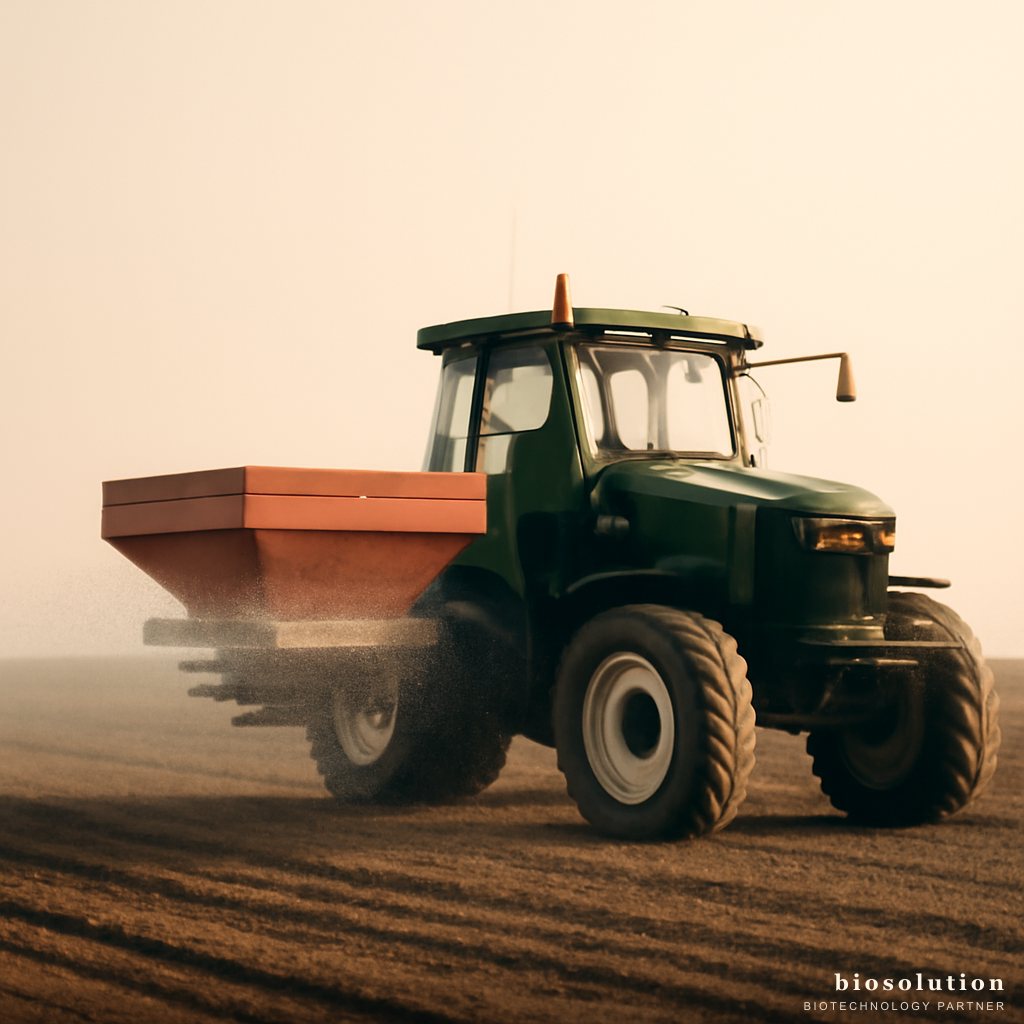
- Application with spreader machines: Granule size of 2–4 mm allows even distribution using mechanical spreaders or tractors.
- Gradual nutrient release: Microbes in the granules are protected by an organic matrix, so their viability is maintained and their activity occurs slowly.
- Reduced nutrient leaching: Nutrients fixed or dissolved by microbes are more available to plants and not easily lost to water runoff.
- Labor efficiency: One application per growing season, no need for reapplication like liquid fertilizers.
According to data from the Ministry of Agriculture, the use of biofertilizers can reduce the need for chemical fertilizers by up to 30% in plantation crops such as oil palm, rubber, and sugarcane. This aligns with sustainable agriculture programs.
Criteria for Choosing Granular Biofertilizer for Large Plantations
Not all granular biofertilizers are suitable for large areas. Here are the main criteria to consider:
1. Microbial Density (CFU/g)
Quality biofertilizers have at least 10⁸ CFU/g. The higher the CFU, the more effective the microbial colonization in the rhizosphere. Products with 10⁹ CFU/g, such as those offered by Biosolution, guarantee sufficient microbial populations even when exposed to field conditions.
2. Uniform Granule Size
A size of 2–4 mm is ideal for conventional spreader machines. Granules that are too large clog nozzles, while those too small are easily blown away. Ensure the product has consistent size distribution.
3. Viability and Shelf Life
Minimum shelf life of 12 months at room temperature. Products with a 24-month shelf life indicate good formulation stability. Store in a cool, dry place.
4. Compatibility with Chemical Fertilizers
Some biofertilizers can be mixed with NPK or organic fertilizers. However, avoid mixing with fungicides or bactericides. Read the product label for compatibility information.
5. Certification and Registration
Ensure the product is registered with the Ministry of Agriculture (biofertilizer registration number). Certifications such as ISO or SNI are added value. Certified products have passed efficacy and safety tests.
The Role of Certification in Ensuring Granular Biofertilizer Quality
Certification is not just a formality. In Indonesia, biofertilizers must have a distribution permit from the Ministry of Agriculture after passing quality and efficacy tests. Some important certifications:
- SNI 8499:2018 concerning solid biofertilizers: regulates moisture content, particle size, and microbial count.
- Biofertilizer registration from the Center for Plant Variety Protection and Agricultural Licensing (PVTPP).
- Organic certificate (if the product is used for organic farming).
By purchasing certified products, you are protected from false claims and get quality assurance. Biosolution, for example, has an official registration number and has undergone field trials on various plantation commodities.
Superior Granular Biofertilizer Formula: 5 Key Microbial Strains
The right combination of microbes determines the effectiveness of biofertilizers. Here are strains commonly used in formulations for large areas:
Rhizobium sp.
Symbiotic nitrogen fixer for legume crops (soybean, peanut, lamtoro). Forms root nodules that provide N to plants. In oil palm plantations, Rhizobium is used on cover crops such as Mucuna or Centrosema.
Bacillus subtilis
Phosphate solubilizer and growth hormone producer (IAA). Also antagonistic to soil pathogens like Fusarium and Rhizoctonia. This strain increases P availability for plants.
Azospirillum sp.
Associative N fixer that lives around the roots of non-legume plants. Suitable for rice, corn, sugarcane, and forage grasses. Enhances nutrient uptake and drought tolerance.
Pseudomonas fluorescens
Produces siderophores that bind iron, thereby inhibiting pathogen growth. Effective in controlling bacterial wilt and root rot diseases.
Trichoderma sp.
Antagonistic fungus that degrades pathogen cell walls. Enhances organic matter decomposition and stimulates root growth. Very good for land previously affected by fungal infections.
The combination of these five strains in one granule ensures multi-purpose synergy: N fixation, P solubilization, and disease protection. Products like Granular Biofertilizer Formula for Large Areas from Biosolution use this consortium at a concentration of 10⁹ CFU/g.
How to Apply Granular Biofertilizer on Large Plantations
Targeted application maximizes the benefits of biofertilizer. Here is a guide for large areas:
Preparation
- Ensure the soil has adequate moisture (not dry or waterlogged).
- If using a spreader machine, calibrate the application rate according to the dosage.
- Mix granules with organic fertilizer or compost if needed.
Dosage and Timing
- General dosage: 100–250 kg per hectare, depending on crop type and soil conditions.
- Application time: during soil tillage or at the start of the rainy season, so microbes become active immediately.
- Frequency: 1–2 times per growing season. For perennial crops, apply every 6 months.
Application Methods
- Manual broadcasting: for small areas, spread evenly around the root zone.
- Spreader machine: adjust the spread width according to machine specifications.
- Planting furrows: place granules into furrows 5–10 cm deep, then cover with soil.
After Application
- Immediately water or wait for rain to activate the microbes.
- Avoid using systemic fungicides for 1 week after application.
Case Study: Effectiveness of Granular Biofertilizer on Sugarcane Plantations
Research in East Java showed that application of granular biofertilizer on sugarcane (variety PS 881) increased stalk weight by 12% compared to the control. A dose of 150 kg/ha was combined with 50% of the recommended NPK fertilizer. Soil analysis results showed an increase in phosphate-solubilizing bacterial populations and a decrease in root disease intensity.
Similar data were reported by IRRI (International Rice Research Institute) that the use of Azospirillum on paddy rice can reduce N fertilizer requirements by up to 30%. This proves the potential of granular biofertilizer in supporting productivity without harming the environment.
Advantages of Biosolution's Granular Biofertilizer Formula
The Granular Biofertilizer Formula for Large Areas product is specifically designed for large plantations. Its advantages:
- 5 superior strains in one granule: Rhizobium, Bacillus, Azospirillum, Pseudomonas, Trichoderma.
- Density of 10⁹ CFU/g – highest in its class.
- 24-month shelf life at room temperature.
- Granule size 2–4 mm – suitable for all spreader machines.
- Flexible dosage 100–250 kg/ha.
- Registered with the Ministry of Agriculture and tested on various commodities.
By using this product, you not only save on chemical fertilizer costs but also improve long-term soil health. For further consultation, contact the Biosolution team via WhatsApp.
Conclusion
Granular biofertilizer for large areas offers an efficient and environmentally friendly solution for modern plantations. Key criteria in selection include microbial density, granule size, viability, compatibility, and certification. Formulas with 5 microbial strains such as Rhizobium, Bacillus, Azospirillum, Pseudomonas, and Trichoderma provide complete benefits: N fixation, P solubilization, and biocontrol. With proper dosage and application methods, granular biofertilizer can increase productivity while maintaining soil sustainability. Make sure you choose a certified product that suits your land needs. For more detailed information about this product, visit the Granular Biofertilizer Formula for Large Areas page or contact us directly.