Green Transparency of Fish Ponds: Daily Water Parameter Monitoring
Green transparency of fish ponds is often a puzzle for intensive pond farmers. A dark green color can indicate dangerous phytoplankton blooms, while water that is too clear is actually nutrient-poor. The key to successful tilapia farming lies in the balance of water parameters. This article will thoroughly discuss how to monitor ammonia, pH, dissolved oxygen, and salinity daily, and how Biosolution's Tilapia Pond Probiotic Formula helps stabilize these conditions.
Why Is Green Transparency of Fish Ponds Important for Tilapia?
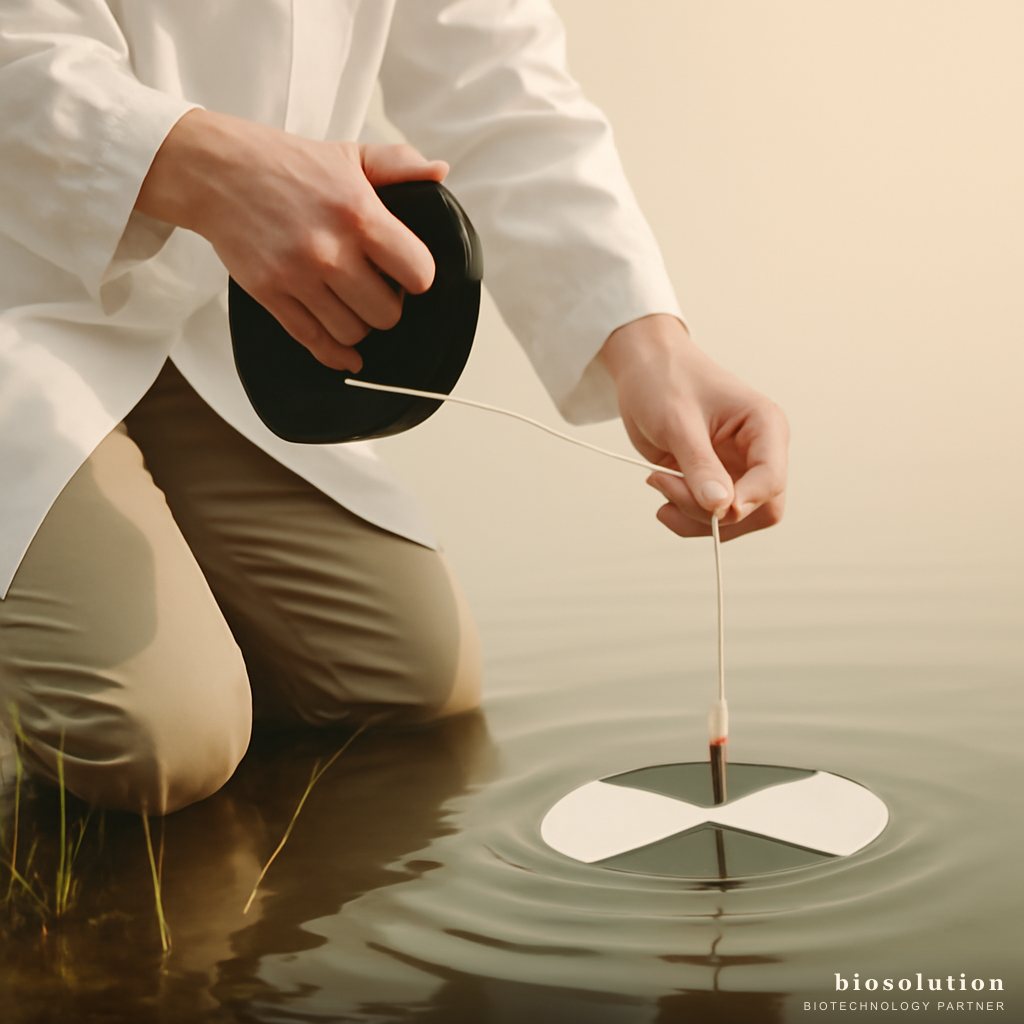
Water transparency is measured using a Secchi disk. In tilapia ponds, ideal transparency ranges from 25-40 cm. If it is too low (water too green), it means excessive phytoplankton. This can cause extreme oxygen fluctuations: high oxygen during the day, plummeting at night. Conversely, transparency that is too high (>50 cm) indicates a lack of natural food, slowing tilapia growth.
The green color comes from phytoplankton chlorophyll pigments. Although phytoplankton produce oxygen, an overabundance can trigger mass die-offs at night. Therefore, daily monitoring of water parameters is a mandatory routine. With accurate data, farmers can take preventive actions such as applying probiotics.
Monitoring Ammonia: The Main Toxin in Tilapia Ponds
Ammonia (NH₃) is a byproduct of fish metabolism and leftover feed. At high pH, ammonia is toxic. Safe ammonia levels for tilapia are <0.1 mg/L. Symptoms of ammonia poisoning include fish gasping at the surface, decreased appetite, and reddened gills.
Monitoring is done with test kits or digital sensors. Perform it every morning before feeding. If ammonia starts to rise, immediately reduce feed and increase aeration. A long-term solution is to use nitrifying bacteria such as Nitrosomonas sp. and Nitrobacter sp., which are contained in Tilapia Pond Probiotic Formula. These bacteria oxidize ammonia into nitrite and then into safer nitrate.
Water pH: Stability Prevents Stress
The optimal pH for tilapia is 6.5-8.5. Large daily pH fluctuations (>1 unit) cause stress, reduce appetite, and lower immunity. The main cause of pH changes is phytoplankton activity: photosynthesis raises pH, respiration lowers it.
Monitor pH twice daily (morning and afternoon). If pH is too low, apply liming with dolomite. If too high, avoid excessive lime application. Probiotics such as Bacillus subtilis help stabilize pH by efficiently decomposing organic matter, reducing excess organic acid production.
Dissolved Oxygen: The Heart of Pond Life
The minimum dissolved oxygen (DO) for tilapia is 3 mg/L. Ideally >5 mg/L. Oxygen deficits occur at night when phytoplankton and fish respire. Early symptoms include fish gathering at the water inlet.
Critical DO monitoring is done at 3-4 AM (when it is lowest). Use a calibrated DO meter. If DO <3 mg/L, immediately turn on additional aerators. High stocking density worsens the condition. With Tilapia Pond Probiotic Formula, organic decomposition is faster, reducing BOD load and keeping DO stable.
Salinity: A Hidden Parameter Affecting Osmoregulation
Although tilapia is known to tolerate salinity, drastic changes are still dangerous. Ideal salinity for tilapia is 0-10 ppt. Salinity fluctuations often occur due to evaporation or heavy rain. Monitor salinity using a refractometer.
Salinity affects enzyme activity and ion balance in fish bodies. If salinity rises suddenly, fish will become stressed and susceptible to disease. Keep salinity constant by adding fresh water during the dry season. Probiotics help reduce oxidative stress by suppressing populations of pathogenic bacteria that are more active at high salinity.
The Role of Probiotics in Maintaining Water Parameter Balance
Probiotics are not just supplements but water quality management tools. Tilapia Pond Probiotic Formula contains three superior bacteria: Nitrosomonas sp., Nitrobacter sp., and Bacillus subtilis. They work synergistically:
- Nitrosomonas sp. oxidizes ammonia into nitrite.
- Nitrobacter sp. oxidizes nitrite into nitrate.
- Bacillus subtilis decomposes leftover feed and feces, reducing sludge accumulation.
Application dosage: 2 L per 1000 m³ of water, every 7 days in the morning. With routine use, the nitrogen cycle runs smoothly, green transparency of fish ponds is more controlled, and other water parameters stabilize. As a result, tilapia growth is more consistent and mortality due to oxygen fluctuations decreases.
Case Study: Daily Monitoring in Intensive Ponds
For example, Mr. Budi, a tilapia farmer in West Java, implemented daily monitoring over one cycle. At 6:00 AM he measured temperature, pH, DO, and ammonia. At 4:00 PM he measured pH and temperature again. Data was recorded in a logbook.
In week 4, ammonia was detected at 0.3 mg/L. He immediately reduced feed by 30% and applied probiotics. Three days later, ammonia dropped to 0.05 mg/L. The green transparency of the fish pond, which was initially 20 cm, returned to 30 cm. The fish were no longer gasping. With routine monitoring, he was able to harvest on time with an FCR of 1.4.
Conclusion
Green transparency of fish ponds is not a mystery if you routinely monitor daily water parameters: ammonia, pH, dissolved oxygen, and salinity. With accurate data, you can take quick action. Probiotics like Tilapia Pond Probiotic Formula become a reliable partner in maintaining pond ecosystem balance. Don't let water parameters become a time bomb. Start monitoring today, and see the difference for yourself.
For further consultation on pond water quality management, contact the Biosolution team via WhatsApp. We are ready to help you achieve optimal harvests.