Green Transparency of Fish Ponds: Manage with Microbial Probiotics
Green transparency of fish ponds is a crucial water quality parameter in intensive tilapia farming. The green color of pond water is generally caused by phytoplankton blooms, which, although providing oxygen during the day, can cause extreme oxygen fluctuations and increase the risk of mass mortality. Managing water transparency and green color does not always require chemicals; a microbial probiotic approach using Tilapia Pond Probiotic Formula from Biosolution offers a sustainable solution that maintains pond ecosystem balance.
Why Green Transparency of Fish Ponds Needs to Be Managed?
Low water transparency (usually <20 cm) indicates high phytoplankton concentrations. Although phytoplankton produce oxygen through photosynthesis, at night they consume oxygen, causing a drastic drop in dissolved oxygen (DO). This condition stresses tilapia, reduces appetite, and increases mortality. Additionally, dead phytoplankton blooms are decomposed by aerobic bacteria, consuming oxygen and releasing ammonia and other toxic compounds.
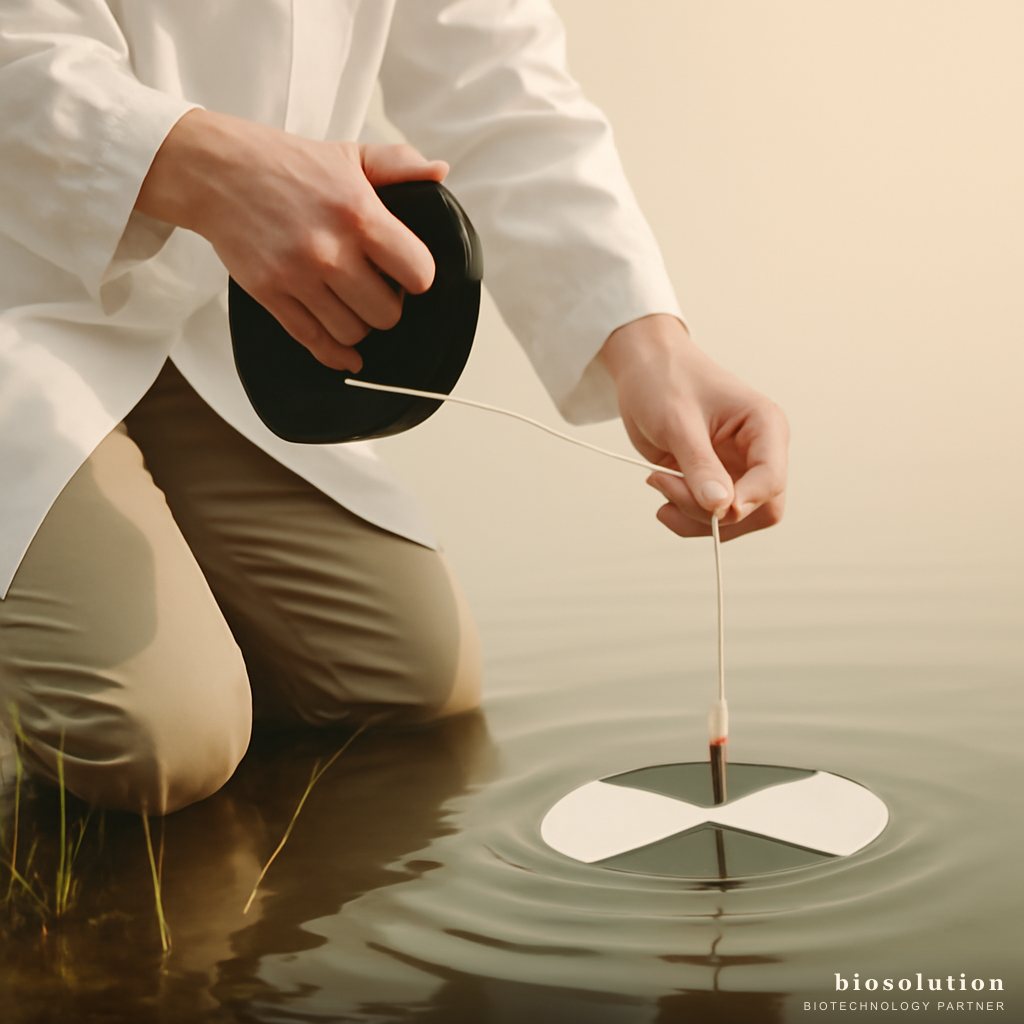
Data from FAO shows that poor water quality causes losses of up to 30% in global aquaculture production. Therefore, maintaining transparency in the range of 30-40 cm (for tilapia ponds) is a primary target for farmers. The ideal green color is bright green (leaf green), not dark green or brownish which indicates dominance of blue-green algae (cyanobacteria) that can produce toxins.
Role of Microbial Probiotics in Managing Water Transparency
Microbial probiotics such as those contained in Tilapia Pond Probiotic Formula work synergistically to control phytoplankton blooms and improve water quality. The main mechanisms of probiotics include:
- Nutrient competition: Probiotic bacteria such as Bacillus subtilis compete with phytoplankton in absorbing nutrients (nitrogen, phosphorus) in the water column, thereby limiting phytoplankton growth.
- Decomposition of organic matter: Bacillus subtilis produces extracellular enzymes (amylase, protease, lipase) that accelerate the breakdown of feed residues, feces, and dead plankton, reducing the organic load that fertilizes phytoplankton.
- Oxidation of ammonia and nitrite: Nitrosomonas sp. oxidizes ammonia to nitrite, and Nitrobacter sp. oxidizes nitrite to nitrate. This process prevents accumulation of toxic compounds while reducing nitrogen sources available to phytoplankton.
By reducing nutrient availability and accelerating decomposition, probiotics help maintain water transparency at optimal levels without reducing stocking density.
Composition of Tilapia Pond Probiotic Formula
This product is specifically designed for intensive tilapia farming with three superior bacterial strains:
- Nitrosomonas sp.: Chemoautotrophic bacteria that oxidize ammonia (NH₃) to nitrite (NO₂⁻). Ammonia comes from fish excretion and decomposition of organic matter. By lowering ammonia, this probiotic reduces toxicity and nitrogen sources for phytoplankton.
- Nitrobacter sp.: Oxidizes nitrite (NO₂⁻) to nitrate (NO₃⁻), which is less toxic. Nitrate can still be utilized by phytoplankton, but phytoplankton growth rate is more controlled compared to ammonia.
- Bacillus subtilis: Heterotrophic bacteria that decompose particulate organic matter (feed residues, feces) into simple compounds. Its activity reduces turbidity and organic nutrient availability.
These three bacteria work synergistically: Bacillus cleans organic matter, while Nitrosomonas and Nitrobacter manage inorganic nitrogen compounds. As a result, the nitrogen cycle becomes more efficient and phytoplankton blooms are controlled.
Proper Application Method and Dosage
Application of Tilapia Pond Probiotic Formula is very simple and practical. Based on technical recommendations:
- Method: Broadcast evenly directly into the pond.
- Dosage: 2 liters per 1000 m³ of water.
- Frequency: Every 7 days.
- Time: Morning (08:00-10:00) when water temperature starts to rise and oxygen is sufficient.
Ensure aeration is running optimally during application to distribute bacteria evenly and provide oxygen needed by aerobic bacteria. Avoid simultaneous use with disinfectants (chlorine, formalin) as they can kill probiotic bacteria. If using disinfectants, allow a minimum 48-hour interval before probiotic application.
Benefits of Probiotics for Water Quality and Tilapia
Regular use of probiotics provides measurable positive impacts:
- Stable water quality: Transparency maintained in the range of 30-40 cm, bright green water color, and minimal oxygen fluctuations.
- More consistent tilapia growth: Fish are not stressed by sudden water quality changes, so appetite and daily growth rate increase.
- Reduced oxygen mortality: With controlled phytoplankton blooms, the risk of oxygen drop at night is drastically reduced.
- Higher stocking density possible: Ponds with good water quality can accommodate more fish without causing problems.
A study at the Freshwater Aquaculture Fisheries Center showed that the use of Bacillus and nitrifying bacteria probiotics can increase tilapia survival rate by up to 15% and reduce feed conversion ratio (FCR) by 0.2 points.
Integration Strategy with Other Pond Management
Probiotics are not a single solution. For optimal results, combine with the following management practices:
- Feed management: Provide feed according to needs, avoid overfeeding. Use feed with 28-30% protein for tilapia.
- Adequate aeration: Ensure oxygen availability of at least 4 ppm. Use paddlewheels or blowers, especially at night.
- Regular monitoring: Measure temperature, pH, DO, ammonia, nitrite, and transparency every 3 days. Record in a logbook.
- Pest and disease control: Quarantine seeds, vaccinate if necessary, and avoid stress.
With an integrated approach, probiotics will work optimally and harvest results will be more optimal.
Conclusion
Uncontrolled green transparency in fish ponds can threaten the success of intensive tilapia farming. A microbial probiotic approach using Tilapia Pond Probiotic Formula containing Nitrosomonas sp., Nitrobacter sp., and Bacillus subtilis offers a natural and effective solution for managing water quality. With routine application of 2 liters per 1000 m³ every 7 days, farmers can maintain ideal transparency, reduce mortality risk, and increase productivity. For further consultation on dosage and application methods suitable for your pond conditions, contact the Biosolution technical team via WhatsApp.
References:
- FAO. (2021). Water quality in aquaculture. FAO Fisheries and Aquaculture Technical Paper.
- Ministry of Marine Affairs and Fisheries. (2022). Guidelines for Good Tilapia Farming. KKP.go.id.