Green Water Transparency in Fish Ponds: Key to Water Quality with Probiotics
Ideal pond water transparency is often a challenge for intensive fish farmers. Green color in ponds can indicate uncontrolled phytoplankton blooms, while excessive turbidity can hinder light penetration and disrupt photosynthesis. Managing green water transparency is not just about aesthetics, but is key to maintaining oxygen balance, suppressing toxic compounds like ammonia, and supporting maximum productivity. In this article, we will thoroughly explore the factors affecting water color, the role of aquaculture probiotics as a microbiology-based solution, and how Biosolution's Formula Probiotik Kolam Nila can be the right choice for maintaining your pond water quality.
Why Transparency and Green Water Color Matter?
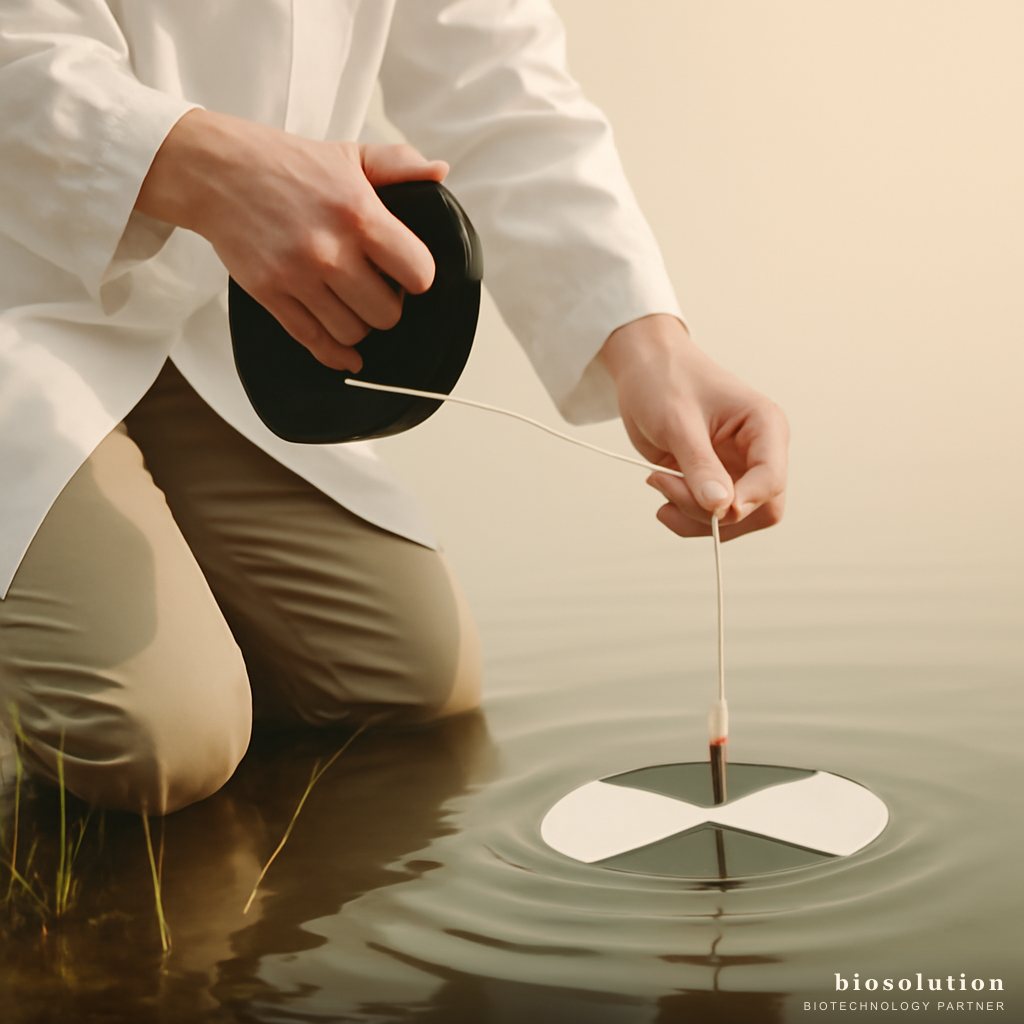
Water transparency reflects the amount of suspended particles, including phytoplankton, bacteria, and feed residues. Green color usually indicates phytoplankton dominance, which is actually beneficial as an oxygen producer and natural feed. However, if uncontrolled, phytoplankton blooms can cause extreme oxygen fluctuations, especially at night when phytoplankton consume oxygen. As a result, fish are prone to oxygen stress, stunted growth, and even mass mortality. Additionally, decomposition of dead phytoplankton produces ammonia and organic matter that degrade water quality. Therefore, maintaining transparency in the range of 25-40 cm (depending on fish species) is the ideal target. Intensive pond farmers need to monitor transparency regularly and take corrective action immediately if deviations occur.
Factors Causing Changes in Transparency and Green Color
1. Accumulation of Organic Matter
Feed residues, fish feces, and dead plankton accumulate at the pond bottom. Aerobic decomposition by bacteria requires oxygen, while anaerobic decomposition produces toxic compounds like ammonia, nitrite, and hydrogen sulfide. Organic matter also serves as nutrients for phytoplankton, triggering excessive growth.
2. Nutrient Imbalance
High nitrogen (N) and phosphorus (P) content from feed and fertilizers stimulate phytoplankton blooms. An imbalanced N:P ratio (e.g., too much phosphorus) encourages the growth of green algae that make water turbid.
3. Heterotrophic Bacteria Population
Heterotrophic bacteria decompose organic matter, but if their population surges, they compete with phytoplankton for oxygen and nutrients. This can cause water to turn brown or turbid.
4. Poor Water Circulation
Lack of aeration causes temperature and oxygen stratification, causing organic matter to settle and decompose anaerobically at the bottom. This condition triggers the release of toxic gases and changes water color to blackish.
Role of Aquaculture Probiotics in Managing Water Quality
Aquaculture probiotics are beneficial microorganisms added to ponds to improve water quality, suppress pathogens, and enhance fish health. In the context of green water transparency, probiotics work through two main mechanisms: accelerating organic matter decomposition and controlling phytoplankton populations through nutrient competition. Probiotic bacteria such as Bacillus subtilis produce extracellular enzymes that break down proteins, carbohydrates, and fats into simple compounds that are more easily utilized by phytoplankton or removed through filtration systems. Additionally, nitrifying bacteria like Nitrosomonas sp. and Nitrobacter sp. oxidize ammonia into nitrate, reducing nitrogen availability for phytoplankton. Thus, probiotics help maintain pond ecosystem balance, prevent algal blooms, and maintain water transparency at optimal levels.
Formula Probiotik Kolam Nila: A Specific Solution for Intensive Farmers
Biosolution presents Formula Probiotik Kolam Ikan Nila specifically formulated for intensive tilapia farming needs. This product contains three superior bacterial strains:
- Nitrosomonas sp.: Oxidizes ammonia (NH3) into nitrite (NO2-), reducing toxicity.
- Nitrobacter sp.: Oxidizes nitrite into nitrate (NO3-), which is safer for fish.
- Bacillus subtilis: Decomposes organic matter, reduces sludge load, and suppresses pathogens.
This combination creates synergy: Bacillus cleans organic substrates, while nitrifying bacteria process nitrogen compounds. With a dosage of 2 liters per 1000 m³ of water applied every 7 days in the morning, farmers can maintain stable water quality. Perceived benefits include:
- More stable water quality with controlled transparency.
- More consistent tilapia growth due to optimal environment.
- Reduced mortality from oxygen fluctuations.
- Allows higher stocking density without risk of water quality degradation.
Case Study: Probiotic Application in Tilapia Ponds
As an illustration, a tilapia pond of 1000 m² with a depth of 1 meter (volume 1000 m³) experienced a decrease in transparency to 15 cm due to phytoplankton bloom. After applying Formula Probiotik Kolam Nila according to dosage, transparency increased to 25 cm within 3 days, and stabilized at 30 cm within a week. Ammonia levels dropped from 1.2 mg/L to 0.3 mg/L. Tilapia showed increased appetite and more uniform growth. This case demonstrates that probiotics not only improve water quality but also directly impact production performance.
How to Choose the Right Aquaculture Probiotic
Not all probiotics are suitable for every pond condition. Here is a selection guide:
- Match with fish species: Tilapia requires strong nitrifying bacteria due to low ammonia tolerance.
- Check strain composition: Ensure the presence of organic decomposer bacteria (Bacillus, Lactobacillus) and nitrifying bacteria (Nitrosomonas, Nitrobacter).
- Check concentration and viability: Products with high colony-forming units (CFU) are more effective.
- Choose a product with practical dosage: Weekly application is easier to integrate into pond management.
Formula Probiotik Kolam Nila meets all these criteria. For more information, visit the product page Formula Probiotik Kolam Nila or also see Formula Probiotik Kolam Lele as an additional reference.
Conclusion
Managing green water transparency in fish ponds is an ongoing effort that requires understanding of pond ecosystems and appropriate intervention. Aquaculture probiotics, especially those containing nitrifying and decomposer bacteria, offer a natural solution to maintain water balance. Biosolution's Formula Probiotik Kolam Nila, with strains Nitrosomonas, Nitrobacter, and Bacillus subtilis, has proven effective in improving transparency, suppressing ammonia, and supporting tilapia growth. With regular application, farmers can achieve high productivity without compromising environmental quality. If you would like to discuss your specific pond conditions, feel free to contact Biosolution's technical team via WhatsApp for a free consultation.