Green Water Transparency in Fish Ponds: Manage with Probiotics for Sustainable Aquaculture
The green color of pond water often worries farmers. Is it a good sign or a danger signal? Green water transparency in fish ponds can actually be an indicator of fertility, but if uncontrolled, it can trigger oxygen and water quality problems. In this article, we will thoroughly discuss the causes, impacts, and ways to manage green water transparency in fish ponds using a probiotic approach, especially for sustainable tilapia farming.
Why Does Fish Pond Water Turn Green?
The green color of pond water is generally caused by a bloom of phytoplankton, especially green algae. Phytoplankton are photosynthetic microorganisms that require nutrients such as nitrogen and phosphorus. When nutrient levels in the pond are high—from leftover feed, fish feces, or fertilizers—algae thrive. Low water transparency (usually <25 cm) indicates high algae density. Although algae produce oxygen during the day, at night they consume oxygen, causing extreme fluctuations in dissolved oxygen. This condition is dangerous for fish, especially at high stocking densities.
Impacts of Uncontrolled Green Transparency
Risk of Mass Mortality Due to Oxygen
Sharp oxygen fluctuations can cause fish stress and increase susceptibility to disease. In extreme cases, fish can die suddenly from hypoxia at night. Additionally, dead algae are decomposed by decomposer bacteria, consuming oxygen and releasing ammonia and other toxic compounds.
Impaired Growth and Fish Quality
An unstable environment forces tilapia to expend energy on adaptation rather than growth. As a result, growth is stunted, feed conversion worsens, and meat quality declines. Excessively low green water transparency also reduces light penetration, disrupting natural fish behavior.
Role of Probiotics in Managing Green Transparency
Probiotics are live microorganisms that provide benefits to their host. In aquaculture, probiotics help maintain microbial balance in the pond. Biosolution's Tilapia Pond Probiotic Formula contains three superior strains: Nitrosomonas sp., Nitrobacter sp., and Bacillus subtilis. They work synergistically to control nutrients that cause algae.
Mechanism of Probiotic Action
- Nitrosomonas sp.: Oxidizes ammonia (NH₃) into nitrite (NO₂⁻). Ammonia is the main waste from fish and a trigger for algae growth.
- Nitrobacter sp.: Oxidizes nitrite (NO₂⁻) into nitrate (NO₃⁻), which is safer and less preferred by algae.
- Bacillus subtilis: Decomposes organic matter such as leftover feed and feces, reducing the nutrient source for algae.
By suppressing ammonia and nitrite levels and reducing organic load, probiotics indirectly control algae populations. Water transparency becomes more stable, generally in the ideal range of 30–45 cm for tilapia.
How to Apply Probiotics for Tilapia Ponds
Probiotics must be applied at the correct dosage and regularly to be effective. Here is a guide for applying Tilapia Pond Probiotic Formula:
- Dosage: 2 liters per 1000 m³ of pond water.
- Frequency: Every 7 days.
- Time: Morning, when water temperature starts to rise and oxygen levels are sufficient.
- Method: Sprinkle evenly over the pond surface.
Ensure good aeration to distribute the probiotics. Optimal results are usually seen after 2–3 weeks of regular application.
Sustainable Aquaculture Strategies with Probiotics
Sustainable aquaculture is not only about protecting the environment but also about economic efficiency. With probiotics, farmers can reduce water management costs, minimize chemical use, and increase productivity.
Benefits of Probiotics for Tilapia Farmers
- Stable water quality: Oxygen and pH fluctuations are reduced, lowering mortality risk.
- More consistent growth: Fish are less stressed, leading to uniform growth and lower Feed Conversion Ratio (FCR).
- Reduced oxygen mortality: By controlling algae, the risk of nighttime hypoxia decreases.
- Higher stocking density: Healthy water allows for greater fish density without causing problems.
Tips for Monitoring Green Transparency
To ensure proper management, conduct regular monitoring:
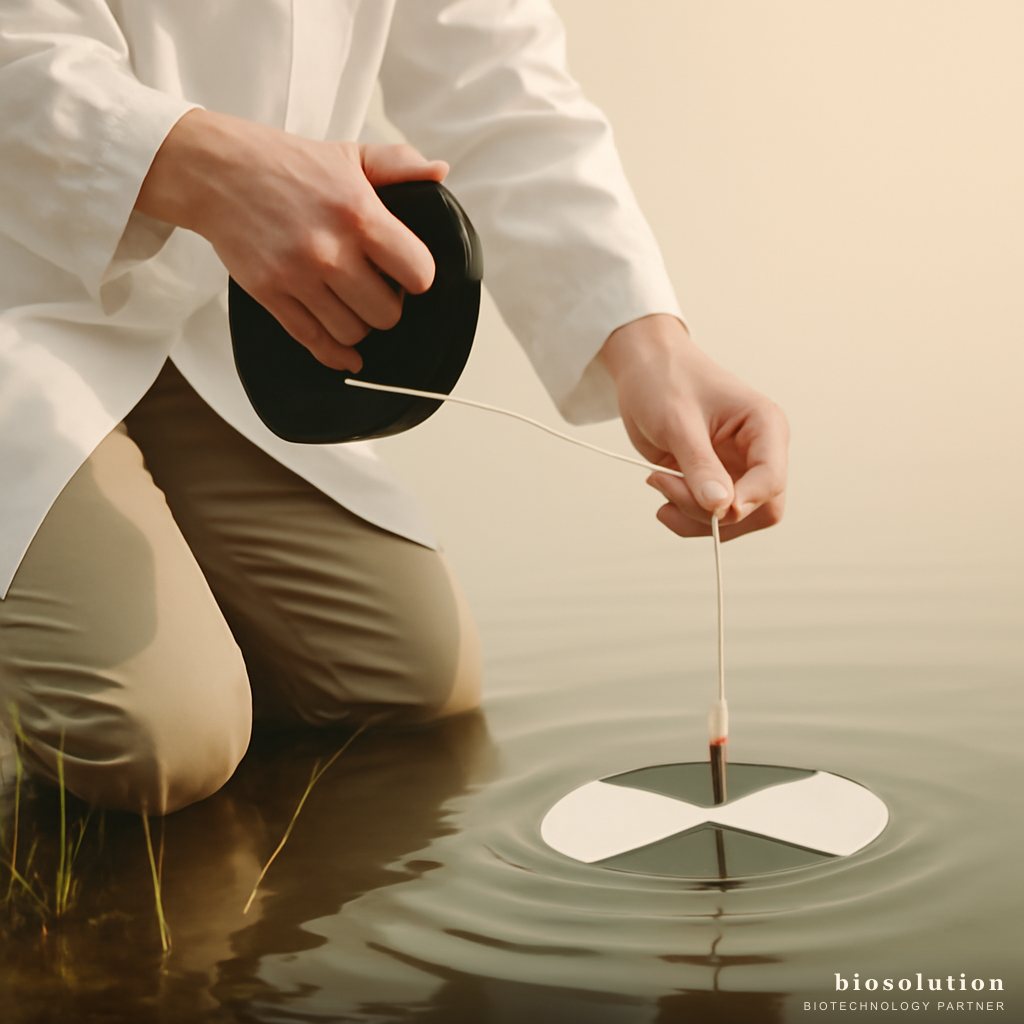
- Measure transparency using a secchi disk. Ideally 30–45 cm for tilapia ponds.
- Check water color: Fresh green indicates healthy algae; dark green or brownish signals algae die-off.
- Test water quality (ammonia, nitrite, pH) at least once a week.
If transparency is too low (<25 cm), immediately increase the probiotic dosage or add aeration. Conversely, if too high (>50 cm), nutrients may be too low; add feed or organic fertilizer as needed.
Conclusion
Green water transparency in fish ponds is a mirror of ecosystem health. With a probiotic approach, farmers can manage green color naturally without harmful chemicals. Biosolution's Tilapia Pond Probiotic Formula offers the right solution to maintain microbial balance, improve water quality, and support sustainable tilapia farming. Want to know more? Contact us for a free consultation or see our products Tilapia Pond Probiotic Formula and Catfish Pond Probiotic Formula for your specific needs.