High Ammonia Nitrite Pond Emergency: Quick Treatment Guide with Nitrifying Bacteria
In the world of aquaculture, high ammonia nitrite pond emergency is the most feared nightmare for farmers. A surge of these toxic nitrogen compounds can occur within hours due to overfeeding, mass plankton die-off, or filtration system failure. Without proper handling, this condition leads to oxidative stress, gill damage, and mass mortality within 24-48 hours. This article will discuss daily monitoring strategies, main causes, and emergency treatment based on high-concentration nitrifying bacteria capable of restoring water quality within one day.
Why Ammonia and Nitrite Become an Emergency?
Ammonia (NH3) and nitrite (NO2-) are toxic byproducts of protein metabolism for fish and shrimp. Unionized ammonia (NH3) easily penetrates gill membranes, disrupts the nervous system, and inhibits blood oxygen transport. Meanwhile, nitrite oxidizes hemoglobin into methemoglobin, which cannot bind oxygen, causing fish to become lethargic and suffocate even when dissolved oxygen is high.
The threshold for ammonia in vaname shrimp is <0.1 mg/L, while nitrite is <1 mg/L. At 0.5 mg/L ammonia, appetite and growth decline. If it reaches 2 mg/L, mass mortality is inevitable. Therefore, early detection through daily monitoring is key.
Daily Water Parameter Monitoring: Ammonia, pH, Oxygen, Salinity
Water quality monitoring should be done daily, at least twice (morning and afternoon) to detect fluctuations. Key parameters to measure:
Total Ammonia and Free Ammonia
Use a test kit or spectrophotometer. Total ammonia (TAN) is measured in mg/L. Free ammonia (NH3) is calculated based on pH and temperature. The higher the pH and temperature, the greater the proportion of toxic NH3. Example: at pH 8.5 and temperature 30°C, 20% of total ammonia is in the form of NH3.
Water pH
Ideal pond pH is 7.5-8.5. pH fluctuations >0.5 per day indicate alkalinity imbalance. High pH increases ammonia toxicity, while low pH (<6.5) inhibits nitrification.
Dissolved Oxygen (DO)
Minimum DO of 4 mg/L for optimal respiration. Oxygen is essential for nitrifying bacteria to oxidize ammonia. Oxygen deficiency slows nitrification and increases ammonia accumulation.
Salinity
Salinity affects ammonia toxicity. At high salinity, ammonia is more toxic due to osmoregulation disruption. For vaname shrimp ponds, ideal salinity is 15-25 ppt.
Create a daily logbook to record data. If an upward trend in ammonia or nitrite is found, take corrective action immediately.
Common Causes of Ammonia and Nitrite Spikes
Several factors trigger high ammonia nitrite pond emergencies:
- Overfeeding: Excess feed produces leftover protein that decomposes into ammonia. Overfeeding also increases organic load.
- Plankton Die-off: Mass plankton die-off (bloom collapse) releases large amounts of ammonia. This often occurs after extreme weather or incorrect probiotic application.
- Aeration System Failure: Aeration stoppage causes DO drop, inhibits nitrification, and increases ammonia.
- High Stocking Density: More biomass means more nitrogen waste.
- High pH: pH >8.5 increases ammonia toxicity and inhibits nitrifying bacteria activity.
Emergency Treatment: High-Concentration Nitrifying Bacteria Formula
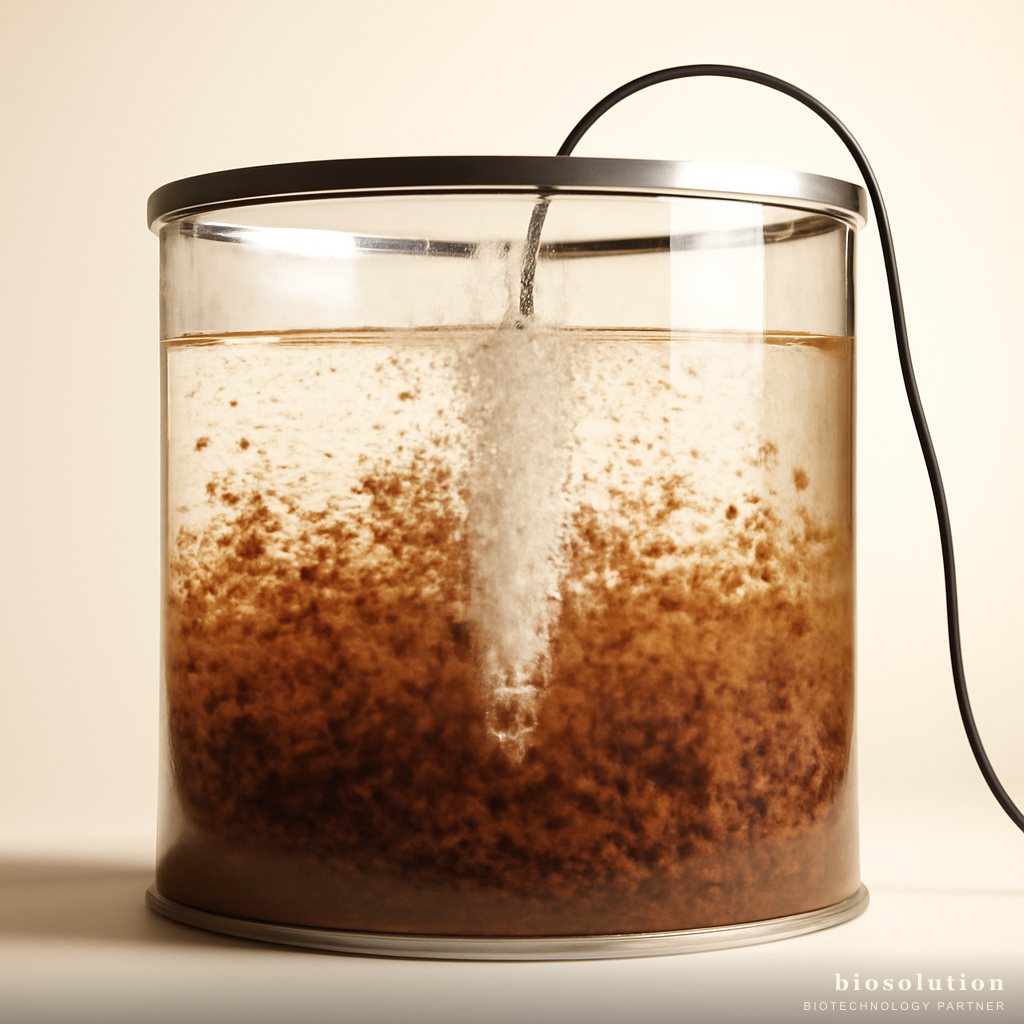
When monitoring shows ammonia or nitrite exceeding thresholds, emergency steps must be taken immediately. The most effective approach is using high-concentration nitrifying bacteria capable of oxidizing ammonia and nitrite in a short time. The product Emergency Ammonia & Nitrite Formula contains two superior strains:
- Nitrosomonas sp.: Chemoautotrophic bacteria that oxidize ammonia (NH3) into nitrite (NO2-). This strain is cultured at 10x concentration of regular probiotics, enabling fast action in emergency conditions.
- Nitrobacter sp.: Bacteria that oxidize nitrite (NO2-) into nitrate (NO3-), a much less toxic compound. The 10x concentration ensures efficient nitrite conversion.
Both bacteria work synergistically in the nitrification cycle. With a shock dose of 10 liters per hectare, the bacterial population increases drastically within hours, significantly accelerating the reduction of ammonia and nitrite.
Correct Application Method for Maximum Results
Emergency treatment application must be done correctly for the bacteria to work optimally. Here is a step-by-step guide:
- Measure Water Parameters: Ensure pH between 7.0-8.5 and DO >4 mg/L. If pH is too high, lower it with dolomite lime or organic acid. If DO is low, increase aeration before application.
- Calculate Dosage: Use a dose of 10 liters per hectare for emergency conditions. If the pond area is 0.5 ha, apply 5 liters. Do not reduce the dose as the bacterial concentration is formulated for that dose.
- Application Time: Apply in the morning (06.00-09.00) when water temperature is not too high and DO is rising after night aeration.
- Application Method: Sprinkle directly onto the water surface evenly. Open the bottle cap and pour slowly while walking around the pond. The bacteria will immediately activate and spread.
- Follow-up Monitoring: Measure ammonia and nitrite 24 hours after application. If still high, repeat the same dose. Usually, one application is enough to reduce ammonia by 50-70% within 24 hours.
- Aeration Support: Ensure aeration runs 24 hours during the recovery period. Oxygen is essential for nitrifying bacteria.
Benefits of Rapid Recovery: Save Your Pond Investment
Speed of recovery is crucial to minimize losses. With proper treatment, high ammonia nitrite pond emergency can be resolved within 24 hours. Benefits obtained:
- Prevent Mass Mortality: Drastic reduction of ammonia and nitrite reduces stress on biota, preventing death.
- Restore Appetite: After water quality improves, fish/shrimp become active again, accelerating growth.
- Protect Investment: Treatment cost is much lower than losses from mass mortality. Products like Emergency Ammonia & Nitrite Formula provide high margins for distributors while saving farmers' investments.
- Maintain Pond Reputation: Farmers who can handle emergencies quickly will be more trusted by business partners.
Conclusion
High ammonia nitrite pond emergency requires a quick and precise response. Daily monitoring of water parameters (ammonia, pH, DO, salinity) is the main preventive step. If a spike occurs, emergency treatment using high-concentration nitrifying bacteria such as Nitrosomonas sp. and Nitrobacter sp. has proven effective in restoring water quality within 24 hours. With a dose of 10 L/ha and morning application, you can save your pond investment from the threat of mass mortality. For further consultation on products and application, contact the Biosolution technical team via WhatsApp. Don't let ammonia destroy your business—act now.