High-Density Catfish Pond Probiotics: Application & Correct Dosage for Maximum Results
High-density catfish farming is a popular choice due to its high profit potential. However, the main challenge is maintaining stable water quality. This is where high-density catfish pond probiotics play a crucial role. With proper application, probiotics can break down organic waste, suppress ammonia, and create a healthy environment for fish. This article will guide you on the application method, dosage per hectare, frequency, and best time using Biosolution's Formula Probiotik Kolam Lele.
Why Are Catfish Pond Probiotics Important for High Density?
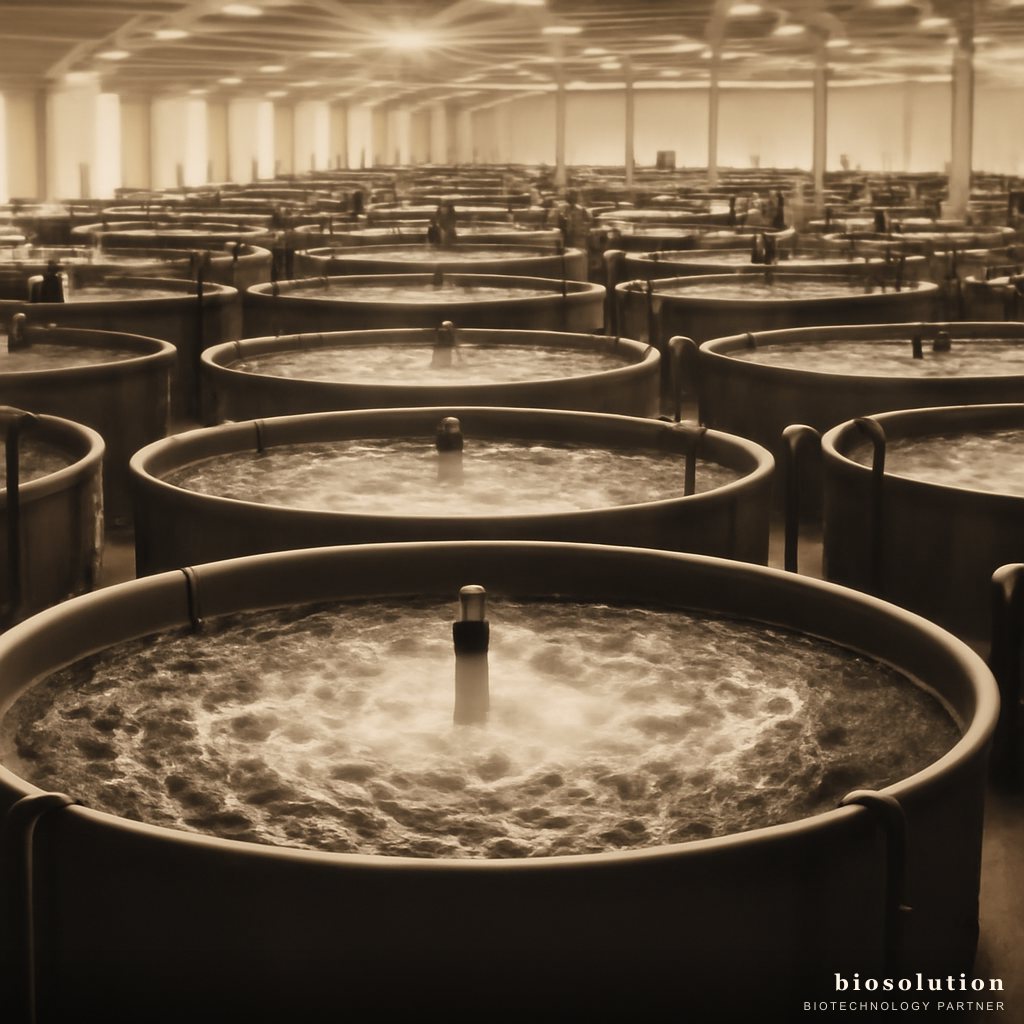
In high-density systems, fish density can reach 200-500 fish per cubic meter. Consequently, leftover feed and feces accumulate quickly, triggering a rise in toxic ammonia (NH3) and nitrite (NO2). Without proper management, water quality declines, fish become stressed, and the risk of mass mortality increases.
Catfish pond probiotics contain beneficial bacteria that work synergistically:
- Bacillus subtilis: Decomposes organic matter (feed residue, feces) into simpler compounds.
- Nitrosomonas sp.: Oxidizes ammonia into nitrite.
- Nitrobacter sp.: Oxidizes nitrite into non-toxic nitrate.
Thus, the nitrogen cycle runs efficiently, water quality is maintained, and high density can be sustained without compromising fish health.
Catfish Pond Probiotic Dosage per Hectare: Accurate Guide
Correct dosage is key to probiotic effectiveness. Based on technical recommendations, Formula Probiotik Kolam Lele is used at a dosage of 2 liters per 1000 m³ of water. For easy calculation, here is the dosage conversion based on pond volume:
| Pond Volume (m³) | Probiotic Dosage (liters) |
|---|---|
| 500 | 1 |
| 1000 | 2 |
| 2000 | 4 |
| 5000 | 10 |
If the pond area is in hectares (1 ha = 10,000 m²) with an average depth of 1 meter, the water volume is approximately 10,000 m³. Then the required dosage is 20 liters per hectare. However, ensure the water volume is calculated accurately for cost efficiency and optimal results.
Tips: Use a volume measuring tool or calculate length x width x average depth of the pond. Do not exceed the dosage as it will not increase effectiveness and may cause turbidity.
Correct Frequency of Catfish Pond Probiotic Application
The frequency of probiotic application is adjusted according to organic load and pond conditions. For high density, it is recommended every 7 days. This interval is sufficient to keep the bacterial population active in decomposing waste.
However, there are conditions that require adjustment:
- New pond (seed stocking): The first application can be done 3-5 days before stocking seeds to establish bacterial colonies.
- After large water change: Immediately apply probiotics to restore microbial balance.
- During extreme weather (continuous rain): Increase frequency to every 5 days because temperature and pH fluctuations can suppress bacteria.
Best Time for Probiotic Application: Morning
Application time greatly affects bacterial effectiveness. Morning (7:00-9:00 AM) is the ideal time because:
- Water temperature is still low (25-28°C), suitable for the growth of Bacillus, Nitrosomonas, and Nitrobacter.
- Dissolved oxygen tends to be high after phytoplankton photosynthesis overnight.
- Probiotic bacteria are aerobic, so they need sufficient oxygen to work optimally.
Avoid application during hot midday because high temperature and low oxygen can stress the bacteria. If forced to apply in the afternoon, ensure it is not at the same time as feeding to avoid competition with fish.
How to Apply Formula Probiotik Kolam Lele
The application method is very simple: directly spread into the pond. Here are the steps:
- Prepare the dosage according to water volume.
- Dilute the probiotic with pond water (ratio 1:10) to ensure even distribution.
- Spread evenly over the entire pond surface, especially in areas with lots of feed residue.
- Turn on aeration for 1-2 hours after application to help circulate bacteria.
Note: Do not mix probiotics with disinfectants or chlorine at the same time. Allow a minimum of 24 hours interval.
Benefits of Probiotic Application in High Density
With consistent application, probiotics provide tangible results:
- Stable water quality: Ammonia and nitrite controlled, pH balanced.
- Reduced pond odor: Waste decomposition proceeds quickly, H2S gas decreases.
- Low mortality: Fish are less stressed, immunity increases.
- Increased density possible: Without worrying about rapid water quality deterioration.
A farmer in West Java reported that after using Formula Probiotik Kolam Lele, he was able to increase density from 300 fish/m³ to 400 fish/m³ with a mortality rate below 5%.
Conclusion
Application of high-density catfish pond probiotics is a key strategy for successful farming. With the correct dosage of 2 L/1000 m³ water, frequency of 7 days, and morning timing, water quality is optimally maintained. Formula Probiotik Kolam Lele from Biosolution contains superior bacteria ready to help you achieve maximum harvest. For further consultation, contact our technical team via WhatsApp.
FAQ
1. Are catfish pond probiotics safe for fish?
Yes, probiotics contain natural, non-pathogenic bacteria. Strains like Bacillus subtilis, Nitrosomonas, and Nitrobacter are actually beneficial as they help decompose waste and maintain water quality. Fish will not be disturbed as long as the dosage follows recommendations.
2. Can probiotics be mixed with vitamins or medication?
It is best not to mix them directly. Allow a minimum interval of 4-6 hours between probiotic application and giving vitamins or medication. If necessary, consult an aquaculture expert to avoid interactions that could harm the bacteria.
3. How long does it take to see the effects of probiotics?
Improvement in water quality is usually noticeable within 3-7 days after regular application. Parameters such as ammonia smell decrease, water becomes clearer, and fish appetite increases. For optimal results, apply periodically according to schedule.
4. What happens if the probiotic dosage is excessive?
Excessive dosage does not significantly increase effectiveness. Excess bacteria can cause temporary water turbidity due to high bacterial biomass. However, this usually stabilizes within 1-2 days. Always follow the recommended dosage for efficiency.
5. Can probiotics be used in earthen ponds?
Absolutely. Probiotics work effectively in earthen, tarpaulin, and concrete ponds. In earthen ponds, bacteria also help decompose bottom sludge, reducing organic matter accumulation. Ensure adequate aeration to support aerobic bacteria.