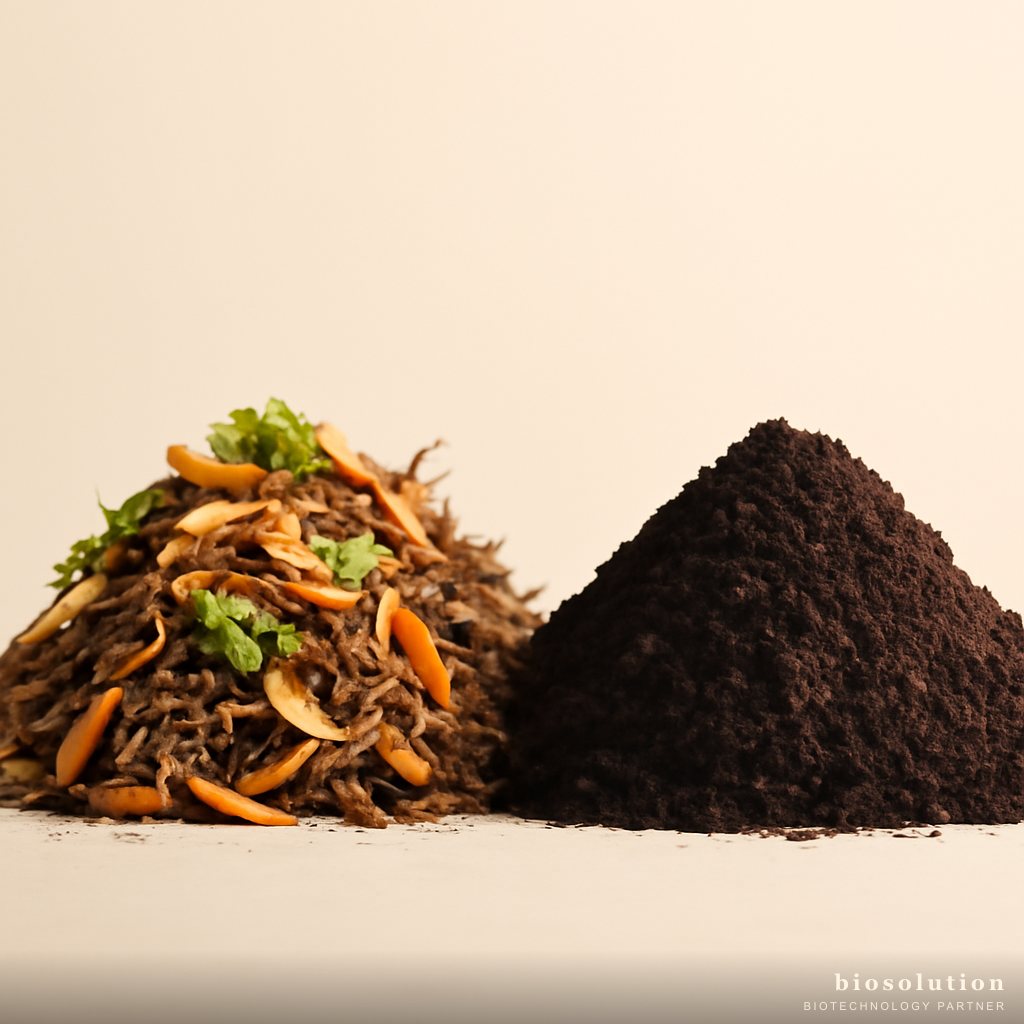
Accelerating Rice Straw Decomposition into Compost in 14 Days with Microbes
Every rice harvest season, farmers are faced with abundant piles of straw. If left alone, rice straw takes 2-3 months to decompose naturally. However, by using a rice straw decomposer containing superior microbes, the decomposition process can be accelerated to just 14–21 days. This not only saves time but also supports environmentally friendly regenerative agriculture practices.
Why Is Rice Straw Decomposition Important?
Rice straw contains lignocellulose which is difficult to break down. If burned, besides polluting the air, nutrients like carbon and nitrogen are wasted. In fact, composted straw can be a source of organic matter that improves soil structure, increases water retention, and provides nutrients for plants. By accelerating decomposition, farmers can immediately prepare the land for the next planting season without waiting long.
The Role of Microbes in Rice Straw Decomposition
Microbes are the key to accelerating decomposition. Several types of microbes have the ability to produce enzymes that break down cellulose, hemicellulose, and lignin. In rice straw decomposer products, there are three reliable microbes:
Aspergillus niger
This fungus produces cellulase enzymes and organic acids that effectively break down cellulose. Aspergillus niger also helps lower the pH of the pile, creating optimal conditions for other microbes.
Trichoderma viride
Trichoderma viride is known as a fast lignocellulose decomposer. It can attack tough lignin and accelerate the weathering of straw fibers.
Thiobacillus sp.
This bacterium oxidizes sulfur, helping to lower the pH of the compost and prevent pathogen growth. The result is more stable, nutrient-rich mature compost.
These three microbes work synergistically to break down straw into humus in a short time. With the right dosage, 1 liter of decomposer is enough for 1 ton of straw.
Proper Application Method for Rice Straw Decomposer
For maximum results, the decomposer application must be done correctly:
- Pile preparation: Stack straw 30-50 cm high, moisten until damp (50-60% moisture content).
- Application: Dissolve 1 liter of decomposer in 10 liters of water, sprinkle evenly over the pile.
- Turning: Turn the pile every 5-7 days for aeration.
- Application time: Do it in the afternoon to reduce evaporation.
With minimal care, in 14-21 days the straw will become blackish-brown compost, smelling like earth, with a C/N ratio below 20.
Advantages of Using Decomposer Compared to Burning
- Environmentally friendly: Produces no smoke or carbon emissions.
- Saves time: Decomposition process only 14-21 days vs. natural 2-3 months.
- Improves soil quality: Compost improves soil structure and fertility.
- Reduces costs: No need for additional chemical fertilizers.
Regenerative agriculture aims to restore soil ecosystems. By returning straw to the soil as compost, the carbon cycle is maintained and soil microbial biodiversity increases.
Common Obstacles and Solutions
Some farmers complain about odor or slow process. The causes are usually:
- Excess water: Pile too wet, lack of aeration. Solution: add dry materials like husks.
- Nitrogen deficiency: Add urea or animal manure.
- Temperature too high: Turn the pile more frequently.
With regular monitoring, these problems are easily overcome.
Conclusion
Fast rice straw decomposition is no longer a dream. By utilizing a rice straw decomposer containing Aspergillus niger, Trichoderma viride, and Thiobacillus sp., farmers can process harvest waste into quality compost in 14-21 days. This step supports regenerative agriculture and reduces straw burning. For more information, consult your needs via WhatsApp or visit the decomposer product page.
FAQ
Is rice straw decomposer safe for plants?
Yes, the microbes used are natural strains that are not pathogenic. The resulting compost actually enriches the soil and is safe for plants.
What dosage is needed for 1 hectare?
Average rice straw per hectare is about 5-8 tons. With a dosage of 1 liter per ton, you need 5-8 liters of decomposer.
Can the decomposer be used for other organic waste?
Certainly. This product is also effective for agricultural waste such as corn stalks, husks, and animal manure.
Is it necessary to add chemical fertilizers when composting?
Not mandatory. However, if the straw lacks nitrogen, you can add urea or animal manure to speed up the process.
How long until the compost is ready to use?
In 14-21 days the compost is mature and ready to be applied to the land. Characteristics: black color, crumbly, and no ammonia smell.