How to Fix Hard and Dry Soil Due to Chemical Fertilizer Overdose
Hard and dry soil is a nightmare for farmers, especially after excessive use of chemical fertilizers. This condition not only reduces productivity but also makes it difficult for plants to grow optimally. So, how do you fix hard and dry soil that has already been damaged? This article will thoroughly discuss the causes, symptoms, and microbiology-based solutions that have proven effective.
Why Does Chemical Fertilizer Overdose Occur?
Chemical fertilizer overdose often occurs due to farmers' habit of pursuing high yields with excessive doses. In fact, chemical fertilizers such as urea, SP-36, and KCl, when applied in large amounts, leave salt residues in the soil. This salt accumulation causes the soil to become hard, crack when dry, and difficult to absorb water. In addition, the balance of soil microbes is disrupted, hindering the decomposition of organic matter and nutrient cycles.
Symptoms of Soil Due to Chemical Fertilizer Overdose
Some observable signs include:
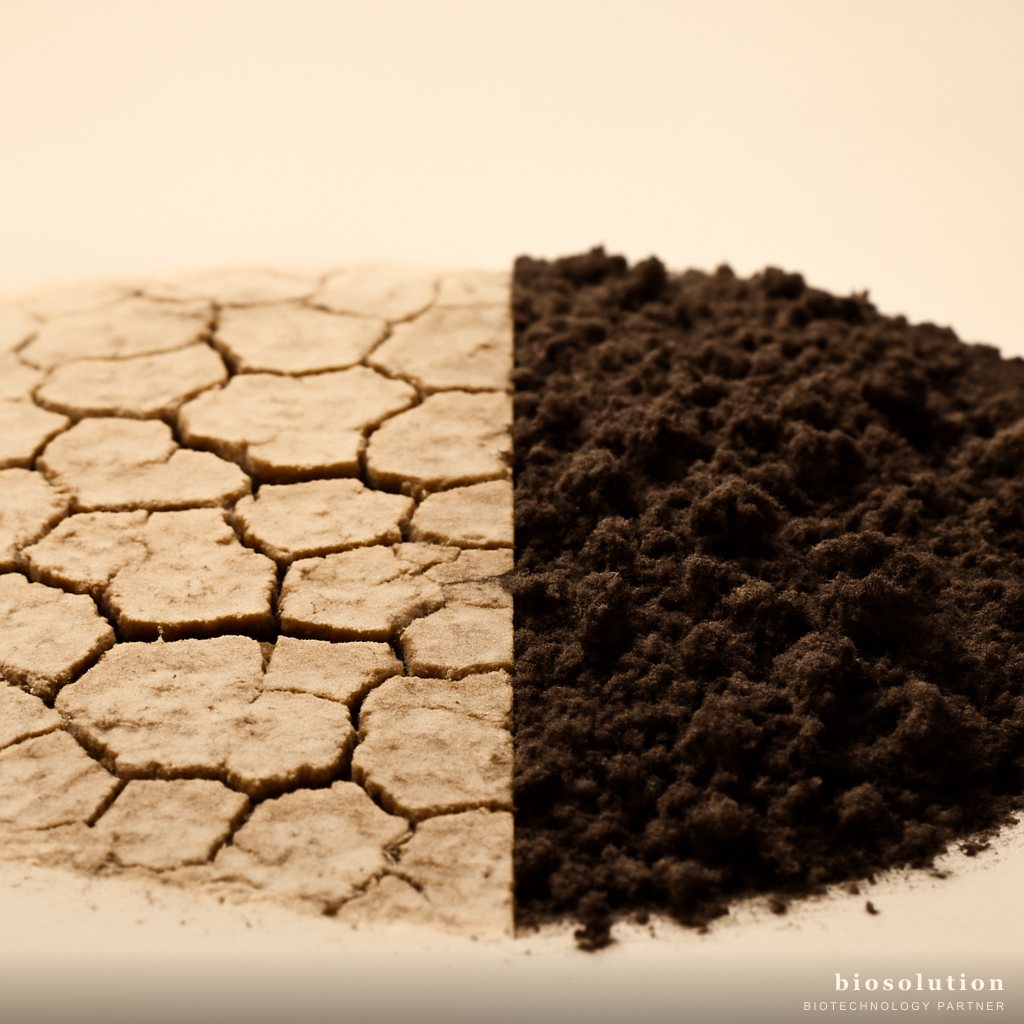
- Soil hardens and cracks easily during the dry season.
- Water pools on the surface due to low infiltration.
- Plants grow stunted, leaves turn yellow, and roots do not develop.
- White crust appears on the soil surface due to salt deposits.
- Earthworm and microorganism populations decline drastically.
Impact of Chemical Fertilizer Overdose on Soil Structure
Good soil structure has stable aggregates, balanced macro and micropores, and the ability to store water and air. However, excess chemical fertilizers damage soil aggregates because salt ions (such as Na+, Cl-) replace important cations (Ca2+, Mg2+) on the soil exchange complex. As a result, soil particles disperse and form a hard, watertight layer. This condition is called soil crusting, which hinders germination and root penetration.
Furthermore, fertilizer overdose also reduces the soil's Cation Exchange Capacity (CEC). Low CEC means the soil cannot optimally retain nutrients, so subsequently applied fertilizers are easily leached. This creates a vicious cycle: farmers keep adding chemical fertilizers, but the soil becomes increasingly damaged.
Microbial Solution: Naturally Fixing Hard and Dry Soil
One of the most effective ways to fix hard and dry soil is by utilizing beneficial microorganisms. Soil microbes such as Azotobacter sp., Azospirillum sp., and Bacillus megaterium have the ability to improve soil structure, increase nutrient availability, and restore soil ecosystem balance.
Role of Azotobacter sp. and Azospirillum sp.
Both of these bacteria are free-living nitrogen fixers (diazotrophs) capable of fixing N₂ from the air and converting it into ammonium available to plants. Additionally, Azotobacter sp. produces exopolysaccharides (EPS) that act as natural adhesives for soil particles. This EPS helps form stable soil aggregates, making the soil loose and increasing porosity. Azospirillum sp. also produces phytohormones such as auxins and gibberellins that stimulate root growth, allowing plant roots to penetrate hard soil layers.
Role of Bacillus megaterium
Bacillus megaterium is known as a phosphate and potassium solubilizing bacterium. This bacterium produces organic acids that dissolve bound phosphates in the soil, making phosphorus available to plants. Additionally, Bacillus megaterium can solubilize potassium from soil minerals, helping to increase nutrient availability. Thus, the need for chemical fertilizers can be gradually reduced.
Soil Structure Improvement Formula: The Right Solution for Damaged Soil
Biosolution presents the Soil Structure Improvement Formula containing three superior bacteria: Azotobacter sp., Azospirillum sp., and Bacillus megaterium. This product is specifically designed to fix hard, dry, and nutrient-poor soil caused by chemical fertilizer overdose.
How the Formula Works
This formula works through several mechanisms:
- Improving soil structure: EPS from Azotobacter sp. binds soil particles into stable aggregates, increasing porosity and water infiltration.
- Increasing water holding capacity: Good soil aggregates can store water longer, so plants do not wilt easily during the dry season.
- Improving CEC: Bacteria help restore cation balance in the soil, increasing the soil's ability to retain nutrients.
- Providing nutrients naturally: N₂ fixation, P and K solubilization reduce dependence on chemical fertilizers.
Application Method
Applying the Soil Structure Improvement Formula is very easy. Mix 10 ml of product per liter of water, then drench or spray onto the soil during land preparation. Repeat every 30 days, 3 times per growing season. The best time is at the beginning of the rainy season or after tillage, so that microbes become active and colonize quickly.
Practical Steps to Fix Hard and Dry Soil
Here is a step-by-step guide you can apply:
1. Stop Excessive Use of Chemical Fertilizers
The first step is to gradually reduce the dose of chemical fertilizers. Do not stop completely immediately because plants still need nutrients. Reduce by 25-50% of the usual dose, then replace with organic and biological fertilizers.
2. Add Organic Matter
Organic matter such as compost, manure, or straw is very important for improving soil. Organic matter increases microbial activity, provides food for bacteria, and helps bind water. Spread 2-5 tons/ha of compost before planting.
3. Apply Soil Structure Improvement Formula
Use Soil Structure Improvement Formula according to the recommended dosage. Apply regularly every month for maximum results. This product can be combined with organic fertilizers to speed up recovery.
4. Implement Proper Irrigation
Hard soil requires slow watering to allow water to penetrate. Use drip or furrow irrigation, avoid flooding which can worsen compaction. After microbial application, maintain soil moisture to keep bacteria active.
5. Plant Cover Crops
Cover crops such as legumes or grasses can protect soil from erosion, add organic matter, and improve root structure. After the growing season, allow plant residues to decompose in the field.
Long-Term Benefits of Soil Improvement with Microbes
By applying the method of fixing hard and dry soil using microbes, you will experience sustainable benefits:
- Soil becomes loose and easy to till: Improved soil structure reduces land preparation costs.
- Increased water holding capacity: Soil can store water longer, reducing irrigation frequency.
- Optimal nutrient availability: Plants grow healthy with higher and better quality yields.
- Restored soil microbial population: Soil ecosystem returns to balance, suppressing soil-borne diseases.
- Reduced dependence on chemical fertilizers: Production costs decrease, farmer profits increase.
Conclusion
Chemical fertilizer overdose indeed makes soil hard, dry, and unproductive. However, with the right approach, this condition can be fixed. The most effective way to fix hard and dry soil is by combining the reduction of excess chemical fertilizers, addition of organic matter, and application of superior microbes such as those contained in Soil Structure Improvement Formula. Microbes work naturally to improve soil structure, increase porosity, and restore fertility. Do not let your land continue to deteriorate. Start improvement now and feel the difference. For further consultation, contact our team via WhatsApp.
FAQ
What is the main cause of hard and dry soil?
The main cause is salt accumulation from excess chemical fertilizers, lack of organic matter, and low microbial activity. These salts damage soil aggregates, causing soil particles to compact and form a hard crust when dry.
How long does it take to fix hard soil?
Soil structure improvement takes 1-3 growing seasons depending on the level of damage. With regular application of Soil Structure Improvement Formula every 30 days, significant improvement is usually seen after 2-3 months.
Is the Soil Structure Improvement Formula safe for the environment?
Very safe. This product contains natural bacteria that are not pathogenic. Its use actually helps reduce the use of chemical fertilizers, making it environmentally friendly.
Can this formula be used for all types of plants?
Yes, the Soil Structure Improvement Formula is suitable for all types of plants, especially food crops, horticulture, and plantations. This product helps improve soil conditions in general.
Where can I buy the Soil Structure Improvement Formula?
This product is available at Biosolution partner agricultural stores or can be ordered directly through the official website. For more information, contact our customer service.