How to Make Compost in 14 Days with Microbial Decomposer
Making compost in a short time—14 days—is the dream of many organic farmers. With microbial decomposer technology, a process that usually takes 30–60 days can be accelerated by half. The key is choosing the right biofertilizer, containing superior microbes such as Aspergillus niger, Trichoderma viride, and Thiobacillus sp. that work synergistically to break down lignocellulose. This article will guide you on how to make compost in just 14 days with a microbial decomposer, as well as criteria for selecting certified products that are effective and safe.
Why 14-Day Compost Is Possible? The Role of Microbial Decomposers
The natural composting process relies on microorganisms that break down organic matter. However, without inoculation, natural microbial populations are often insufficient to break down tough fibers like cellulose and lignin in a short time. This is where microbial decomposers come in. Products like Straw & Organic Waste Decomposer Formula contain three key strains:
- Aspergillus niger: This fungus produces cellulase enzymes that break down cellulose into simple sugars, as well as organic acids that lower the compost pH, creating an ideal environment for other microbes.
- Trichoderma viride: Known as a fast lignocellulose decomposer, it can break down lignin and cellulose simultaneously, accelerating the thermophilic phase.
- Thiobacillus sp.: Sulfur-oxidizing bacteria that help lower compost pH, prevent pathogen growth, and increase sulfur availability for plants.
These three microbes work optimally in moist conditions (40-60% humidity) and adequate aeration. With a dose of only 1 liter per ton of raw material, the composting process can be completed in 14–21 days, producing compost with a C/N ratio below 20—the criterion for mature compost.
Criteria for Choosing Biofertilizer for 14-Day Fast Compost
Not all microbial decomposers are the same. To achieve 14-day fast compost, consider the following criteria:
1. Superior and Synergistic Microbial Content
Choose a product containing at least one cellulolytic fungus (e.g., Trichoderma or Aspergillus) and decomposer bacteria. The synergy between Trichoderma viride and Aspergillus niger has been proven to accelerate straw decomposition by up to 50% faster than controls.
2. Adequate Microbial Population Density
Quality products list the number of CFU (Colony Forming Units) per mL or gram. Minimum 10⁸ CFU/mL for bacteria and 10⁶ CFU/g for fungi. The Straw & Organic Waste Decomposer Formula meets these standards.
3. Certification from Authorized Institutions
In Indonesia, biofertilizers must be registered with the Ministry of Agriculture. Look for products that already have a registration number and SNI label. Certification ensures biological safety and product effectiveness. Visit the official Ministry of Agriculture website for more information.
4. Ease of Application and Dose Efficiency
Ready-to-use liquid products are more practical. A dose of 1 liter per ton of raw material is an efficient standard. Ensure clear application instructions, including watering time (afternoon) and turning frequency.
Practical Guide: How to Make Compost in 14 Days with Microbial Decomposer
Here are the steps to make fast compost in 14 days using a microbial decomposer:
Raw Material Preparation
- Main materials: Rice straw (dry), agricultural waste (leaves, stems), or livestock waste (cow/chicken manure).
- Additional materials: Bran/rice polish (as a carbon source and initial nutrient), clean water.
- Ratio: 70% carbon-rich material (straw) : 30% nitrogen-rich material (livestock manure).
Application Steps
- Chop materials to 5–10 cm size to increase surface area.
- Create a pile 1–1.5 m high, 1–2 m wide.
- Dissolve decomposer: Mix 1 liter of Straw & Organic Waste Decomposer Formula into 10 liters of clean water. Stir well.
- Spray the solution evenly over the entire pile. Ensure moisture reaches 50-60% (check by squeezing: a little water drips).
- Cover the pile with a tarp or black plastic to retain heat and moisture.
- Turn the pile every 5–7 days for aeration. Do this in the afternoon to avoid UV rays that damage microbes.
Indicators of Mature Compost (14 Days)
- Pile temperature drops from 50-65°C (thermophilic phase) to 30-40°C.
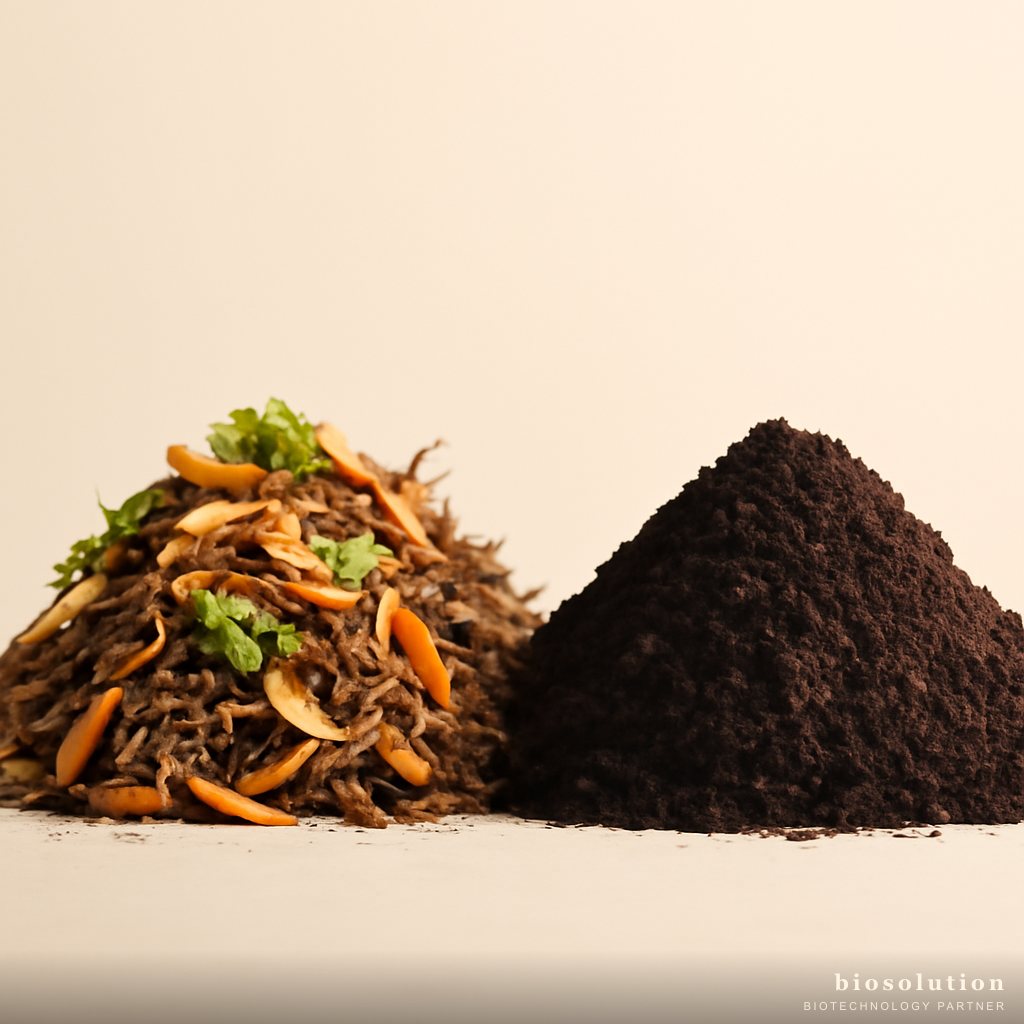
- Dark brown to black color, crumbly texture.
- Earthy smell (not ammonia or rotten).
- C/N ratio < 20 (test with a simple tool or laboratory).
Benefits of 14-Day Fast Compost for Organic Farmers
With 14-day fast compost, organic farmers gain:
- Shorter production cycle: Can produce compost several times in one growing season.
- Reduced straw burning: Straw that is usually burned can now be processed into compost, reducing air pollution and carbon emissions.
- Maintained compost quality: Low C/N ratio means compost is ready to use without the risk of "nitrogen starvation" for plants.
- Lower costs: Only 1 liter of decomposer per ton is needed, at an affordable price. Compare with chemical fertilizers whose prices fluctuate.
Conclusion
Making compost in 14 days is no longer a myth. By choosing the right microbial decomposer—containing Aspergillus niger, Trichoderma viride, and Thiobacillus sp.—and following correct application procedures, organic farmers can significantly accelerate the composting process. Ensure the product used has official certification and adequate microbial density. For optimal results, use the Straw & Organic Waste Decomposer Formula which has been tested. Consult your needs with the Biosolution expert team via WhatsApp for further guidance.
FAQ
1. Is microbial decomposer safe for plants? Yes, the microbes used such as Trichoderma viride and Aspergillus niger are non-pathogenic strains that have been tested for safety. In fact, these microbes help suppress soil pathogens and improve plant health.
2. Can 14-day compost be used immediately? Mature compost (C/N <20) can be applied directly to plants. However, for maximum results, it is recommended to ferment for an additional 3-5 days in an open state to stabilize the microbes.
3. What if the pile temperature does not rise? Low temperature may be due to insufficient moisture, too large particle size, or insufficient decomposer dose. Check moisture (add water if dry) and ensure the pile is high enough (at least 1 meter).
4. Can this formula be used for livestock waste? Certainly. The Straw & Organic Waste Decomposer Formula is effective for cow manure, chicken manure, and other agricultural waste. Adjust the C/N ratio by adding carbon-rich materials (straw, sawdust) if needed.
5. Where can I buy microbial decomposer? Products are available at Biosolution partner agricultural stores or through online ordering. Contact the official contact for information on the nearest distributor.