Improving Coastal Saline Soil with the Best Biofertilizer
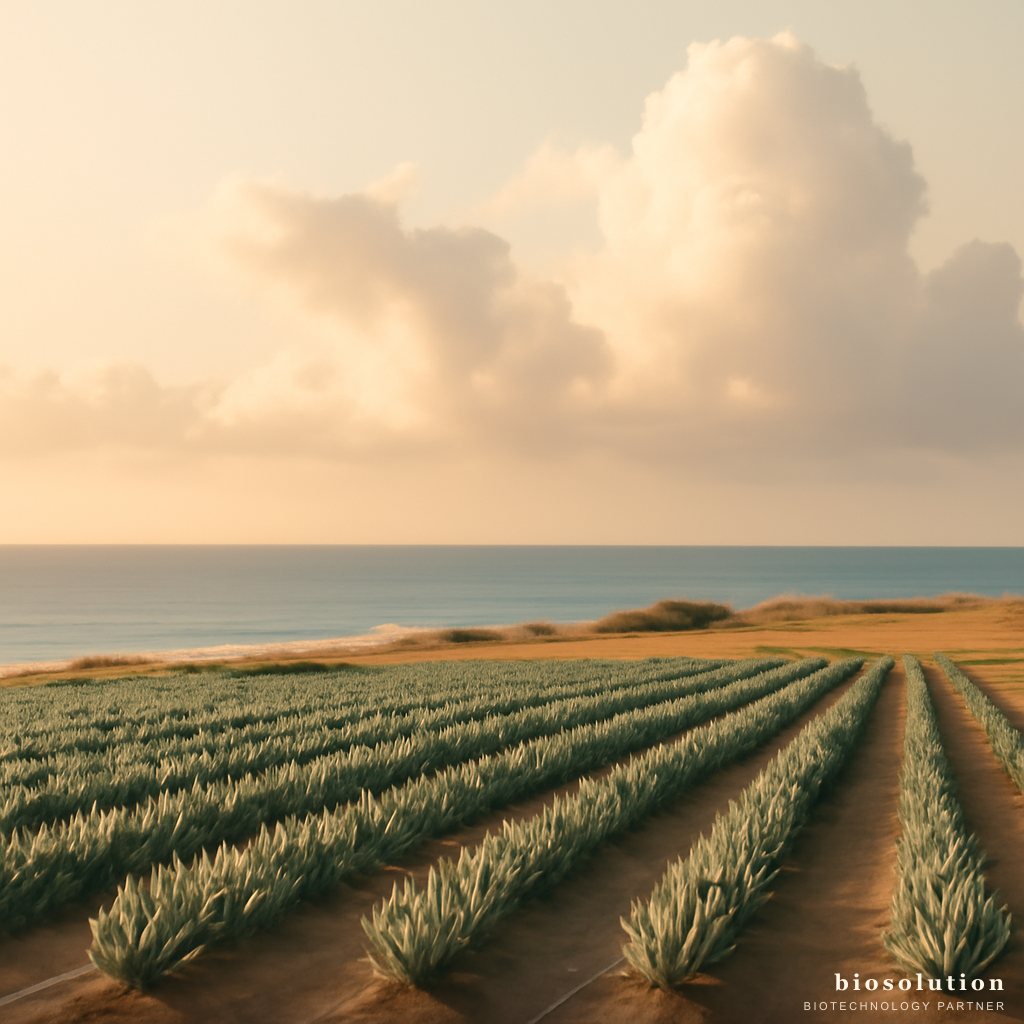
Agricultural land in coastal areas often faces high salinity problems that inhibit plant growth. Improving coastal saline soil requires the right approach, one of which is using biofertilizer. Biofertilizer contains beneficial microbes that can naturally restore soil fertility. This article will discuss the criteria and certifications to consider when selecting biofertilizer for saline land, and recommend superior products from Biosolution.
Why is Coastal Saline Soil Problematic?
Coastal saline soil has high levels of dissolved salts, especially NaCl, which disrupts water and nutrient absorption by plants. Salt accumulation causes osmotic stress, ion toxicity, and degradation of soil structure. As a result, soil porosity decreases, water holding capacity declines, and soil microbial activity is inhibited. Data from the Ministry of Agriculture (2018) shows that approximately 440,000 hectares of paddy fields in Indonesia are affected by salinity. This condition requires effective and environmentally friendly rehabilitation solutions.
Criteria for Biofertilizer for Saline Land
Salt-Tolerant Microbial Content
Microbes in biofertilizer must be able to survive and be active under high salinity conditions. Strains such as Azotobacter sp. and Azospirillum sp. are known to be salt-tolerant and capable of producing exopolysaccharides (EPS) that aid soil aggregation. Bacillus megaterium is also effective in solubilizing phosphate and potassium under saline conditions. The Soil Structure Improvement Formula product contains all three strains at optimal concentrations.
Ability to Improve Soil Structure
A good biofertilizer should enhance soil aggregation, porosity, and water holding capacity. EPS-producing microbes such as Azotobacter sp. bind soil particles to form stable aggregates, reducing salt crust on the surface. This is important for improving coastal saline soil which tends to be compact and difficult to cultivate.
Product Certification and Registration
Ensure the biofertilizer is registered with the Ministry of Agriculture with a valid registration number. Certification guarantees product quality, safety, and efficacy. Biosolution products meet the standards and are recommended for marginal land.
How Biofertilizer Works in Improving Saline Soil
Microbial Mechanisms
Azotobacter sp. fixes atmospheric nitrogen and produces EPS that improves soil structure. Azospirillum sp. produces phytohormones such as auxin that stimulate root growth, making plants more tolerant to salt stress. Bacillus megaterium solubilizes fixed phosphate and potassium, increasing nutrient availability. All three work synergistically to restore soil ecosystem balance.
Effect on Soil Chemical Properties
Regular use of biofertilizer can lower the pH of saline soil, increase CEC, and reduce sodium concentration. Microbes also produce organic acids that bind salt ions, thereby reducing toxicity. Research at Gadjah Mada University showed that Azotobacter application could reduce soil salinity by up to 20% in one season.
Guide to Applying Biofertilizer for Coastal Land
Proper Timing and Dosage
The Soil Structure Improvement Formula product is applied by drenching or soil spraying during tillage. Dosage is 10 ml per liter of water, repeated every 30 days for 3 times per season. The best time is at the beginning of the rainy season so that microbes develop quickly. Avoid application when the soil is too dry because salt can inhibit microbial activity.
Combination with Organic Matter
For optimal results, biofertilizer should be combined with manure or compost. Organic matter provides a substrate for microbes and increases water retention. Mix 2-3 tons of compost per hectare before applying biofertilizer.
Case Study: Success in Coastal Land of East Java
Farmers in Tuban Regency succeeded in increasing rice production from 3 tons to 5 tons per hectare after using the Soil Structure Improvement Formula for two seasons. Soil salinity decreased from 6 dS/m to 3 dS/m, and soil structure became looser. This testimony shows that the best biofertilizer can significantly improve coastal saline soil.
Conclusion
Improving coastal saline soil requires biofertilizer with specific criteria: containing salt-tolerant microbes, capable of improving soil structure, and having official certification. The Soil Structure Improvement Formula from Biosolution meets all these criteria. For further consultation, contact our team via WhatsApp or visit the product page for detailed information.
FAQ
What is coastal saline soil?
Coastal saline soil is soil in coastal areas with high salt content due to seawater intrusion or excessive evaporation. This condition inhibits plant growth due to osmotic stress and ion toxicity.
How to choose biofertilizer for saline land?
Choose biofertilizer containing salt-tolerant microbes such as Azotobacter sp. and Bacillus megaterium, and with the ability to produce EPS to improve soil structure. Ensure the product is registered with the Ministry of Agriculture.
How long does it take to improve saline soil?
Significant improvement is usually seen after 1-2 growing seasons with regular biofertilizer application. Factors such as initial salinity level and use of organic matter also affect recovery speed.
Is biofertilizer safe for the environment?
Yes, biofertilizer is made from natural microbes that are environmentally friendly and leave no chemical residues. Biosolution products have been tested safe for soil, water, and plants.
Where can I buy the Soil Structure Improvement Formula?
The product is available at Biosolution partner agricultural stores or can be ordered directly through the official website. For more information, contact our customer service.