Large-Area Granular Biofertilizer: A Practical Solution for Modern Plantations and Regenerative Agriculture
Large-scale plantations face unique fertilization challenges: application efficiency, labor costs, and environmental impact. Large-area granular biofertilizer is the answer to these needs. With a superior microbial formulation in granular form, this product is not only easy to apply using a spreader machine but also supports regenerative agriculture principles by improving soil health biologically. This article will thoroughly explore how granular biofertilizer can revolutionize the way you fertilize large plantations.
Why Granular Biofertilizer is Superior for Large Areas?
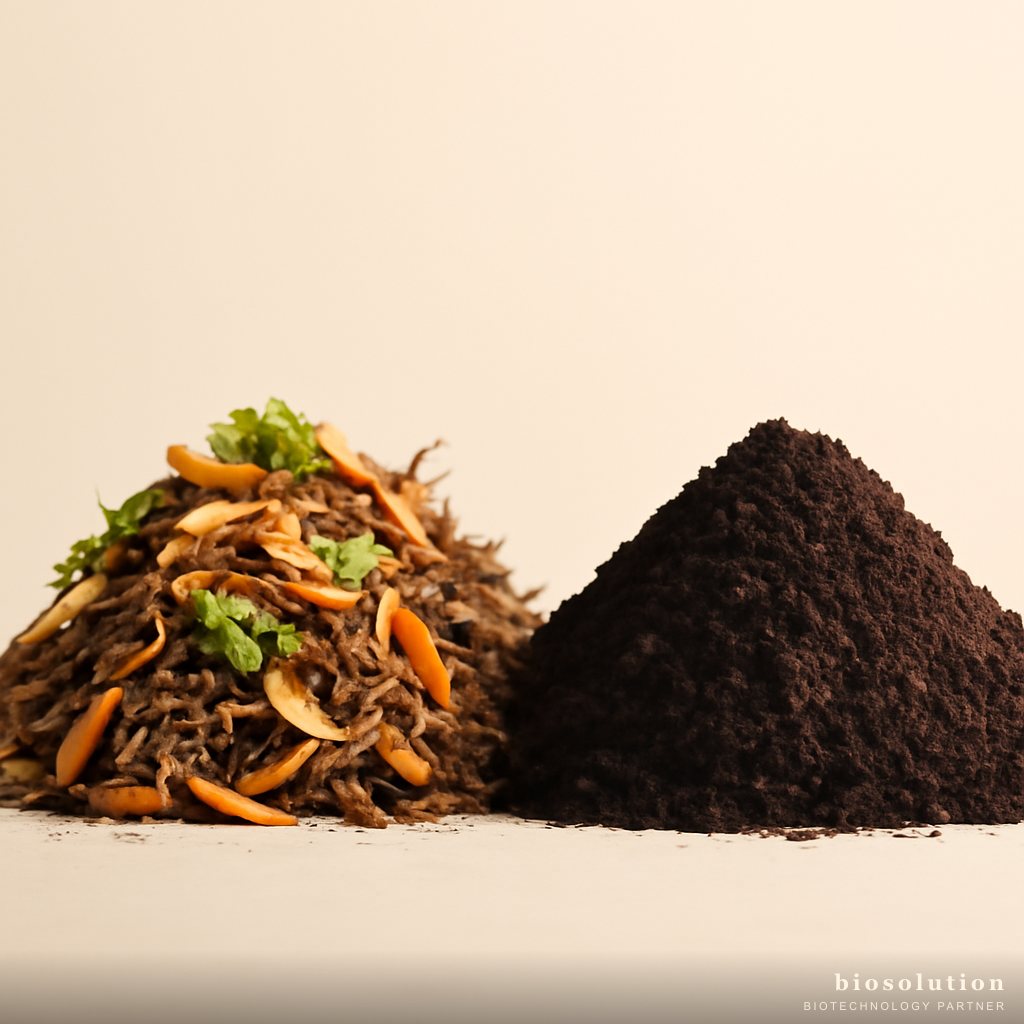
Granular biofertilizer offers several advantages over liquid or powder forms, especially for large areas. Granules sized 2–4 mm are ideal for spreader machines, allowing fast and even distribution. With a dosage of 100–250 kg per hectare, application is sufficient 1–2 times per growing season, saving time and labor. Additionally, gradual nutrient release reduces the risk of nutrient leaching, ensuring plants receive a continuous supply of microbes and organic compounds. The organic content in the granules also increases soil C-organic, improves soil structure, and supports indigenous microbial activity.
Superior Microbial Composition in Granular Biofertilizer
This product contains five synergistically selected microbial strains to support plant growth and soil health:
Rhizobium sp.: Nitrogen Fixer for Legumes
Rhizobium sp. symbioses with legume roots (soybean, peanut, lamtoro) to fix atmospheric nitrogen. Each hectare can contribute 50–200 kg N per season, reducing urea fertilizer needs by up to 30%.
Bacillus subtilis: Phosphate Solubilizer and Biocontrol
Bacillus subtilis solubilizes bound phosphate in the soil into forms available to plants. Additionally, this bacterium produces antibiotics and enzymes that suppress soil-borne pathogens such as Fusarium and Rhizoctonia.
Azospirillum sp.: Associative N Fixer
Azospirillum sp. lives in the rhizosphere and fixes nitrogen for non-legume plants such as corn, sugarcane, and oil palm. Phytohormone production by this bacterium also stimulates root growth.
Pseudomonas fluorescens: Soil Pathogen Antagonist
Pseudomonas fluorescens produces siderophores and antibiotics that inhibit the growth of soil-borne fungal pathogens. This strain also induces systemic resistance in plants.
Trichoderma sp.: Soil Fungus Biocontrol
Trichoderma sp. is an antagonistic fungus that parasitizes pathogens such as Sclerotium and Phytophthora. Additionally, Trichoderma enhances decomposition of organic matter and nutrient availability.
Application of Granular Biofertilizer with Spreader Machines
One of the main advantages of this product is the ease of application using a spreader machine. Here is a practical guide:
- Preparation: Ensure the spreader machine is clean and calibrated according to the dosage (100–250 kg/ha). Use 2–4 mm granules to avoid clogging.
- Application Time: During tillage or early rainy season, when soil moisture is sufficient for microbial activation.
- Spreading Method: Spread evenly on the soil surface, then lightly cover with soil or combine with light tillage.
- Frequency: Sufficient 1–2 times per growing season. For perennial crops, apply every 6–12 months.
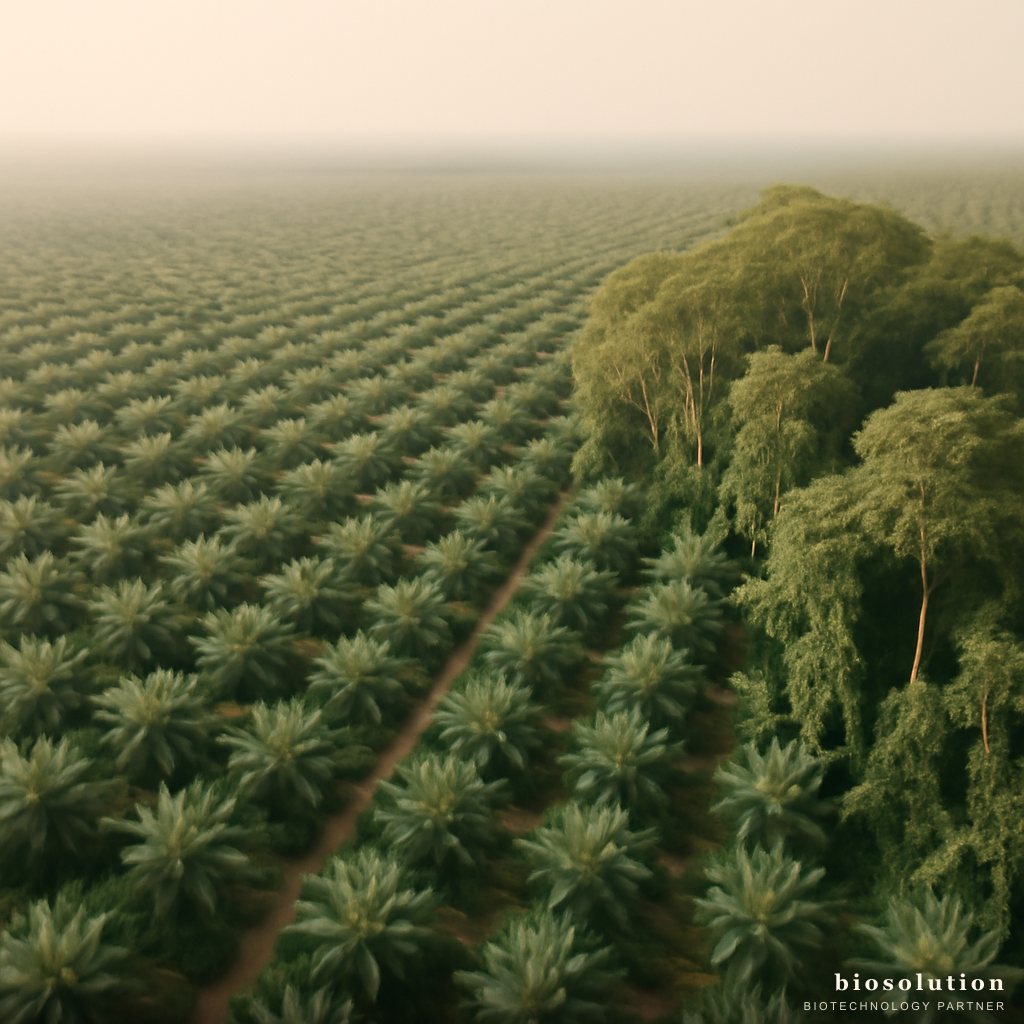
Using a spreader machine saves up to 80% application time compared to manual methods, making it highly suitable for oil palm, rubber, sugarcane, and other industrial crop plantations.
Role of Granular Biofertilizer in Regenerative Agriculture
Regenerative agriculture aims to restore soil health, increase biodiversity, and sequester carbon. Granular biofertilizer plays a key role in:
- Increasing Soil C-Organic: The granules contain organic matter that decomposes into humus, improving water and nutrient retention.
- Reducing Greenhouse Gas Emissions: By reducing chemical fertilizer use, N₂O emissions can be suppressed.
- Supporting Microbial Biodiversity: Inoculation with superior microbes enriches the soil microbial community, improving nutrient cycling.
- Reducing Erosion: Improved soil structure due to increased organic matter reduces erosion.
FAO studies show that applying biofertilizer on plantation land can increase crop yields by 10–20% while reducing fertilizer costs by 25–40%.
Comparison with Conventional Chemical Fertilizers
| Aspect | Granular Biofertilizer | Conventional Chemical Fertilizer |
|---|---|---|
| Nutrient Release | Gradual, according to plant needs | Rapid, leaching risk |
| Environmental Impact | Environmentally friendly, improves soil | Water pollution, soil degradation |
| Soil Health | Increases microbial activity | Suppresses beneficial microbes |
| Long-term Cost | More economical due to reduced application frequency | High cost, requires repeated application |
Case Study: Successful Use of Granular Biofertilizer in Sugarcane Plantation
In East Java, a 500-hectare sugarcane plantation used granular biofertilizer at a dose of 200 kg/ha at planting. Results:
- Sugarcane production increased by 18% compared to control (chemical fertilizer only).
- Urea fertilizer requirement reduced by 30%.
- Soil microbial population doubled at the end of the season.
How to Get Large-Area Granular Biofertilizer
The Large-Area Granular Biofertilizer Formula product from Biosolution is available in 25 kg and 50 kg packages. For bulk orders (≥1 ton), special discounts are available. Contact our team for a free consultation on dosage and application suitable for your crop type and land conditions.
Conclusion
Large-area granular biofertilizer is an innovation that meets the needs of modern plantations: efficient, practical, and environmentally friendly. With superior microbial composition such as Rhizobium sp., Bacillus subtilis, and Trichoderma sp., this product not only nourishes plants but also improves soil health sustainably. Support regenerative agriculture and increase your plantation productivity with granular biofertilizer. Consult your needs with the Biosolution team or see other agricultural solutions.