Liquid Organic Fertilizer for Tomatoes: 7 Mistakes That Cause Crop Failure
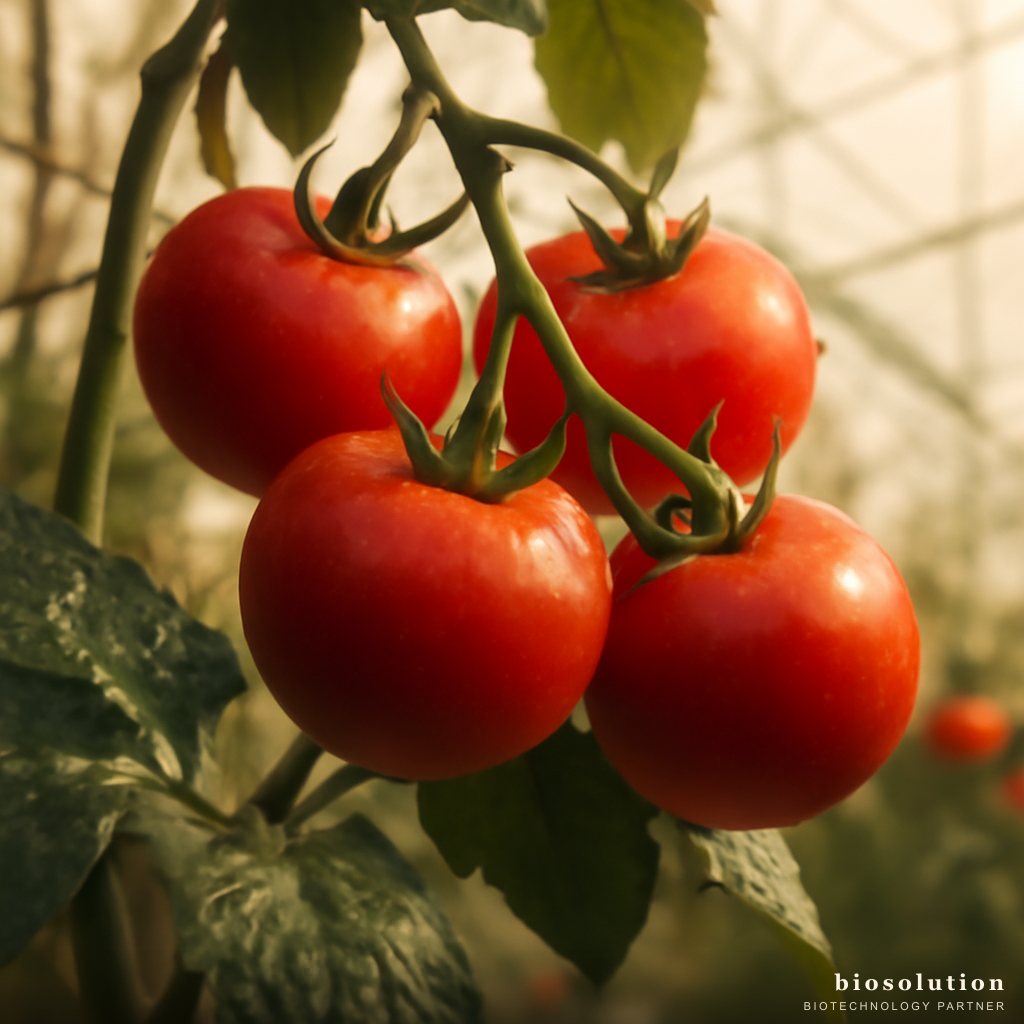
Liquid organic fertilizer for tomatoes is a mainstay for modern farmers who want to produce sweet fruit free of chemical residues. However, many still fail due to technical errors during application. This article discusses 7 common mistakes in using liquid organic fertilizer for tomatoes—both in hydroponic and soil systems—and the right solutions using Biosolution's Flower & Fruit Trigger POC Formula.
1. Choosing the Wrong POC Formula for the Growth Phase
Differences in vegetative vs. generative phase needs
Many farmers use the same POC from planting to harvest. In fact, the vegetative phase (leaf and root growth) requires nitrogen dominance, while the generative phase (flowers and fruit) requires high phosphorus and potassium. The Flower & Fruit Trigger POC Formula is specifically formulated for the generative phase with PGPR Consortium that triggers flowering hormones, seaweed extract rich in cytokinins, and humic and fulvic acids as nutrient carriers. Consequently, if generative POC is given too early, plants will lack N for optimal vegetative growth.
2. Incorrect Dosage and Application Frequency
Overdose actually causes flower drop
The recommended usage of Flower & Fruit Trigger POC Formula is 3–5 ml per liter of water every 7–10 days via foliar spray or drench. Many farmers think "more is better," so they increase the dose to 10 ml/L. This causes hormonal imbalance, triggering flower and fruit drop. Biosolution trial data shows that applying the correct dose can reduce drop by −30%. Too frequent application (every 3 days) also stresses plants due to excess cytokinins.
3. Wrong Application Time: Midday Heat
Microbes die, fertilizer wasted
The PGPR consortium in POC are live bacteria sensitive to UV light. If sprayed during midday (10 AM–3 PM), high sunlight intensity can kill microbes within minutes. The best time is morning before 10 AM or late afternoon near dusk. High humidity and low temperature help bacteria survive longer on leaf surfaces and soil. Many farmers ignore this due to haste, so their liquid organic fertilizer investment does not yield maximum results.
4. Ignoring Water Quality for Dilution
Hard or chlorinated water kills PGPR
The water used to dilute POC must be clean, chlorine-free (let tap water sit overnight), and have a neutral pH (6–7). Hard water (high lime) can bind humic and fulvic acids, reducing their effectiveness as nutrient carriers. Hydroponic farmers often use RO water that is too pure without minerals, so POC has no "bridge" to enter plants. Solution: use well water or settled rainwater, or add a little citric acid to lower pH if needed.
5. Not Combining with Base Nutrients
POC is not a substitute for macronutrients
The Flower & Fruit Trigger POC Formula is a biofertilizer that acts as a stimulant and provider of micronutrients, not a primary macronutrient fertilizer. Many farmers stop giving NPK fertilizer when using POC, causing plants to lack nitrogen, phosphorus, and potassium. Result: small fruit, less sweet, and prone to rot. POC must be combined with base nutrients such as Liquid 5-in-1 Biofertilizer Formula which provides complete macronutrients. The combination increases yield weight by +15–25% per plant.
6. Applying Only to Leaves, Ignoring Roots
Soil drench is equally important
Although the Flower & Fruit Trigger POC Formula can be applied foliarly (leaf spray), do not forget drench application to the root zone. Humic and fulvic acids work optimally in soil by binding nutrients and increasing rhizosphere microbial populations. Hydroponic farmers need to add POC to the nutrient solution (not just leaf spray) so roots also benefit from PGPR. Balancing leaf and root application results in stronger plants and more uniform fruit.
7. Improper POC Storage
Bacteria die before use
The PGPR consortium in Flower & Fruit Trigger POC Formula are living organisms that require storage in a cool place (15–25°C) away from direct sunlight. Do not store in a car trunk or near a stove. Opened bottles should be used within 1–2 months. If POC smells foul or clumps, it may be contaminated—do not use. Farmers often buy POC in bulk and store it for months, causing effectiveness to drop drastically.
Conclusion
The above mistakes are often considered trivial, but they have a major impact on tomato harvests. By understanding plant needs and following correct application guidelines, liquid organic fertilizer for tomatoes such as Flower & Fruit Trigger POC Formula can improve fruit quality, reduce drop, and extend shelf life. For optimal results, combine with base nutrients from Biosolution Farm Division and consult directly with the expert team via WhatsApp. Get genuine products only at the official Biosolution store.
FAQ
1. Can liquid organic fertilizer for tomatoes be used for hydroponics?
Yes, the Flower & Fruit Trigger POC Formula is safe for hydroponic systems. Mix 3–5 ml per liter of nutrient solution, then apply as a foliar spray or add directly to the reservoir. Ensure the solution pH remains 5.5–6.5 to keep PGPR active.
2. How long does it take to see effects of POC on tomato plants?
Initial effects like greener leaves and more flowers are usually visible within 7–14 days after regular application. Increased fruit weight and sweetness are noticeable at harvest, about 4–6 weeks after the first application.
3. Is this POC safe for pollinating bees?
Very safe. The Flower & Fruit Trigger POC Formula is organic and contains no synthetic pesticides. Spray in the morning so residue dries before bees become active. Avoid spraying when flowers are fully open to prevent disturbance.
4. How to deal with an overdose of POC?
If an overdose has occurred, immediately flush the plants with clean water to dilute the concentration in the soil. For foliar application, rinse leaves with water. Stop POC application for 2 weeks, then resume at half the recommended dose.
5. Can it be mixed with chemical pesticides?
It is best not to mix directly because chemical pesticides can kill PGPR. If pesticide application is necessary, allow at least 3 days before or after POC application. For best results, use compatible organic pesticides.