Managing Green Water Transparency in Fish Ponds: 7 Probiotic Mistakes to Avoid
Green water transparency is an important parameter in intensive tilapia farming. Green water color is often associated with uncontrolled phytoplankton blooms, causing oxygen fluctuations and risk of mass mortality. Many farmers use probiotics to address this issue, but many fail due to application errors. This article discusses 7 common mistakes when using probiotics to manage transparency and green water color in fish ponds, and how the right probiotic formula can be the solution.
1. Not Understanding the Relationship Between Green Color and Transparency
Green water color in ponds is usually caused by phytoplankton, especially green algae and cyanobacteria. Low transparency (<20 cm) indicates excessive phytoplankton populations. Many farmers assume all green color is bad, whereas phytoplankton also acts as oxygen producers and natural feed. Problems arise when blooms are uncontrolled due to excess nutrients (ammonia, nitrate, phosphate). Probiotics such as Nitrosomonas sp. and Nitrobacter sp. help oxidize ammonia and nitrite, reducing nutrient sources for phytoplankton. However, without this understanding, probiotics are often used too little or too often, making them ineffective.
2. Incorrect Probiotic Dosage
The most common mistake is improper dosage. Probiotic products like Tilapia Pond Probiotic Formula have a recommended dosage of 2 L per 1000 m³ water every 7 days. Farmers often reduce dosage due to cost, or increase dosage when they see dark green water. Low dosage cannot keep up with ammonia accumulation rates, while excess dosage can cause sudden oxygen depletion due to increased bacterial activity. Follow the recommended dosage for optimal results.
3. Wrong Application Time
Probiotics should be applied in the morning when water temperature is still low and dissolved oxygen is high. Many farmers apply probiotics at noon when temperatures are high and oxygen is low, causing probiotic bacteria to stress and die. Additionally, evening application is not recommended because nitrification requires oxygen. At night, oxygen levels are already low due to respiration of phytoplankton and fish. Consistent morning application helps probiotics work optimally.
4. Ignoring Bottom Water Quality
Green water transparency in fish ponds is not only affected by surface phytoplankton but also by decomposition of organic matter at the pond bottom. Bacillus subtilis in probiotic formulas acts as a decomposer, breaking down uneaten feed and fish waste. If the pond bottom is too dirty, probiotics will be ineffective because the organic load exceeds decomposition capacity. Perform regular bottom sludge management, such as draining or additional aeration, before relying on probiotics.
5. Not Monitoring Water Parameters Regularly
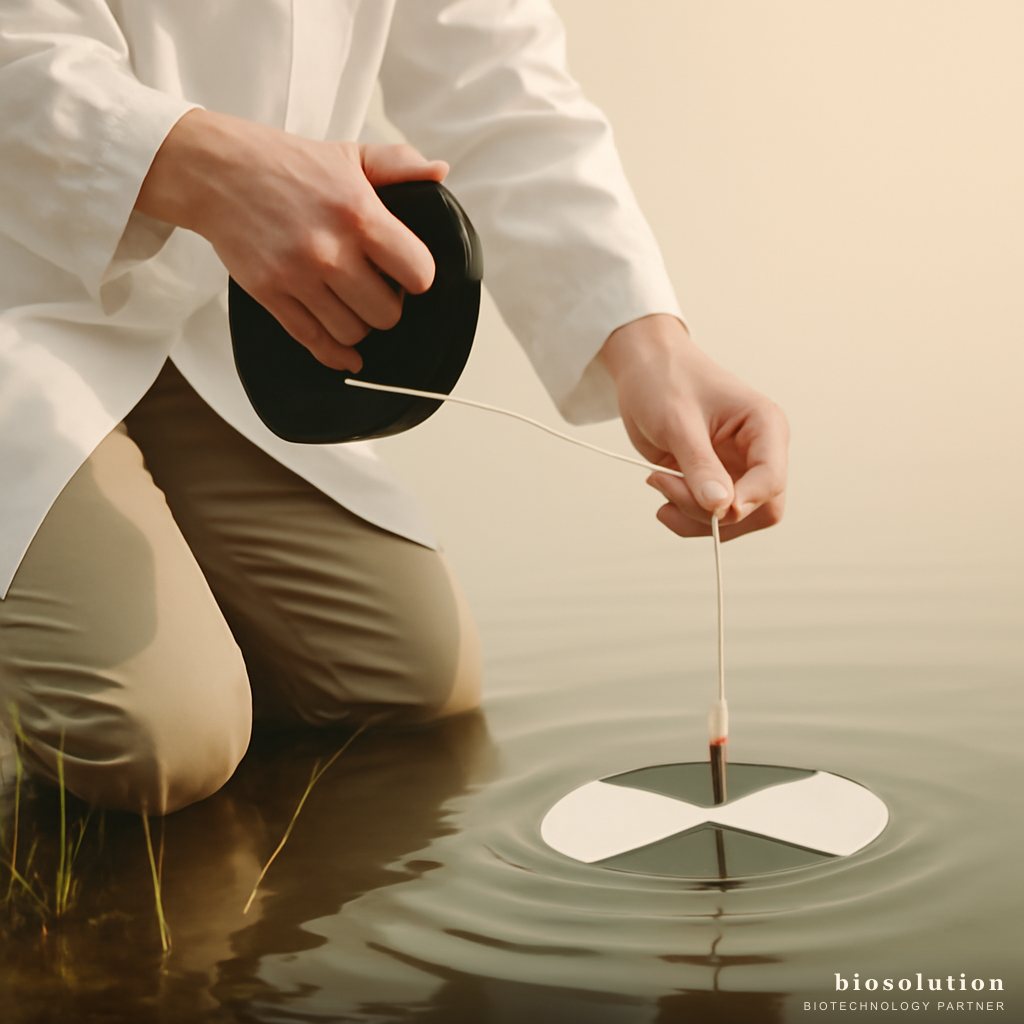
Probiotics are not an instant solution. Farmers often expect green color changes within 1-2 days, whereas nitrification and decomposition take time. Without regular monitoring (ammonia, nitrite, pH, dissolved oxygen), it is difficult to assess probiotic effectiveness. For example, if ammonia remains high after a week, dosage may need to be increased or aeration improved. Use simple test kits to monitor water quality every 3-4 days.
6. Combining with Counterproductive Chemicals
Some farmers mix probiotics with lime or disinfectants like chlorine. These chemicals can kill probiotic bacteria before they work. If lime is needed to raise pH, apply it at least 2 days after probiotics. Avoid using antibiotics or bactericides together with probiotics. Consult an expert before mixing products.
7. Choosing Probiotics Without Considering Strain Composition
Not all probiotics are the same. Products containing only one bacterial strain may not be sufficient to manage green transparency. A good formula should contain nitrifying bacteria (Nitrosomonas sp. and Nitrobacter sp.) to control ammonia and nitrite, and decomposer bacteria (Bacillus subtilis) to break down organic matter. Ensure the product contains at least these three strains in sufficient quantities.
Why Tilapia Pond Probiotic Formula is Effective?
The product Tilapia Pond Probiotic Formula is specifically designed to address water quality issues in intensive tilapia farming. With Nitrosomonas sp. oxidizing ammonia to nitrite, Nitrobacter sp. oxidizing nitrite to nitrate, and Bacillus subtilis decomposing organic matter, this formula works synergistically to maintain stable water transparency and green color. A dosage of 2 L per 1000 m³ water every 7 days helps prevent phytoplankton blooms without eliminating phytoplankton entirely. The result is stable water quality, more consistent tilapia growth, and reduced mortality due to oxygen fluctuations. Farmers can even increase stocking density without worrying about declining water quality.
Case Study: Tilapia Pond with 15 cm Transparency
A farmer in West Java complained that his tilapia pond water was dark green with only 15 cm transparency. After using Tilapia Pond Probiotic Formula at the correct dosage and morning application time, transparency increased to 30 cm within 2 weeks. Ammonia dropped from 2 ppm to <0.5 ppm. The tilapia showed better appetite and more uniform growth. The farmer now uses probiotics weekly and monitors water parameters with test kits.
Conclusion
Managing green water transparency in fish ponds requires the right approach, not just scattering probiotics randomly. Avoid the 7 mistakes above and use probiotics with appropriate strain composition, correct dosage, and morning application. With proper understanding, probiotics become an effective tool for maintaining water quality, increasing tilapia productivity, and reducing mortality risk. If you want further consultation on using probiotics for your pond, contact the Biosolution team via WhatsApp.
FAQ
1. Can probiotics completely eliminate green water color?
Probiotics are not intended to completely eliminate green color, but to control phytoplankton blooms to maintain balance. Light green color (30-40 cm transparency) actually indicates fertile and healthy water. Probiotics help reduce excess nutrients that cause blooms, making the green color more stable.
2. How long does it take for probiotics to improve transparency?
Improvement in transparency is usually seen within 1-2 weeks after regular application. However, it depends on the severity of the problem and initial pond conditions. Monitoring ammonia and nitrite is important to assess effectiveness. If no change occurs after 2 weeks, check dosage, aeration, and pond bottom cleanliness.
3. Can probiotics be used together with pond fertilizers?
It is best not to use them simultaneously. Pond fertilizers (e.g., urea) actually increase ammonia, which feeds phytoplankton. If fertilization is needed, do it after probiotics have reduced ammonia, or use mature organic fertilizers. Allow at least 3 days between fertilizer and probiotic application.
4. Are probiotics safe for tilapia?
Yes, probiotics are very safe because they consist of natural, non-pathogenic bacteria. Bacillus subtilis is even commonly used as a feed probiotic. However, ensure the product has a distribution permit and clear composition. Do not use probiotics containing additional chemicals.
5. How to store liquid probiotics to keep them effective?
Store probiotics in a cool, dark place, away from direct sunlight. Ideal storage temperature is 15-25°C. Do not freeze or heat. Use within 3 months after opening. Shake the bottle before use to evenly distribute bacteria.