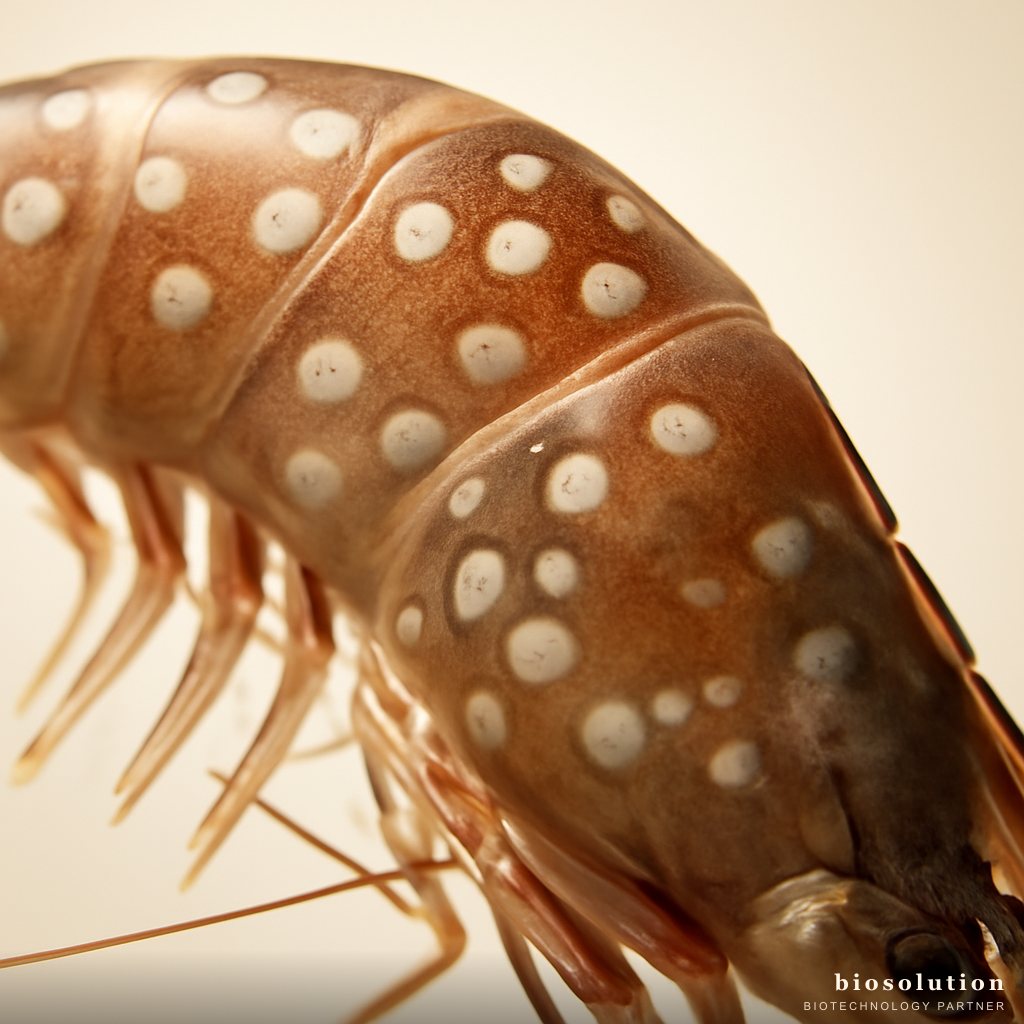
Managing WSSV Risk in Vaname Shrimp with Water Quality Management
WSSV (White Spot Syndrome Virus) is one of the most lethal pathogens in vaname shrimp (Litopenaeus vannamei) farming. This virus can cause mass mortality in a short time, especially when water quality is suboptimal. Strict water quality management per cultivation phase is key to suppressing the risk of WSSV white spot disease. With a microbiology and probiotic-based approach, farmers can create an environment that does not support the development of the virus and opportunistic bacteria such as Vibrio.
Understanding the Relationship Between WSSV and Water Quality
WSSV is a double-stranded DNA virus that attacks the ectodermal and mesodermal cells of shrimp. Transmission occurs horizontally through water, cannibalism, or carrier organisms. Environmental factors such as temperature, salinity, pH, and ammonia greatly affect shrimp resistance and virus virulence. Research shows that stress from extreme fluctuations in water parameters increases shrimp susceptibility to WSSV. Therefore, maintaining water quality stability is a key preventive measure.
Pond Preparation Phase: Sterilization and Biofloc Formation
Before stocking, the pond must be sterilized with lime or chlorine to kill residual pathogens. After that, form biofloc by adding a carbon source and initial probiotics. Biofloc acts as a natural biological filter that suppresses Vibrio growth and provides natural feed. In this phase, target water parameters: pH 7.5–8.5, salinity 15–25 ppt, temperature 28–30°C, and dissolved oxygen >4 ppm.
Stocking to Day 30 Phase: Environmental Stability
In the early phase, postlarvae are susceptible to stress. Ensure stable water quality with daily monitoring. Ammonia and nitrite should be kept <0.1 ppm. Use routine probiotics such as Bacillus subtilis and Bacillus licheniformis to degrade organic matter and inhibit Vibrio. If there are indications of increased Vibrio, immediately apply Formula Anti-Vibrio Tambak Udang Vaname (Emergency) at a dose of 10 L per hectare for rapid knockdown.
Grow-Out Phase (30–60 Days): Anticipating Organic Load Surges
As shrimp biomass increases, the organic load rises dramatically. This triggers Vibrio blooms and reduces dissolved oxygen. Manage with:
- Optimal aeration (minimum 2 HP/1000 m²)
- Use of heterotrophic probiotics such as Bacillus spp. to break down leftover feed and feces
- Monitoring total Vibrio bacteria (target <10³ CFU/mL)
- If white spot symptoms appear, immediately isolate and apply the emergency formula.
Harvest Phase: Clean Water Preparation
Approaching harvest, water quality must be maintained to avoid stress that triggers WSSV. Perform gradual water changes if necessary. Ensure no sudden salinity fluctuations. Probiotics are still given until the last day to maintain microbial balance.
Role of Anti-Vibrio Probiotics in WSSV Prevention
Probiotics such as Bacillus subtilis and Bacillus licheniformis work through several mechanisms: production of antibacterial compounds (bacteriocins), nutrient competition, and organic matter degradation. The product Formula Anti-Vibrio Tambak Udang Vaname (Emergency) contains high concentrations of Bacillus subtilis (10x) and Bacillus licheniformis that can rapidly suppress Vibrio populations. Application in the morning at a dose of 10 L/ha is effective for overcoming Vibrio spikes that often trigger WSSV.
Case Study: Successful Water Quality Management
In several vaname ponds in East Java, the implementation of probiotic-based water quality management successfully reduced mortality due to WSSV to below 10%. The key is daily monitoring and rapid intervention when parameters begin to deviate. For more detailed information, read the related article: Probiotic Formula for Vaname Shrimp Ponds.
Conclusion
WSSV white spot disease can be managed with discipline in maintaining water quality at every cultivation phase. The combination of environmental management, strict monitoring, and use of anti-Vibrio probiotics is an effective strategy. If you experience a Vibrio spike or white spot symptoms, immediately consult with the Biosolution technical team via WhatsApp for the right solution.
FAQ
What is the main cause of WSSV in vaname shrimp?
WSSV is caused by the White Spot Syndrome Virus, which is transmitted through water, infected feed, or carrier organisms. Environmental stress such as temperature fluctuations and poor water quality increase shrimp susceptibility.
How to prevent WSSV with probiotics?
Probiotics such as Bacillus subtilis and Bacillus licheniformis inhibit the growth of Vibrio that can trigger WSSV. Routine application maintains pond microbial balance and reduces oxidative stress in shrimp.
When is the best time to apply the Anti-Vibrio Emergency Formula?
Apply in the morning (06:00-09:00) when water temperature starts to rise. Dose 10 L/ha for shock treatment, repeat after 48 hours if necessary. Post-application Vibrio monitoring is recommended.
What is the probiotic dosage for WSSV prevention?
For prevention, use routine probiotics such as Probiotic Formula for Vaname Shrimp Ponds according to recommended dosage (usually 1-2 L/ha per week). Adjust according to pond organic load.
Can WSSV be cured after shrimp are infected?
WSSV is lethal and there is no effective treatment. Focus on prevention with water quality management and probiotics. If already infected, immediately harvest early to reduce losses.
References: FAO. (2024). White Spot Syndrome Virus: Prevention and Control. External link; Ministry of Marine Affairs and Fisheries. (2023). Guidelines for Vaname Shrimp Cultivation.