Monosex Tilapia Sex Reversal: Post-Treatment Pond Management with Microbial Probiotics
The sex reversal process for monosex tilapia has become a standard in hatcheries to produce 95-100% male populations, which grow faster and more uniformly. However, post-treatment success heavily depends on pond management. Without proper water quality management, residual hormones and feed can trigger spikes in ammonia, nitrite, and organic matter that suppress growth and increase mortality. This is where microbial probiotic strategies play a crucial role. This article discusses how Biosolution's Tilapia Pond Probiotic Formula can be a solution for post-treatment pond management of monosex male tilapia, using a microbiology-based scientific approach to maintain pond ecosystem balance.
Why Post-Sex Reversal Pond Management for Monosex Tilapia is Crucial
After sex reversal treatment, tilapia fry are transferred to nursery or grow-out ponds. At this stage, several key challenges arise:
High Ammonia Load
Residual 17α-methyltestosterone hormone and high-protein feed increase ammonia (NH3) concentrations in the pond. Ammonia is toxic to fish; even at low concentrations (<0.02 mg/L) it can cause gill damage and suppress appetite. Without proper management, ammonia levels can spike to 1-2 mg/L, triggering oxidative stress and mortality.
Organic Matter Accumulation
Uneaten feed and fish feces accumulate at the pond bottom. Anaerobic decomposition of organic matter produces toxic compounds such as hydrogen sulfide (H2S) and methane, and reduces dissolved oxygen (DO). This condition inhibits growth and makes fish susceptible to disease.
Water Quality Fluctuations
Changes in temperature, pH, and oxygen are common in outdoor ponds. pH fluctuations, for example, can affect ammonia toxicity: at high pH, the proportion of toxic NH3 increases. Water quality stability is key to maximizing the growth of monosex tilapia fry.
High Stocking Density Targets
Hatcheries often apply stocking densities of 50-100 fish/m² for efficiency. However, without good water management, high density accelerates water quality deterioration and increases disease risk. Microbial probiotics help break down waste, allowing higher stocking densities without compromising fish health.
The Role of Microbes in Post-Sex Reversal Pond Management
Microbial probiotics work on the principle of bioremediation: utilizing beneficial bacteria to convert harmful compounds into non-toxic ones. The Tilapia Pond Probiotic Formula contains three superior strains that synergize:
Nitrosomonas sp.: Ammonia Oxidation
These chemoautotrophic bacteria oxidize ammonia (NH3) into nitrite (NO2-). The reaction: 2 NH3 + 3 O2 → 2 NO2- + 2 H+ + 2 H2O. By converting toxic ammonia into more easily processed nitrite, Nitrosomonas sp. serves as the first line of defense for water quality. Application dosage of 2 L per 1000 m³ of water every 7 days ensures sufficient Nitrosomonas population to offset daily ammonia load.
Nitrobacter sp.: Nitrite Oxidation
Nitrite (NO2-) is also toxic to fish, causing methemoglobinemia (brown blood disease) that inhibits oxygen transport. Nitrobacter sp. oxidizes nitrite into relatively non-toxic nitrate (NO3-): 2 NO2- + O2 → 2 NO3-. The presence of both bacteria forms a complete nitrification cycle in the pond, keeping ammonia and nitrite below dangerous thresholds.
Bacillus subtilis: Organic Decomposer
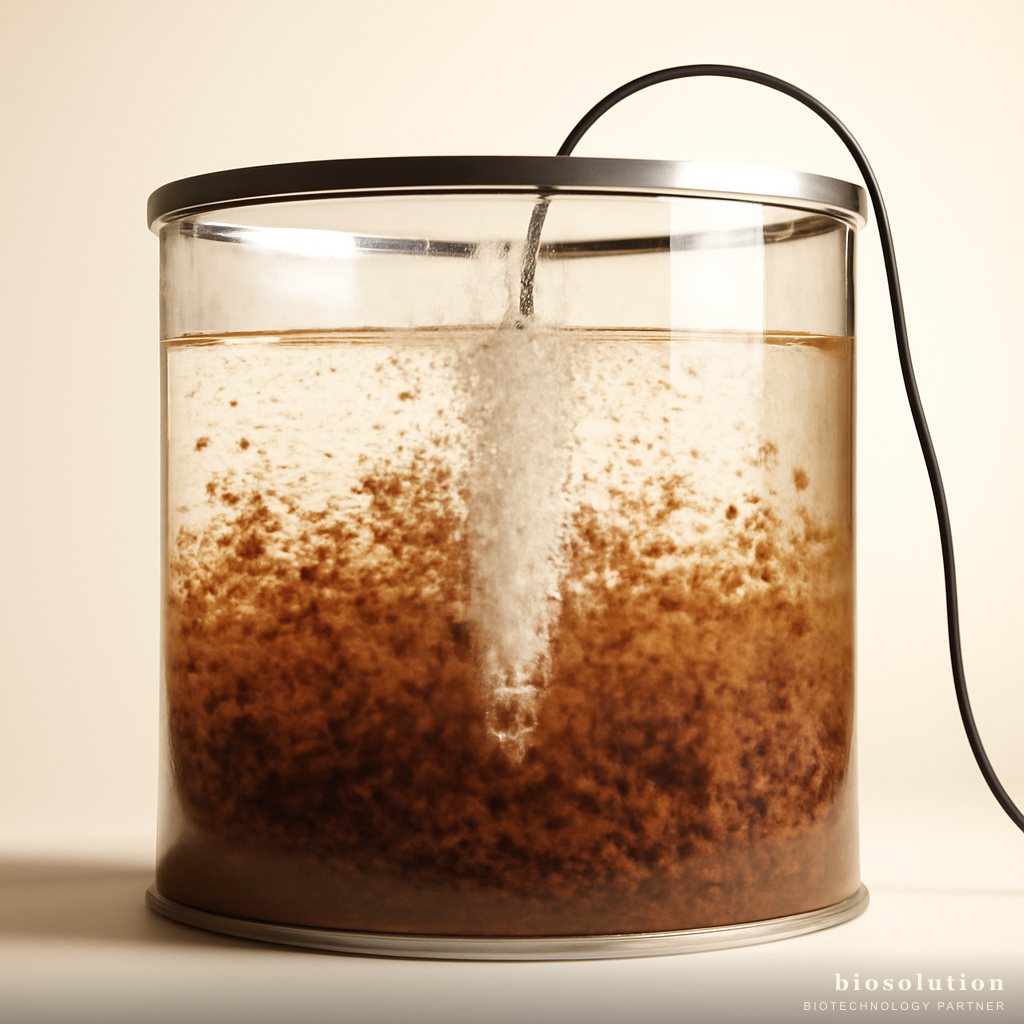
These heterotrophic bacteria produce protease, amylase, and lipase enzymes that degrade uneaten feed, feces, and other organic matter. By breaking down organic particles, Bacillus subtilis reduces biological oxygen demand (BOD) and prevents the formation of anaerobic compounds. Additionally, this bacterium produces antimicrobial substances that suppress pathogens such as Aeromonas and Vibrio.
Probiotic Application Strategy for Monosex Tilapia Pond Management
For optimal results, the Tilapia Pond Probiotic Formula must be applied regularly and correctly. Here is a practical guide:
Application Time: Morning
Morning is the best time because water temperature is still low and dissolved oxygen is relatively high. These conditions support the activity of nitrifying and decomposing bacteria. Avoid application during cloudy or rainy weather, as sunlight helps phytoplankton photosynthesis that produces oxygen.
Dosage and Frequency
The recommended dosage is 2 L per 1000 m³ of water, repeated every 7 days. For ponds with high stocking density (>100 fish/m²) or heavy feed load, frequency can be increased to every 5 days. Ensure the probiotic is evenly distributed across the pond surface, especially in aeration areas.
Integration with Aeration
Aeration helps maintain dissolved oxygen above 4 mg/L, which is necessary for nitrifying bacteria to work optimally. Water wheels or diffusers should be operated 24 hours, especially at night. The combination of probiotics and aeration creates synergy: oxygen for bacteria, and bacteria break down waste that reduces oxygen demand.
Water Parameter Monitoring
Conduct routine measurements of ammonia, nitrite, nitrate, pH, and DO every 3 days. Ideal targets: ammonia <0.02 mg/L, nitrite <0.1 mg/L, pH 6.5-8.5, DO >4 mg/L. If ammonia or nitrite increases, immediately apply extra probiotic and increase aeration.
Feed Management
Feed application must be controlled: provide quality feed with 30-35% protein for fry, frequency 3-4 times daily, and avoid overfeeding. Excess uneaten feed will burden the nitrification system. Probiotics help break down leftover feed, but it still needs to be limited.
Case Study: Application in a Tilapia Hatchery
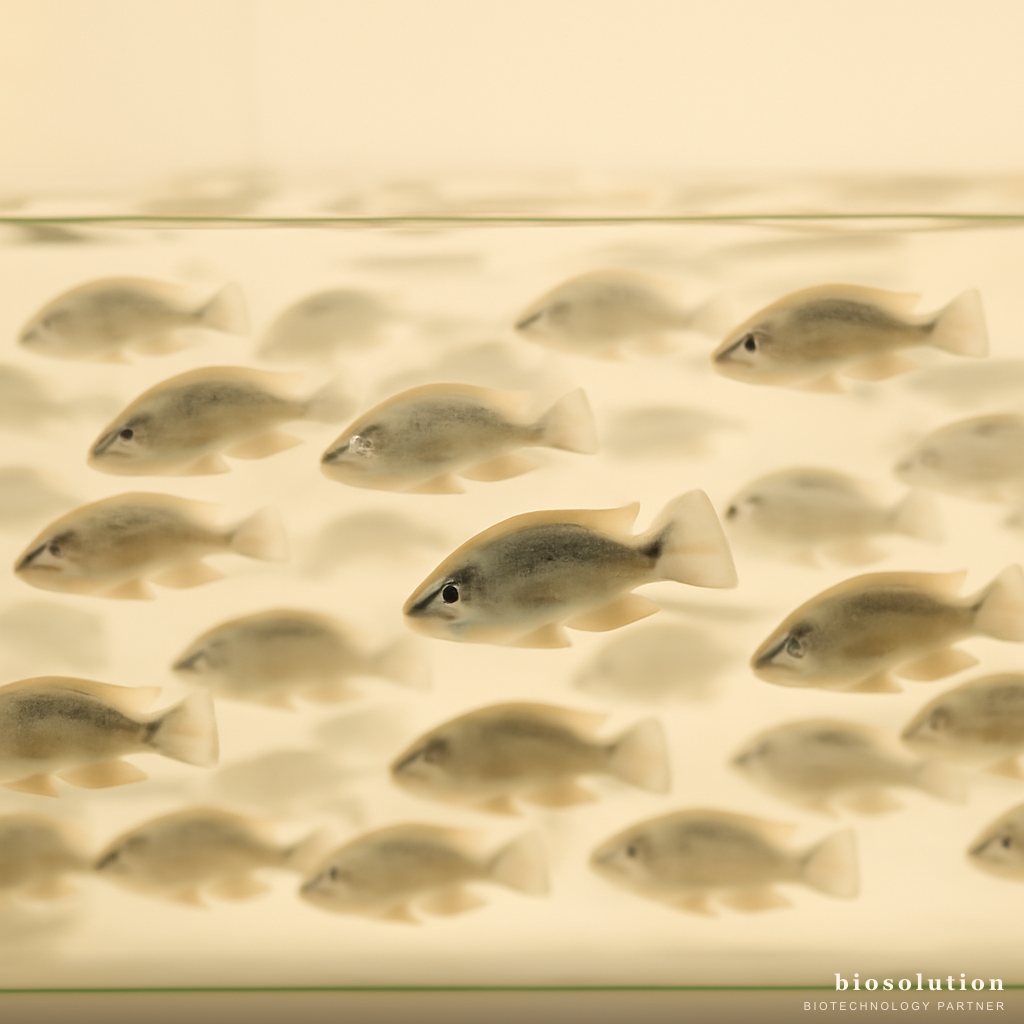
A hatchery in West Java applied the Tilapia Pond Probiotic Formula to nursery ponds after sex reversal with a stocking density of 80 fish/m². Before probiotics, the main problem was ammonia fluctuations often reaching 0.5 mg/L, causing slow growth and 15% mortality in the first week. After routine application of 2 L/1000 m³ every 7 days, within 2 weeks:
- Ammonia stabilized at <0.02 mg/L
- Nitrite <0.05 mg/L
- Mortality dropped to 5%
- Growth was more uniform with an average weight of 2 grams by week 3
These results show that microbial probiotics not only improve water quality but also significantly increase hatchery productivity.
Advantages of the Tilapia Pond Probiotic Formula for Post-Sex Reversal
Stable Water Quality
The combination of Nitrosomonas and Nitrobacter ensures the nitrogen cycle runs efficiently, keeping ammonia and nitrite low. The pond becomes more stable despite temperature or pH fluctuations.
More Consistent Tilapia Growth
A healthy environment reduces stress on fish, allowing energy to be allocated to growth. With probiotics, monosex tilapia fry reach uniform size faster, shortening the nursery period.
Reduced Mortality Due to Low Oxygen
Bacillus subtilis breaks down organic matter that consumes oxygen, so DO is maintained. Mortality due to hypoxia can be reduced by up to 50%.
Higher Stocking Density
With optimal water management, stocking density can be increased to 120 fish/m² without compromising water quality. This means hatchery productivity rises without additional land.
Conclusion
Post-treatment pond management for monosex male tilapia sex reversal is a key factor in hatchery success. By applying microbial probiotic strategies using the Tilapia Pond Probiotic Formula, farmers can maintain stable water quality, improve fry growth and survival, and optimize stocking density. This science-based approach is not only environmentally friendly but also economical, reducing dependence on chemicals and antibiotics. For best results, consult your hatchery's specific needs with the Biosolution expert team. Contact us via WhatsApp for appropriate dosage and application schedule recommendations.
FAQ
1. How long after probiotic application does water quality start to improve?
Improvement is usually visible within 3-5 days after the first application. Ammonia and nitrite will gradually decrease as the nitrifying bacteria population grows. For stable results, routine application every 7 days is necessary.
2. Is this probiotic safe for tilapia fry that have just completed sex reversal?
Very safe. The bacteria in the Tilapia Pond Probiotic Formula are non-pathogenic microbes that have been tested for safety. In fact, probiotics help reduce stress on fry by maintaining a healthy environment.
3. Can probiotics be used together with disinfectants or medications?
It is best not to. Disinfectants such as chlorine or formalin will kill probiotic bacteria. Allow at least 48 hours after disinfectant application before adding probiotics. If medication is unavoidable, choose a selective one.
4. Does the dosage need to be adjusted for earthen ponds?
Earthen ponds usually have a larger natural bacterial population. However, the dosage remains 2 L/1000 m³ as an initial dose. If water quality is already good, frequency can be reduced to 10-14 days. Monitor water parameters for adjustments.
5. How should probiotics be stored to remain effective?
Store in a cool, dry place, away from direct sunlight. Ideal storage temperature is 15-25°C. Do not freeze. Use within 6 months of purchase to ensure bacterial viability.