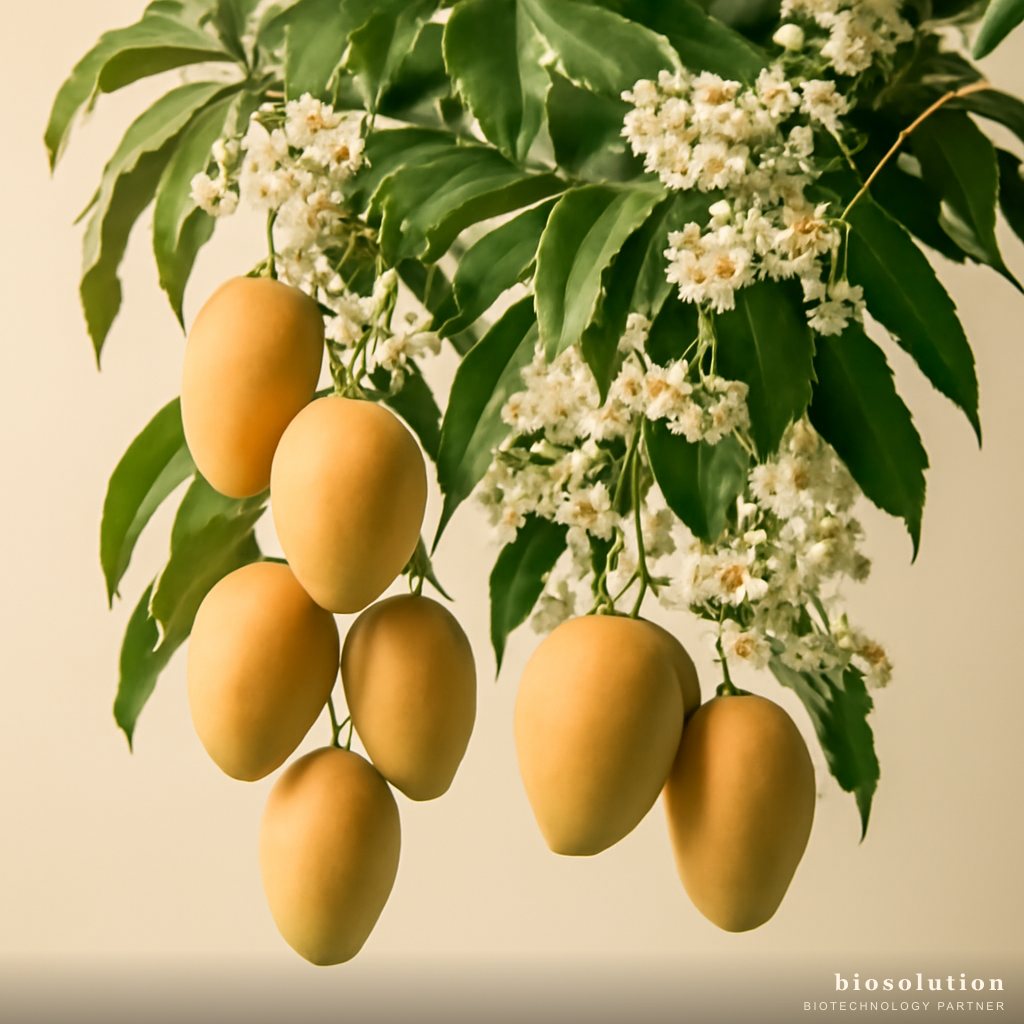
Off-Season Mango Flowering POC: Case Study of Javanese Farmers Successfully Harvesting Earlier
Unpredictable mango harvest seasons are often a nightmare for farmers. Prices plummet during peak harvest, while off-season demand is high but supply is low. The solution? Off-season mango flowering POC. Using an agricultural microbiology approach, farmers in Java succeeded in advancing harvest time by up to 30 days. This article thoroughly examines their case study and how the Flower & Fruit Trigger POC Formula became the key to success.
Why Off-Season Mangoes Are Promising?
Mangoes (Mangifera indica) are plants sensitive to photoperiodism and temperature. Naturally, flowering occurs during the dry season after water stress. However, climate change makes this pattern increasingly unpredictable. This is where POC (Liquid Organic Fertilizer) technology plays a role.
Economic Opportunities of Off-Season
Off-season mango prices can be 2–3 times higher than during peak harvest. Export market demand is also high for quality mangoes such as Arumanis and Gedong Gincu. With off-season mango flowering POC, farmers can schedule harvests according to market needs.
Physiological Challenges
Forcing mangoes to flower off-season requires precise hormonal stimulation. A balance between flower-inducing hormones (cytokinins, gibberellins) and inhibitors (auxins, ethylene) is needed. POC formulas containing seaweed extract rich in natural cytokinins are relied upon.
Mechanism of Flower & Fruit Trigger POC in Stimulating Flowering
The Flower & Fruit Trigger POC Formula is specifically designed for the generative phase. Its composition includes:
- PGPR Consortium (Plant Growth Promoting Rhizobacteria): Bacillus subtilis, Pseudomonas fluorescens, and Azospirillum sp. These bacteria produce phytohormones such as IAA, cytokinins, and gibberellins that trigger flower bud differentiation.
- Seaweed extract: Source of cytokinins (zeatin) and micronutrients (Zn, B, Mo) essential for pollen and ovule formation.
- Humic & fulvic acids: Increase nutrient availability in the rhizosphere and enhance nutrient uptake.
How It Works on Mango Plants
- Foliar application is absorbed directly through leaf stomata, sending hormonal signals to bud meristems.
- PGPR consortium colonizes roots and continuously produces flower-inducing hormones.
- Humic acids chelate micronutrients like Zn and B, crucial for flower protein synthesis.
Case Study: Mango Farmers in East Java
Mr. Budi, a mango farmer of the Arumanis variety in Pasuruan Regency, East Java, faced uneven flowering. Some trees flowered profusely, while others remained vegetative. He then applied off-season mango flowering POC using drench and spray methods.
Application Steps
- Dosage: 4 ml per liter of water (spray) and 5 ml per liter of water (drench).
- Time: morning from 06:00 to 09:00, every 7 days for 4 weeks.
- Combination: plus light pruning and irrigation management (mild water stress for 2 weeks).
Real Results
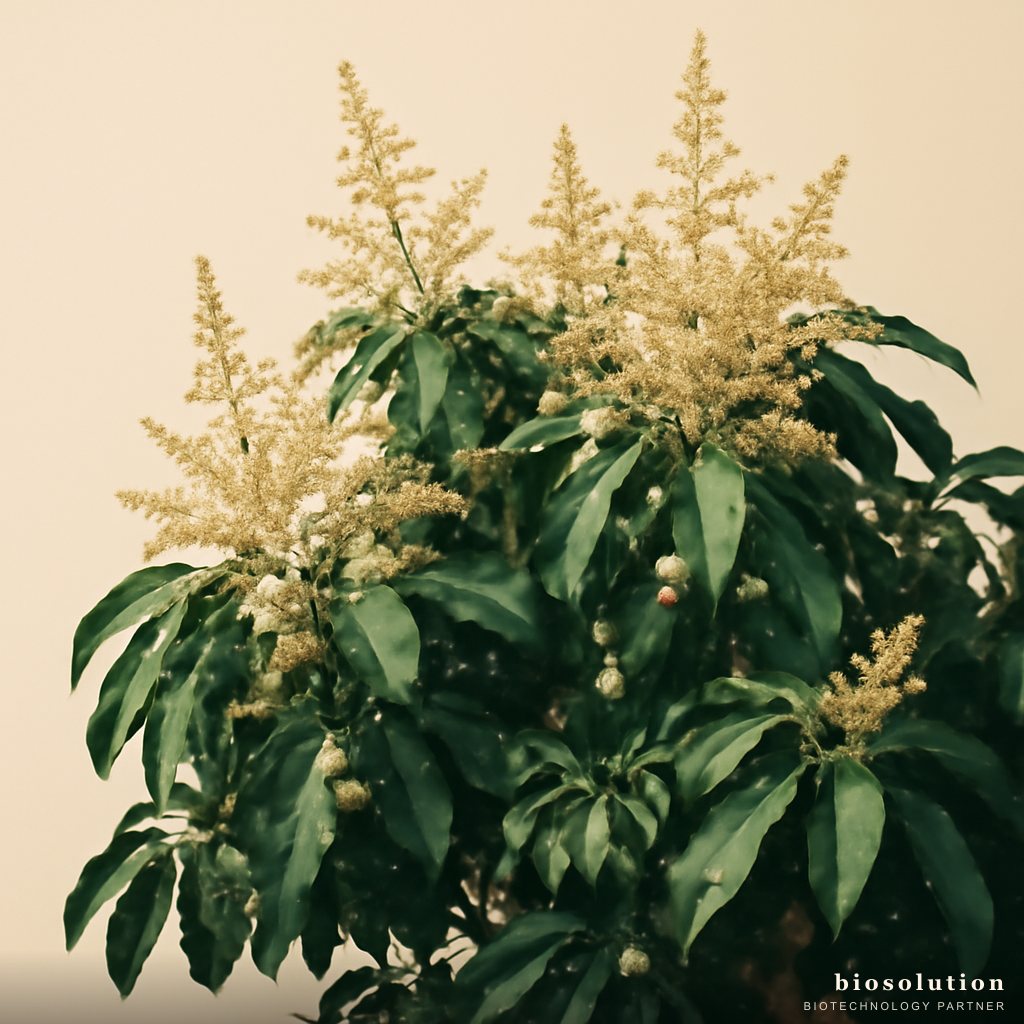
- Synchronized flowering occurred 2 weeks earlier than the control.
- Fruit set percentage increased by 20%.
- Harvest was done 1 month earlier than expected, with an average fruit weight of 400 grams.
- Flower/fruit drop reduced by up to 30% (data from Biosolution trials).
Tips for Maximum POC Application Results
For off-season mango flowering POC to work optimally, consider the following:
Proper Application Timing
- Pre-flower phase: 2–3 weeks before target flowering.
- When panicles appear: continue spraying every 7–10 days to maintain flowers.
- After fruit set: reduce frequency to avoid excessive vegetative growth.
Correct Spraying Technique
- Use a fine nozzle, spray evenly over the entire leaf surface (especially the underside).
- Avoid spraying during intense sunlight or rain.
- If combined with pesticides, ensure the mixture pH is 5.5–6.5.
Recommended Dosage
| Method | Dosage | Frequency |
|---|---|---|
| Foliar spray | 3–5 ml/liter | 7–10 days |
| Drench | 5 ml/liter | 7–10 days |
Performance Data of Flower & Fruit Trigger POC Formula
Based on field and laboratory trials, here is the product performance:
- Yield per tree: increased by +15–25%.
- Flower/fruit drop: reduced by up to 30%.
- Application: easy with foliar method.
- Status: organic, safe for organic farming certification.
Advantages of Using Organic POC vs. Synthetic Chemicals
Organic POC like the Flower & Fruit Trigger POC Formula has advantages:
- Leaves no chemical residues on fruit.
- Improves soil structure due to humic acid content.
- Increases beneficial microbial populations in the rhizosphere.
- Safe for pollinators such as bees.
Conclusion
Off-season mango flowering POC is no longer a dream. With the Flower & Fruit Trigger POC Formula from Biosolution, farmers can schedule harvests and improve yield quality. The case study in Java proves a yield increase of up to 25% and a 30% reduction in flower drop. Want to try it? Consult your needs with our team via WhatsApp or see product details here.
FAQ
1. Is this POC safe for mangoes to be consumed?
Yes, the Flower & Fruit Trigger POC Formula is made from organic ingredients such as seaweed extract and PGPR consortium. It contains no harmful synthetic chemicals. Safe to apply up to harvest, even supports organic certification.
2. How long after the first application do flowers start to appear?
Generally, after 2–3 applications (days 14 to 21), flower initiation begins to be visible. However, plant response depends on tree physiology, weather, and supporting care such as pruning and irrigation.
3. Can this POC be used for other fruit plants besides mangoes?
Certainly. This formula is designed for the generative phase of various fruit plants such as citrus, avocado, durian, and guava. The cytokinin and PGPR content works universally on dicot plants. Adjust dosage according to plant type.
4. Does it need to be combined with NPK fertilizer?
It is recommended to still provide basic NPK fertilizer according to plant needs, especially during the vegetative phase. This POC acts as a flowering stimulant, not a substitute for macronutrient fertilizer. The combination of both will be optimal.
5. How to store POC that has been mixed with water?
Mixed POC should be used immediately within 1–2 hours after dilution. If leftover, store in a shaded place and use within 24 hours. Avoid direct sunlight as PGPR microbes may die.