Oil Palm Biofertilizer: 9 Superior Formulas for Peatland
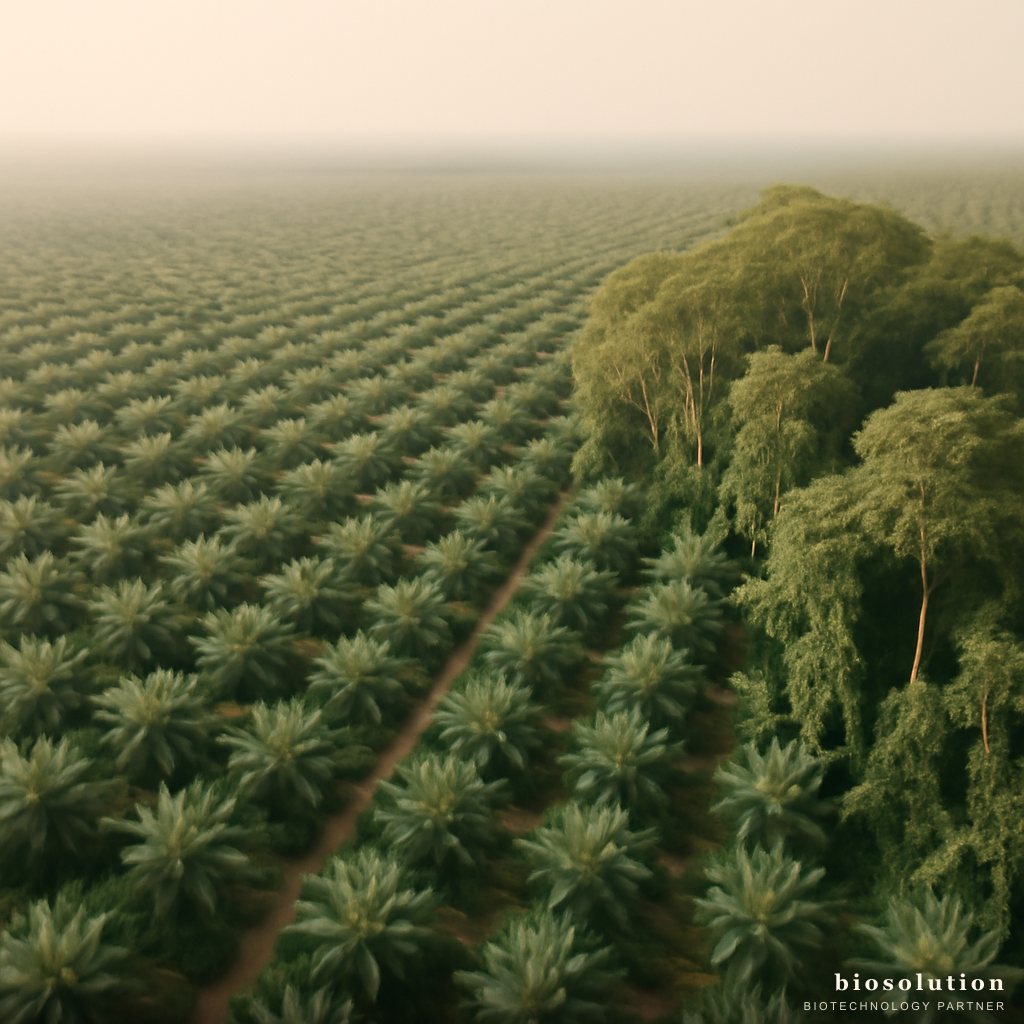
Oil palm plantations on peatland face unique challenges: acidic soil, poor nutrients, and susceptibility to pathogens like Ganoderma boninense. This is where oil palm biofertilizer plays a role as an environmentally friendly and effective biotechnology solution. Unlike chemical fertilizers that worsen peat degradation, biofertilizers work naturally by utilizing superior microorganisms to improve soil fertility and plant health. This article will thoroughly discuss 9 best biofertilizer formulas, proper selection criteria, and how Biosolution products can be the answer for your oil palm plantation.
Why Biofertilizer is Important for Oil Palm on Peatland?
Peatland has different physical and chemical characteristics from mineral soils. High organic matter content, low pH (3-4), and limited macro and micronutrient availability. Continuous use of chemical fertilizers increases soil acidity and triggers greenhouse gas emissions. Conversely, biofertilizer for oil palm plantations on peatland contains microbes that can:
- Fix nitrogen from the air through Azotobacter sp.
- Solubilize bound phosphate with the help of Bacillus subtilis.
- Control soil-borne pathogens like Ganoderma through Trichoderma harzianum.
- Improve peat soil structure that is prone to drying and difficult to wet.
With regular application, biofertilizers can reduce chemical fertilizer needs by up to 30%, increase fresh fruit bunch (FFB) production by 10-15%, and extend the economic life of plants.
9 Superior Oil Palm Biofertilizer Formulas
Here are nine biofertilizer formulas that have proven effective for oil palm, especially on peatland. Each has specific advantages according to agro-climatic conditions.
1. Biosolution Oil Palm Biofertilizer Formula (Trichoderma harzianum + Azotobacter sp. + Bacillus subtilis)
Biosolution's flagship product is a combination of three superior microbes that work synergistically. Trichoderma harzianum acts as a biological agent to control Ganoderma and as a plant growth promoter (PGPR). Azotobacter sp. can fix up to 30 kg N/ha/year on peatland. Meanwhile, Bacillus subtilis solubilizes phosphate and produces growth hormones. Application dose: 20 ml per tree every 3 months via drenching method on the palm circle. Field trials show an increase in FFB production of 10-15% and a reduction in Ganoderma attack by up to 50%.
2. Mycorrhiza Glomus spp. Formula
Arbuscular mycorrhizal fungi (AMF) such as Glomus spp. form symbiosis with oil palm roots, enhancing phosphorus and water uptake. Very suitable for phosphorus-poor peat. Application is done at planting or on mature plants.
3. Rhizobium + Bradyrhizobium Formula
Although oil palm is not a legume, these bacteria can live in the rhizosphere and fix nitrogen associatively. Effective on peat with low N content.
4. Pseudomonas fluorescens Formula
Known as a strong PGPR, Pseudomonas fluorescens produces siderophores that bind iron and suppress pathogens. It also solubilizes phosphate and potassium.
5. Bacillus megaterium Formula
A highly efficient phosphate-solubilizing bacterium. Suitable for combination with rock phosphate to increase fertilization efficiency.
6. Streptomyces spp. Formula
These actinomycetes produce antibiotics that inhibit Ganoderma and other pathogenic fungi. Additionally, they can decompose peat organic matter.
7. Azospirillum brasilense Formula
An associative nitrogen-fixing bacterium tolerant to acidic peat conditions. Can be applied via seed or soil.
8. Potassium-Solubilizing Bacterial Consortium Formula
Contains Bacillus circulans and Paenibacillus spp. that release bound potassium from soil minerals. Very beneficial for potassium-deficient peat.
9. Trichoderma reesei Formula
This type of Trichoderma excels in decomposing plant residues and producing cellulase enzymes. Helps accelerate composting and improve peat structure.
Criteria for Selecting Biofertilizer for Oil Palm on Peatland
Not all biofertilizers are suitable for peatland. Here are the main criteria to consider:
- Adaptive Microbial Strains – Choose strains that have been tested for tolerance to low pH, high humidity, and tropical temperatures. For example, Bacillus subtilis and Trichoderma harzianum are acid-tolerant.
- Ability to Fix Nitrogen and Solubilize Phosphorus – Peat is nutrient-poor, so N-fixing and P-solubilizing microbes are essential.
- Antagonistic Activity against Ganoderma – Ganoderma is a major problem on peat. Ensure the product contains biological agents like Trichoderma or Streptomyces.
- Growth Hormone Content – Microbes that produce IAA, gibberellins, and cytokinins stimulate root development and vegetative growth.
- Stability and Shelf Life – The product must have high viability (minimum 10⁶ CFU/g) and long shelf life (minimum 6 months).
- Certification from the Ministry of Agriculture – Ensure the product is registered and has an official distribution permit.
Biofertilizer Certification: Quality and Safety Assurance
Biofertilizers circulating in Indonesia must meet quality standards according to Permentan No. 70/2011. Certification includes:
- Quality Test – Minimum microbial content, maximum contamination, pH, moisture content.
- Efficacy Test – The product must be proven to increase yield by at least 10% or suppress disease attack.
- Distribution Permit – From the Ministry of Agriculture or the Pesticide Commission.
Biosolution products have undergone rigorous quality and efficacy tests. With official certification, you can be confident in their quality.
Proper Application Method for Biofertilizer on Peatland Oil Palm
For optimal biofertilizer performance, follow these guidelines:
- Application Time – Morning or evening when temperatures are not too hot. Avoid heavy rain to prevent microbial washout.
- Drenching Method – Mix 20 ml of Biosolution formula per tree with water (1-2 liters), then pour evenly on the palm circle up to a 1-meter radius from the trunk base.
- Frequency – Every 3 months. On extreme peatland, frequency can be increased to every 2 months.
- Combination with Chemical Fertilizers – Reduce chemical fertilizer dose by 30% after biofertilizer application. Do not mix directly with chemical pesticides; allow a minimum 3-day interval.
- Storage – Store in a cool, dry place away from direct sunlight.
Product Recommendation: Biosolution Oil Palm Biofertilizer Formula
For oil palm plantations on peatland, the Biosolution Oil Palm Biofertilizer Formula is the right choice. With content of Trichoderma harzianum, Azotobacter sp., and Bacillus subtilis, this product not only increases FFB production by 10-15% but also suppresses Ganoderma attack and improves soil quality. You can get this product through the Oil Palm Biofertilizer Formula product page.
For more complete plant nutrition needs, also see 5-in-1 Liquid Biofertilizer Formula which combines five superior microbes in one package.
Conclusion
Choosing the right oil palm biofertilizer for peatland requires careful consideration of microbial strains, adaptability, and certification. Superior formulas like Biosolution containing Trichoderma harzianum, Azotobacter sp., and Bacillus subtilis have proven effective in increasing FFB production, suppressing Ganoderma, and reducing chemical fertilizer by 30%. With regular application and proper dosage, biofertilizer is key to sustainable oil palm plantations on peatland. For further consultation, contact the Biosolution team via WhatsApp.
FAQ
What is oil palm biofertilizer?
Oil palm biofertilizer is a product containing living microorganisms such as beneficial bacteria and fungi for plants. These microbes help increase nutrient availability, stimulate growth, and control soil pathogens naturally, thereby reducing dependence on chemical fertilizers.
How to apply biofertilizer for oil palm?
Biofertilizer is applied using the palm circle drenching method. Mix the recommended dose (e.g., 20 ml per tree) with water, then pour evenly around the roots. Apply in the morning or evening, every 3 months. Avoid direct mixing with chemical pesticides.
Is biofertilizer safe for the environment?
Very safe. Biofertilizers use natural microbes that leave no harmful residues, do not contaminate groundwater, and help improve peat soil quality. Biosolution products are certified and meet environmental safety standards.
How long does it take to see results from biofertilizer use?
Changes are usually visible after 2-3 months of regular application. Leaves become greener, vegetative growth is faster, and FFB production increases in the next harvest. For Ganoderma suppression, optimal results are seen after 6 months.
Where can I buy Biosolution biofertilizer?
Biosolution biofertilizer products can be purchased through the official website or by contacting the sales team. Visit the Oil Palm Biofertilizer Formula product page for more information.