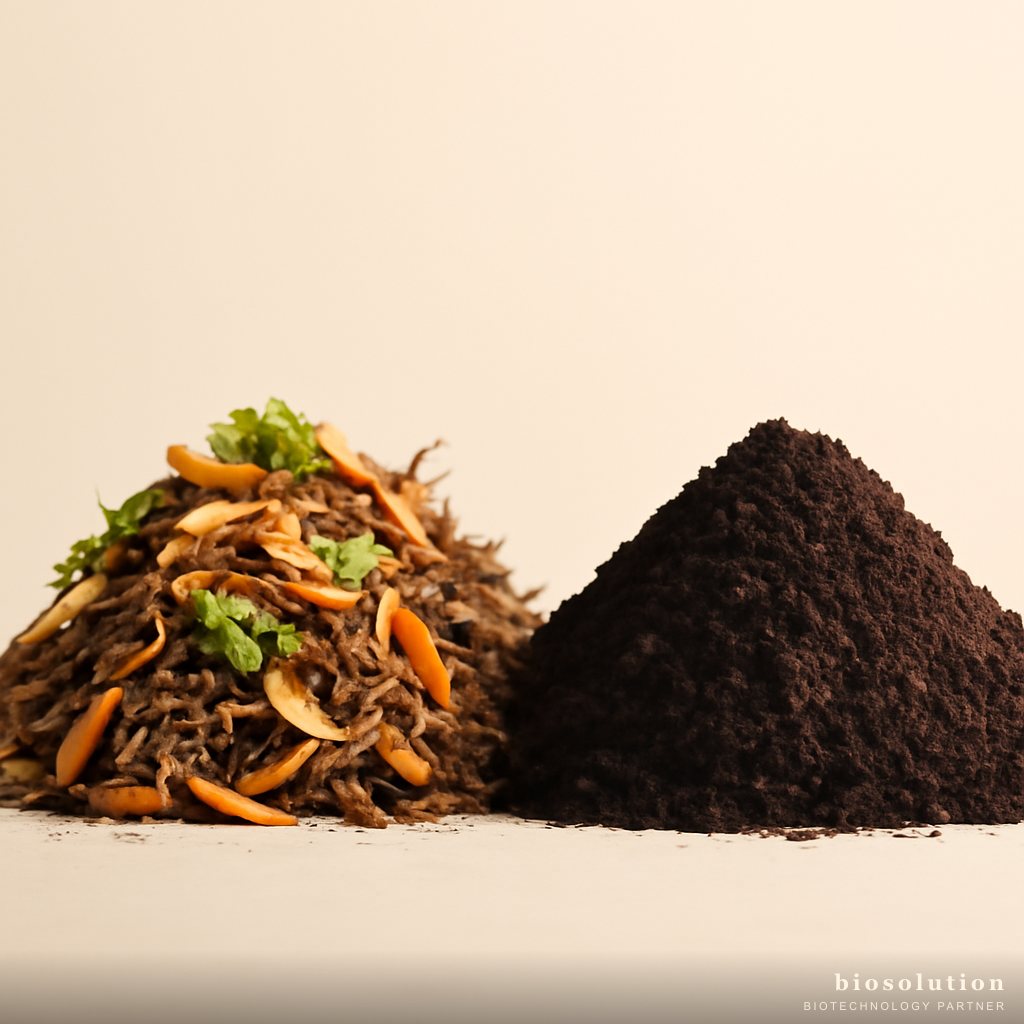
Organic Agriculture Biofertilizer: Certification Guide & Best Products
Organic agriculture in Indonesia is increasingly popular among farmers and consumers. However, to obtain a legitimate organic label, farmers must comply with strict standards, including the use of environmentally friendly inputs. This is where organic agriculture biofertilizer plays a vital role. Biofertilizers not only provide nutrients naturally but also help meet certification requirements. This article will discuss criteria for choosing the right biofertilizer, its relation to organic certification in Indonesia, and recommended products from Biosolution.
What is Biofertilizer and Why is it Important for Organic Certification?
Biofertilizer is a biological fertilizer containing living microorganisms, such as bacteria, fungi, or algae, that can increase nutrient availability for plants. Unlike chemical fertilizers, biofertilizers work naturally through biochemical mechanisms such as nitrogen fixation, phosphate solubilization, and phytohormone production. In the context of Indonesian organic agriculture certification, biofertilizer is an allowed input because it leaves no harmful chemical residues.
The Indonesian National Standard (SNI) for organic agriculture (SNI 6729:2016) requires that all inputs come from natural materials and contain no synthetic compounds. Biofertilizers registered with the Ministry of Agriculture and holding official distribution permits can be used in organic farming systems. Moreover, consistent use of biofertilizer can improve soil health, increase microbial biodiversity, and ultimately support long-term productivity without harming the environment.
Criteria for Choosing Biofertilizer for Organic Agriculture
Not all biological fertilizers are suitable for certified organic agriculture. Here are criteria to consider:
1. Clear and Registered Microbial Composition
Products must transparently list the types and quantities of microbes (CFU/ml). For example, a consortium containing Rhizobium sp., Bacillus subtilis, Azospirillum sp., Pseudomonas fluorescens, and Trichoderma sp. has synergistic roles in providing nutrients and protecting plants.
2. Free from Synthetic Chemicals
Ensure the product contains no preservatives, solvents, or chemical additives prohibited by organic standards. Pure biofertilizers consist only of microbes and natural carriers such as peat, compost, or water.
3. Has a Distribution Permit from the Ministry of Agriculture
Legal products usually have a biological fertilizer registration number. This guarantees quality and safety according to regulations.
4. Proven Effectiveness
Biofertilizers must show tangible results in the field, e.g., increasing yields by 20–30% in rice, corn, and horticulture, and reducing chemical fertilizer needs by up to 50%.
5. Practical Packaging and Application Instructions
Liquid products like Biosolution's Formula Pupuk Hayati 5-in-1 Cair are easy to apply at a dose of 5–10 ml per liter of water, simply drenched onto the root zone every 10–14 days.
Recommended Biofertilizer: Formula Pupuk Hayati 5-in-1 Cair
One product meeting the above criteria is Formula Pupuk Hayati 5-in-1 Cair from Biosolution. This product contains a consortium of 5 superior microbial strains that complement each other:
- Rhizobium sp.: Symbiotic nitrogen fixation for legumes and related plants.
- Bacillus subtilis: Solubilizes bound phosphate and produces phytohormones (IAA, gibberellins) that stimulate root growth.
- Azospirillum sp.: Associative nitrogen fixation in grasses like rice and corn.
- Pseudomonas fluorescens: Controls soil-borne pathogens through siderophore and antimicrobial compound production.
- Trichoderma sp.: As a biocontrol agent for pathogenic fungi and decomposer of organic matter.
This consortium works synergistically: Rhizobium and Azospirillum provide nitrogen, Bacillus releases phosphorus and potassium, while Pseudomonas and Trichoderma protect plants from disease. With regular application every 10–14 days, 3–5 times per growing season, farmers can reduce chemical fertilizer use by half without sacrificing yield. In fact, data shows yield increases of 20–30%.
Mechanism of Biofertilizer in Enhancing Plant Productivity
Biofertilizers work through various mutually supportive mechanisms:
Nitrogen Fixation
Microbes like Rhizobium and Azospirillum convert atmospheric nitrogen (N₂) into ammonia (NH₃) that plants can absorb. This process reduces dependence on urea fertilizer.
Phosphate Solubilization
Bacillus subtilis and the fungus Trichoderma produce organic acids that dissolve bound phosphate in the soil, making phosphorus available to plants. Phosphorus is important for root, flower, and fruit formation.
Phytohormone Production
PGPR (Plant Growth Promoting Rhizobacteria) like Bacillus and Pseudomonas produce growth hormones such as IAA (auxin) and gibberellins, which stimulate root and shoot elongation.
Pathogen Biocontrol
Pseudomonas fluorescens produces siderophores that bind iron, depriving pathogens of iron and inhibiting their growth. Trichoderma also produces enzymes that degrade the cell walls of pathogenic fungi.
Organic Matter Decomposition
Trichoderma and other microbes accelerate the breakdown of plant residues into humus, improving soil structure and water retention.
Case Study: Biofertilizer Application in Organic Rice Farming
A trial on organic rice fields in West Java using Formula Pupuk Hayati 5-in-1 Cair showed significant results. Farmers who previously relied on manure and compost, after adding this biofertilizer, recorded an increase in dry grain yield from 5.2 tons/ha to 6.8 tons/ha, a 30% increase. Additionally, bacterial leaf blight disease incidence dropped dramatically due to the role of Pseudomonas fluorescens. Farmers also reported greener plants and more abundant roots, indicating more efficient nutrient uptake.
These results align with the product's efficacy data: 20–30% yield increase and up to 50% reduction in chemical fertilizers. Thus, biofertilizer not only supports organic certification but also increases farmers' profits.
Proper Biofertilizer Application for Maximum Results
For optimal biofertilizer performance, follow these guidelines:
- Application Time: Apply in the morning before 10 AM or afternoon after 4 PM to avoid UV rays that can kill microbes.
- Dosage: Mix 5–10 ml of product per liter of water. For 1 hectare, about 1–2 liters of product per application is needed.
- Method: Drench the solution onto the root zone or spray onto the soil. Avoid foliar spraying as microbes are more active in the rhizosphere.
- Frequency: Repeat every 10–14 days, 3–5 times per growing season. Start application from early planting until the generative phase.
- Combination: Biofertilizer can be combined with solid organic fertilizers like compost or manure for better results.
Conclusion
Organic agriculture biofertilizer is the right solution for farmers seeking organic certification while increasing productivity. By choosing products that meet criteria—clear composition, free from synthetic chemicals, and with distribution permits—farmers can comply with SNI 6729:2016. Formula Pupuk Hayati 5-in-1 Cair from Biosolution offers a consortium of 5 microbial strains proven to increase yields by 20–30% and reduce chemical fertilizers by up to 50%. For more information, consult your organic farming needs with the Biosolution team via WhatsApp. Also get economical products in the assistance program through Formula Pupuk Hayati Ekonomis.