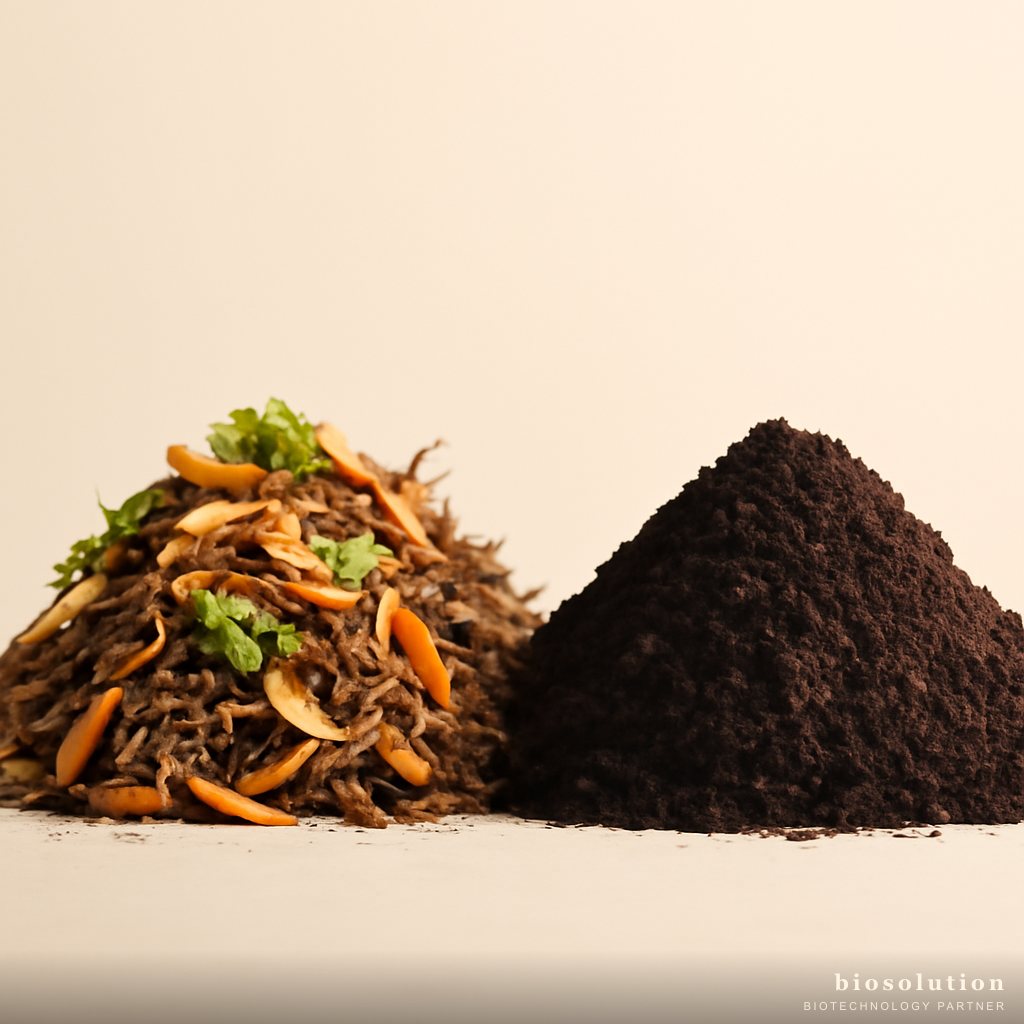
Organic Agriculture Biofertilizer: Field Trial Results of Liquid 5-in-1 Biofertilizer Formula
Organic agriculture certification in Indonesia is increasingly in demand as consumer awareness of healthy food grows. However, the main challenge for organic farmers is maintaining productivity without synthetic chemical fertilizers. This is where organic agriculture biofertilizer becomes a reliable solution. Biosolution presents the Liquid 5-in-1 Biofertilizer Formula, a consortium of five superior microbial strains that have been field-tested on various commodities. This article presents field trial results and the product's working mechanism, so certified organic farmers can adopt it with confidence.
Why Biofertilizer is Important for Organic Agriculture Certification?
Organic certification requires the use of environmentally friendly inputs free from synthetic chemicals. Biofertilizers, or biological fertilizers, contain living microorganisms that help provide nutrients to plants naturally. Unlike chemical fertilizers that dissolve quickly but damage soil structure in the long term, biofertilizers improve soil fertility sustainably.
Role of Biofertilizer in Organic Systems
- Fertilizing the soil: Microbes such as Azospirillum sp. and Rhizobium sp. fix nitrogen from the air, reducing dependence on synthetic N fertilizers.
- Solubilizing phosphate: Bacillus subtilis produces organic acids that solubilize bound phosphate, increasing P availability to plants.
- Protecting plants: Pseudomonas fluorescens and Trichoderma sp. are antagonistic to soil-borne pathogens, reducing the need for pesticides.
Thus, biofertilizer is not just an alternative but a basic necessity for farmers who want to maintain organic certification while increasing crop yields.
Field Trial of Liquid 5-in-1 Biofertilizer Formula on Rice
The field trial was conducted on partner farmers' land in West Java during the 2024 growing season. The experimental plots used Ciherang rice variety with treatments: (A) 100% chemical fertilizer (control), (B) 50% chemical fertilizer + Liquid 5-in-1 Biofertilizer Formula, and (C) organic fertilizer + Liquid 5-in-1 Biofertilizer Formula (no chemical fertilizer).
Main Results
| Parameter | Control (A) | Treatment B | Treatment C |
|---|---|---|---|
| Plant height (cm) | 95 | 102 | 98 |
| Number of productive tillers | 15 | 18 | 17 |
| Dry grain weight at harvest (ton/ha) | 5.2 | 6.3 | 5.8 |
Treatment B (50% chemical fertilizer + biofertilizer) resulted in a 21% yield increase compared to control, while treatment C (full organic) increased by 11%. This shows that the Liquid 5-in-1 Biofertilizer Formula can replace up to 50% of chemical fertilizers without yield loss, even increasing it.
Working Mechanism in Rice
- Azospirillum sp. lives around rice roots and contributes 20-30% of the plant's nitrogen needs.
- Bacillus subtilis solubilizes phosphate and produces the phytohormone IAA, which stimulates root growth.
- Trichoderma sp. accelerates straw decomposition into humus, improving soil structure.
Field Trial on Horticultural Crops (Chili and Tomato)
Red Chili
Field trial of chili in the highlands of East Java showed:
- Biofertilizer + 50% chemical fertilizer treatment produced fruit weight per plant of 450 grams, compared to control 350 grams (29% increase).
- Fusarium wilt incidence decreased dramatically due to Pseudomonas fluorescens, which produces siderophores and natural antibiotics.
Tomato
In tomatoes, biofertilizer application increased the number of fruits per plant from 25 to 32, with more uniform fruit size. Vitamin C content was also higher, an added value for organic products.
Content and Mechanism of Liquid 5-in-1 Biofertilizer Formula
Each milliliter of product contains at least 10⁸ CFU of each of the five microbial strains:
- Rhizobium sp. – Symbiotic N₂ fixer for legumes and related plants.
- Bacillus subtilis – Phosphate solubilizer and root growth promoter (PGPR).
- Azospirillum sp. – Associative N₂ fixer for grasses (rice, corn).
- Pseudomonas fluorescens – Antagonist to soil-borne pathogens, siderophore producer.
- Trichoderma sp. – Biocontrol of soil fungi and decomposer of organic matter.
Synergistic Mechanism
This consortium works synergistically:
- Nitrogen fixation: Rhizobium and Azospirillum convert atmospheric N₂ into ammonia that plants can absorb.
- Phosphate solubilization: Bacillus and Trichoderma produce organic acids (citric, malic) that solubilize bound P.
- Phytohormone production: Bacillus produces IAA, gibberellins, and cytokinins that stimulate root growth and plant development.
- Biocontrol: Pseudomonas and Trichoderma inhibit pathogens through competition, antibiosis, and parasitism.
With this mechanism, plants not only receive sufficient nutrients but are also more resistant to abiotic (drought) and biotic (disease) stresses.
Proper Application for Maximum Results
For optimal biofertilizer performance, application must be correct:
- Method: Drench the solution onto the root zone or spray onto the soil around the plant.
- Dosage: 5–10 ml per liter of water, or equivalent to 1–2 bottle caps per 15-liter spray tank.
- Frequency: Every 10–14 days, 3–5 times per growing season.
- Best time: Morning before 10 AM or afternoon after 4 PM, avoid direct UV light that can kill microbes.
Ensure the soil is moist before application so microbes can adapt quickly. Do not mix biofertilizer with chemical pesticides or fungicides, as this can reduce microbial viability.
Impact on Organic Agriculture Certification
Use of the Liquid 5-in-1 Biofertilizer Formula meets organic input requirements because:
- All microbial strains are naturally sourced and not genetically engineered.
- Contains no synthetic chemicals or heavy metals.
- Increases soil biological activity, a key indicator of organic soil fertility.
Several partner farmers have successfully maintained organic certification for three consecutive seasons with stable yields. Moreover, production costs decreased by 30% due to reduced chemical fertilizers and pesticides.
Conclusion
Organic agriculture biofertilizer such as the Liquid 5-in-1 Biofertilizer Formula has proven effective in increasing crop yields by 20-30% while reducing chemical fertilizers by up to 50%. Field trials on rice, chili, and tomatoes show consistent performance. For farmers who are undergoing or planning to pursue organic certification, this product is the right solution for sustainable productivity. For more information or consultation, contact the Biosolution team via WhatsApp. See the full product on the product page or also read about the Economical Biofertilizer Formula for assistance programs.
FAQ
1. Is this biofertilizer safe for organic crops? Yes, this product consists of five natural microbial strains that are not genetically modified. It contains no synthetic chemicals, thus meeting national and international organic certification standards.
2. How many applications are needed per growing season? It is recommended to apply 3–5 times with an interval of 10–14 days. The first application is done at planting or immediately after transplanting. Frequency can be adjusted based on soil and crop conditions.
3. Can it be mixed with other liquid organic fertilizers? Yes, as long as the organic fertilizer does not contain antimicrobial substances. It is advisable to do a small test by mixing a little and letting it sit for 1 hour. If there is no color or odor change, the mixture is safe to use.
4. Is this product effective for all soil types? This product is effective in various soil types, especially soils poor in organic matter or with phosphate fixation issues. In peat or acidic soils, the addition of agricultural lime is recommended to optimize microbial activity.
5. How should it be stored properly? Store in a cool, dry place at 15-25°C, avoid direct sunlight. Do not freeze. Keep tightly closed after use. The product can last up to 12 months if stored correctly.