Overcome Acidic Agricultural Soil with a Proper Microbial Application Schedule
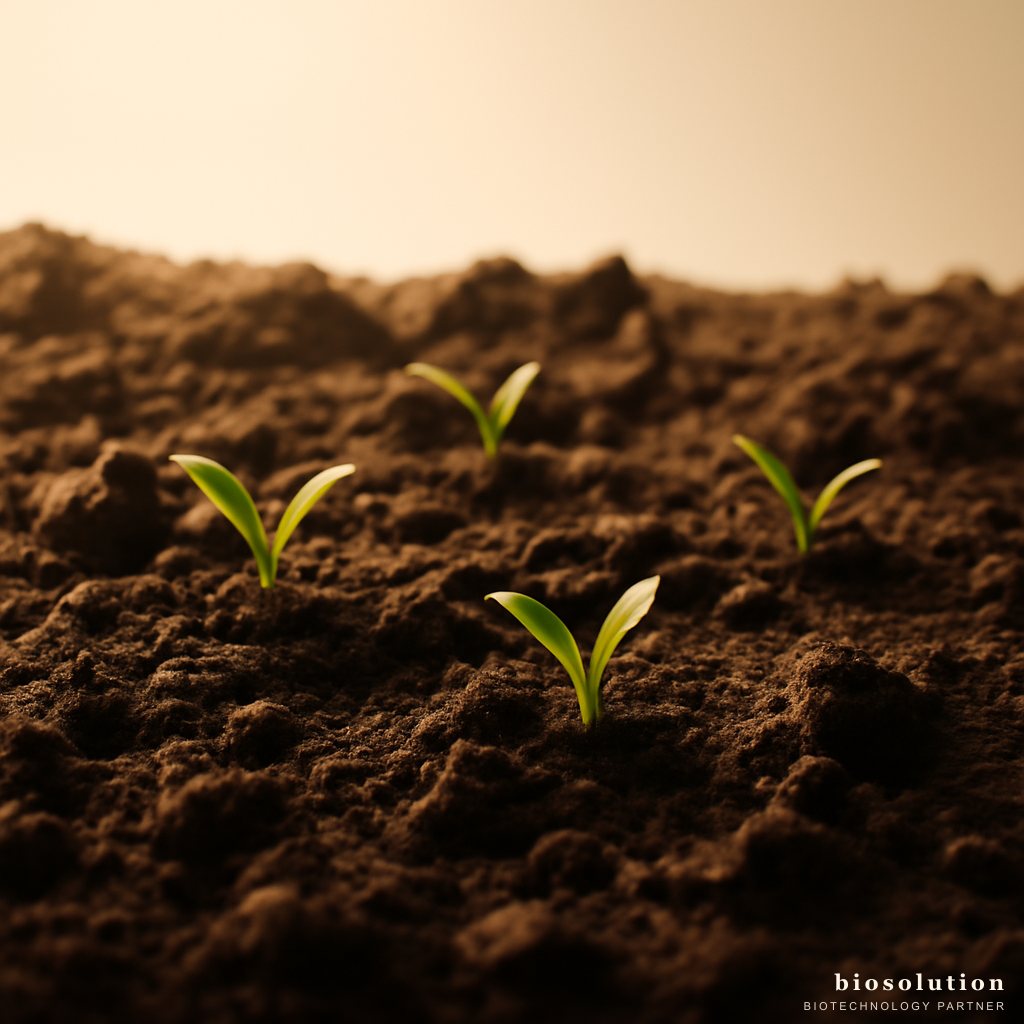
Acidic agricultural soil is a nightmare for farmers on marginal land. Low pH, high aluminum saturation, and poor soil structure make it difficult for plants to grow optimally. However, there is an environmentally friendly scientific solution: utilizing superior microbes. The Soil Structure Improvement Formula from Biosolution is the answer to naturally overcome tropical acidic agricultural soil. This article will thoroughly discuss the application schedule per growth phase for maximum results.
Why Is Acidic Soil a Serious Problem?
Acidic soil (pH < 5.5) is commonly found in Indonesia's marginal land, especially in areas with high rainfall. This condition causes:
- Aluminum and manganese toxicity: Root growth is inhibited, nutrient uptake decreases.
- Low phosphorus availability: Phosphorus is bound by Al and Fe, unavailable to plants.
- Low Cation Exchange Capacity (CEC): Soil struggles to store and supply nutrients.
- Dense soil structure: Poor porosity, drainage and aeration are disrupted.
As a result, land productivity can drop by 30-50% compared to fertile land. Farmers often rely on dolomite lime to raise pH, but the effect is temporary and does not biologically improve soil structure.
Soil Structure Improvement Formula: Superior Microbial Solution
Biosolution presents the Soil Structure Improvement Formula containing three superior microbial strains:
- Azotobacter sp.: Free nitrogen-fixing bacteria, also producing exopolysaccharides (EPS) that bind soil particles into stable aggregates.
- Azospirillum sp.: Nitrogen fixer and producer of phytohormones (auxin, cytokinin) that stimulate root growth.
- Bacillus megaterium: Phosphate and potassium solubilizer, releasing bound nutrients in the soil.
They work synergistically to improve soil physical, chemical, and biological properties. EPS from Azotobacter forms crumbly soil clumps, enhancing porosity and water infiltration. Bacillus megaterium converts unavailable phosphate into plant-available forms. The result: acidic soil gradually becomes more productive.
Application Schedule for Tillage Phase (Pre-Planting)
This phase is key to successfully improving acidic soil. Application is done during the first tillage, ideally at the start of the rainy season.
- Dosage: 10 ml of product per liter of water.
- Application method: Drench or spray evenly onto tilled soil, then mix with a rake.
- Timing: 2-4 weeks before planting, allowing microbes to adapt and start working.
During this phase, Azotobacter begins producing EPS, while Bacillus megaterium solubilizes bound phosphate. The soil becomes looser and pH gradually increases.
Application Schedule for Vegetative Phase (0-30 DAP)
After seedlings are planted, the second application is done when plants enter the early vegetative phase (around 7-14 days after planting).
- Dosage: 10 ml per liter of water, drench around the root zone.
- Frequency: Every 30 days. One application is sufficient for this phase.
- Benefits: Azospirillum produces auxin that stimulates root growth, making plants stronger in absorbing nutrients and water. Soil water holding capacity increases by 20-30%.
Application Schedule for Generative Phase (30-60 DAP)
Entering the flowering and fruit filling phase, the third application is done around 30-45 DAP.
- Dosage: Same, 10 ml/liter of water.
- Method: Drench or spray onto soil around the root zone.
- Benefits: Bacillus megaterium continues to solubilize phosphate and potassium needed for flower and fruit formation. Soil CEC increases, making nutrients more available.
Application Schedule for Ripening Phase (60-90 DAP)
The final application (if needed) can be done at 60-75 DAP for long-season crops like chili or tomato.
- Dosage: 10 ml/liter of water.
- Frequency: One more application is sufficient.
- Benefits: Maintains microbial activity until harvest, keeps soil structure crumbly, and reduces drought impact.
Tips for Successful Application on Acidic Soil
- Measure soil pH periodically to monitor changes.
- Combine with organic matter (compost, manure) to provide food for microbes.
- Avoid using broad-spectrum chemical pesticides that can kill microbes.
- Apply when soil is moist so microbes become active quickly.
- Use clean water (not well water containing chlorine).
Conclusion
Overcoming acidic agricultural soil does not always require chemical lime. With the right application schedule of Soil Structure Improvement Formula—from tillage to ripening—you can improve soil structure, increase CEC, and naturally boost productivity on marginal land. Microbes like Azotobacter, Azospirillum, and Bacillus megaterium work synergistically to transform acidic soil into productive land.
Interested in trying? Free consultation with the Biosolution team or see product details Soil Structure Improvement Formula. For complete plant nutrition, visit Liquid 5-in-1 Biofertilizer Formula.
FAQ
Q: How long does it take to see improvement in acidic soil? A: Significant changes are usually seen after 2-3 growing seasons with regular application every 30 days. In the first season, soil structure begins to improve and pH rises by 0.2-0.5. Crop yields can increase by 20-40% compared to untreated soil.
Q: Is this product safe for plants and the environment? A: Very safe. The product contains natural non-pathogenic microbes that have been tested. It leaves no harmful residues and is friendly to earthworms and other soil organisms.
Q: Can the product be mixed with chemical fertilizers? A: It is best to avoid direct mixing with high-dose chemical fertilizers as it can inhibit microbial activity. Apply microbes 2-3 days after chemical fertilizers, or use them alternately.
Q: Is this product suitable for all types of acidic soil? A: The product is formulated for tropical acidic soil with pH 4.0-5.5. Its effectiveness is optimal when combined with light liming (dolomite) to raise pH above 5.0.
Q: How should the product be stored? A: Store in a cool, dark place (temperature 15-25°C). Avoid direct sunlight. Do not freeze. The product lasts 12 months in tightly sealed packaging.