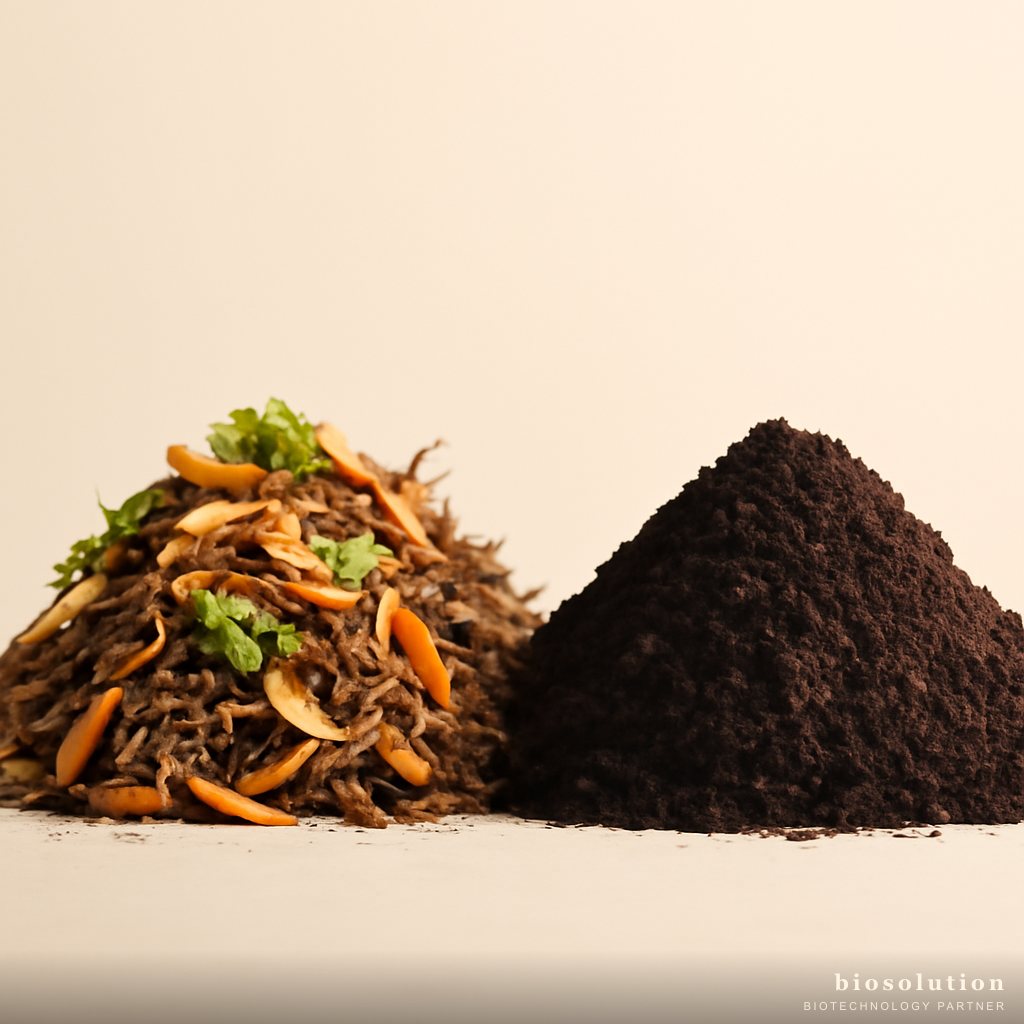
Overcoming Acidic Agricultural Soil with Soil Structure Improvement Formula
Acidic agricultural soil is a nightmare for farmers on marginal land in Indonesia. Low pH, high levels of soluble aluminum (Al) and iron (Fe), and poor essential nutrients cause crop productivity to plummet. However, a natural solution has arrived: the Soil Structure Improvement Formula from Biosolution. This microbe-based product has been field-tested and proven effective in overcoming acidic agricultural soil by improving soil structure, increasing porosity, and reactivating soil biology. This article presents field trial results, scientific mechanisms, and application guidelines for marginal land farmers.
Why is Acidic Soil a Major Problem in Tropical Agriculture?
Acidic soil (pH < 5.5) covers about 30% of agricultural land in Indonesia, especially in Sumatra, Kalimantan, and Papua. This condition causes:
- Aluminum and manganese toxicity: Plant roots are inhibited, water and nutrient absorption disrupted.
- Phosphorus fixation: Phosphate is strongly bound by Al and Fe, unavailable to plants.
- Low nutrient availability: Cations such as Ca, Mg, K are easily leached.
- Decreased microbial activity: Decomposition of organic matter is slow, nutrient cycles are hindered.
Marginal land farmers often rely on dolomite lime to raise pH, but it is expensive and its effect is temporary. This is where the role of soil microbes becomes crucial. Certain microbes can produce organic compounds that bind toxic Al, dissolve fixed phosphate, and produce extracellular polysaccharides (EPS) that bind soil particles into stable aggregates. As a result, soil structure improves, aeration and drainage are optimal, and plant roots can develop freely.
Field Trial Results of Soil Structure Improvement Formula on Marginal Land
Field trials were conducted over two growing seasons (2024-2025) on acidic soil (pH 4.8-5.2) owned by a farmer in Sukamaju Village, Lampung. The test crop was hybrid corn. Two plots were compared: control plot (no treatment) and treatment plot (application of Soil Structure Improvement Formula at a dose of 10 ml/L water, drenched into the soil every 30 days, 3 times per season).
Soil Physical Parameters
At the end of the first season, the treatment plot showed:
- Porosity increased by 18% (from 42% to 60%), improving aeration and water infiltration.
- Water holding capacity increased by 25% (from 35% to 60% volume), reducing drought stress.
- Stable soil aggregates (aggregate stability index 0.75 vs 0.45 in control), reducing erosion.
Soil Chemical Parameters
- Soil pH increased by 0.6 units (from 4.8 to 5.4) without liming.
- Exchangeable aluminum (Al-dd) decreased by 40% (from 2.5 cmol/kg to 1.5 cmol/kg).
- Available phosphorus increased threefold (from 5 ppm to 15 ppm).
- Cation exchange capacity (CEC) increased by 20% (from 8 to 9.6 cmol/kg).
Soil Biological Parameters
The population of phosphate-solubilizing and nitrogen-fixing bacteria increased significantly. Dehydrogenase activity (a soil health indicator) increased by 50%.
Crop Productivity
- Plant height: average 210 cm vs 170 cm (control).
- Ear weight: 220 g vs 150 g (control).
- Dry grain yield: 6.8 tons/ha vs 4.2 tons/ha (62% increase).
Partner farmer, Mr. Budi, said: "My soil used to be hard and full of gravel. After using the Soil Structure Improvement Formula, the soil became loose, water didn't pool, and the corn grew lush. I saved on lime costs."
Microbial Mechanisms in Improving Acidic Soil
The Soil Structure Improvement Formula contains three superior microbes that work synergistically:
Azotobacter sp. – N2 Fixer and EPS Producer
Azotobacter is an aerobic bacterium capable of fixing atmospheric nitrogen into ammonia, providing N for plants. Additionally, it produces large amounts of exopolysaccharides (EPS). This EPS acts like a natural glue that binds clay, silt, and sand particles into macro-aggregates. These stable aggregates create soil pores, improving aeration and drainage. In acidic soil, EPS also binds toxic Al ions, reducing phytotoxicity.
Azospirillum sp. – N2 Fixer and Root Stimulant
Azospirillum lives around the roots (rhizosphere) and fixes N2 associatively. It produces growth hormones such as auxins and gibberellins that stimulate root elongation and branching. Denser and longer roots enhance nutrient and water uptake, while also improving soil aggregation through root exudates.
Bacillus megaterium – Phosphate and Potassium Solubilizer
Bacillus megaterium produces organic acids (e.g., citric acid, gluconic acid) that dissolve fixed phosphate (AlPO4, FePO4) and potassium from soil minerals. The organic acids also chelate Al and Fe, reducing their toxic activity. Thus, the availability of P and K increases dramatically, supporting plant growth.
These three microbes are formulated in a stable consortium, capable of surviving in acidic soil due to their ability to form spores (especially Bacillus megaterium). Regular application every 30 days ensures high microbial populations and sustained activity.
Proper Application Method for Marginal Land
Based on field trial results, here is the application guide for the Soil Structure Improvement Formula:
- Method: Drench or spray onto soil during tillage or after planting. Ensure the soil is moist.
- Dosage: 10 ml per liter of water. For 1 hectare, approximately 5 liters of product in 500 liters of water is needed.
- Timing: Early rainy season or after tillage, when microbes can easily develop.
- Frequency: Every 30 days, 3 times per growing season. First application during tillage, second when plants are 30 days old, third at 60 days.
Tips: It is best to apply in the afternoon to avoid direct UV light. Mix with manure or compost to enrich soil organic matter.
Advantages of Soil Structure Improvement Formula Over Conventional Methods
Conventional methods like liming only temporarily raise pH, without biologically improving soil structure. Lime can also bind phosphorus if overused. In contrast, the Soil Structure Improvement Formula:
- Improves soil structure from within through EPS and biological aggregation.
- Increases nutrient availability naturally without side effects.
- Activates soil biology so nutrient cycles are sustainable.
- Environmentally safe and leaves no chemical residues.
- Saves costs by reducing the need for chemical fertilizers and lime by up to 30-50%.
Conclusion
Overcoming acidic agricultural soil requires a holistic approach that not only relies on lime but also improves soil structure biologically. Field trial results prove that Biosolution's Soil Structure Improvement Formula can increase pH, reduce toxic Al, improve soil aggregation, and increase corn yield by up to 62%. This product is the right solution for marginal land farmers who want to rehabilitate their land sustainably.
Interested in trying? Free consultation with the Biosolution team or see the product Soil Structure Improvement Formula and Liquid 5-in-1 Biofertilizer Formula for maximum results.