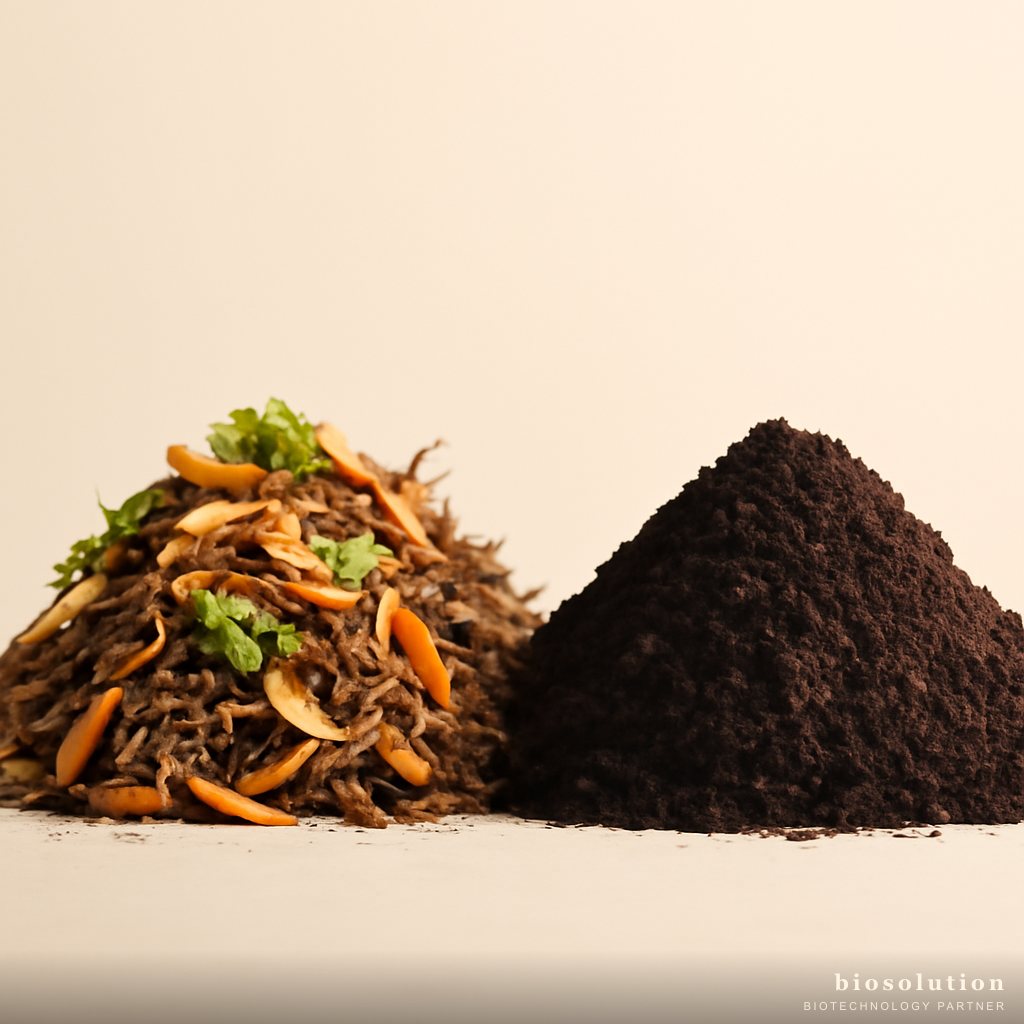
Overcoming Acidic Soil with Microbes: Javanese Farmers Successfully Improve Marginal Land
Acidic soil is a major challenge for tropical agriculture, especially on marginal land in Indonesia. However, microbial strategies for improving acidic soil in tropical agriculture have now proven effective. A farmer in Java successfully transformed unproductive acidic land into a fertile vegetable garden using the Soil Structure Improvement Formula from Biosolution. How did they do it? Read the science behind this success.
Why Is Acidic Soil a Serious Problem in Tropical Agriculture?
Acidic soil (pH < 5.5) dominates agricultural land in Indonesia, especially in Sumatra, Kalimantan, and Java. This condition causes several critical problems:
Aluminum and Manganese Toxicity
At low pH, Al³⁺ and Mn²⁺ ions become soluble and toxic to plants. Aluminum inhibits root growth, while excess manganese disrupts photosynthesis. As a result, plants become stunted, leaves turn yellow, and yields drop drastically.
Low Nutrient Availability
Phosphorus (P) is strongly bound by Al and Fe, forming insoluble compounds. Potassium (K), calcium (Ca), and magnesium (Mg) are easily leached. Nitrogen (N) is lost through denitrification. Farmers often add high doses of chemical fertilizers, but results remain minimal because nutrients are unavailable.
Damaged Soil Structure
Acidic soil tends to be compact, poor in organic matter, and has low porosity. Roots struggle to penetrate, water pools, and aeration is poor. Beneficial microbes also struggle to thrive.
Economic impact: productivity of marginal land can drop by up to 50% compared to fertile land. Therefore, an approach is needed that not only changes pH but also simultaneously improves soil physical, chemical, and biological properties.
Microbial Strategy for Improving Acidic Soil in Tropical Agriculture
Biosolution developed the Soil Structure Improvement Formula containing three superior microbes: Azotobacter sp., Azospirillum sp., and Bacillus megaterium. They work synergistically through the following mechanisms:
Azotobacter sp. and Azospirillum sp.: Nitrogen Fixers and Exopolysaccharide Producers
Both bacteria fix N₂ from the air into ammonia that plants can use. Not only that, Azotobacter sp. produces exopolysaccharides (EPS) that act like natural glue. EPS binds soil particles into stable aggregates, increasing porosity and improving drainage. Roots then grow more freely.
Bacillus megaterium: Phosphate and Potassium Solubilizer
Bacillus megaterium produces organic acids (e.g., citric acid, gluconic acid) that dissolve phosphate bound to Al/Fe and potassium from soil minerals. Thus, P and K nutrients become available to plants without the need for excess chemical fertilizers.
Synergistic Effect on Soil pH
Although microbes do not directly raise pH drastically, their activity triggers the decomposition of organic matter, producing humic and fulvic acids. These acids chelate toxic Al and Mn, reducing their toxicity. Over time, soil pH naturally increases.
Case Study: Javanese Farmer Succeeds with Soil Structure Improvement Formula
Mr. Budi, a vegetable farmer in the highlands of West Java, had 0.5 ha of land with a pH of 4.8. The soil was hard, often flooded during rain, and chili and tomato plants always failed to harvest. After attending Biosolution training, he applied the Soil Structure Improvement Formula at a dose of 10 ml per liter of water, drenched into the soil every 30 days, 3 times per season, starting at the beginning of the rainy season.
Real Results After One Growing Season
- Soil pH rose from 4.8 to 5.6 within 4 months.
- Soil structure became crumbly, porosity increased, no waterlogging.
- Chili productivity increased by 40% compared to the previous season.
- Chemical fertilizer needs reduced by 30%.
Mr. Budi said: "I used to be stressed every rainy season, the soil was muddy and plants died. Now the soil is loose, chili roots grow lush. I also save on fertilizer."
Proper Application of Soil Structure Improvement Formula
For optimal results, follow these guidelines:
Application Timing
- Start of the rainy season or after tillage.
- Repeat every 30 days, at least 3 times per growing season.
Dosage and Method
- Mix 10 ml of product with 1 liter of clean water (without chlorine).
- Drench evenly into the soil around the root zone, or spray onto the soil surface before planting.
- Ensure the soil is moist, not waterlogged.
Additional Tips
- Combine with liquid 5-in-1 biofertilizer for complete nutrient supply.
- Avoid using chemical pesticides simultaneously; allow at least a 3-day interval.
- Use organic mulch to maintain moisture and microbial activity.
Long-Term Benefits for Marginal Land
Regular application of the Soil Structure Improvement Formula provides sustainable benefits:
Increased Water Holding Capacity
Stable soil aggregates can hold water longer, so plants are less stressed during short dry spells.
Improved Cation Exchange Capacity (CEC)
Organic matter from microbial decomposition increases CEC, so nutrients are not easily leached.
Soil Microbial Diversity
Indigenous microbes are also stimulated, creating a healthy and self-sustaining soil ecosystem.
Increased Marginal Land Productivity
Land that was previously unproductive can yield harvests equivalent to fertile land within 2-3 seasons.
Conclusion
Microbial strategies for improving acidic soil in tropical agriculture have proven effective through the case study of Javanese farmers. The Soil Structure Improvement Formula from Biosolution, containing Azotobacter sp., Azospirillum sp., and Bacillus megaterium, can improve soil structure, increase nutrient availability, and suppress Al toxicity. The results: soil pH rises, productivity increases, and dependence on chemical fertilizers decreases. For farmers on marginal land, this solution is the answer to sustainable agriculture.
Interested in trying? Consult your land conditions with the Biosolution team via WhatsApp. Get dosage recommendations and appropriate application schedules. Also visit the product page Soil Structure Improvement Formula for more information.