Pond Bottom Sludge Decomposer Without Draining: Microbial Probiotic Strategy
Organic sludge that settles at the pond bottom is a major challenge for intensive farmers. Accumulation of uneaten feed, feces, and dead plankton forms a sludge layer that, if left unchecked, triggers ammonia spikes, reduces dissolved oxygen, and becomes a pathogen medium. Until now, the common solution has been periodic pond draining—an expensive, time-consuming process that disrupts production cycles. However, with a microbial probiotic approach, pond bottom sludge decomposition without draining is now a reality. This article thoroughly examines the mechanism of sludge decomposition using beneficial bacteria and how Biosolution's Pond Bottom Sludge Decomposer Formula can be your mainstay.
Why Pond Bottom Sludge Needs Management?
Pond bottom sludge is not just ordinary sediment. Its main components are easily decomposable organic materials such as proteins, carbohydrates, and fats. When anaerobic microbes dominate, the decomposition process is slow and produces toxic compounds like ammonia (NH3), hydrogen sulfide (H2S), and methane. The impacts include:
- Increased total ammonia: Ammonia is toxic to shrimp and fish, especially at high pH.
- Decreased dissolved oxygen: Anaerobic decomposition consumes oxygen, causing hypoxia.
- Pathogen growth: Reducing environment triggers the growth of Vibrio spp. bacteria and parasites.
- Unpleasant odor: H2S gas gives a rotten egg smell.
According to data from the Ministry of Marine Affairs and Fisheries (KKP), poor sludge management can reduce pond productivity by up to 30%. Therefore, an effective sludge management strategy is crucial for sustainable aquaculture.
Mechanism of Microbial Probiotics in Decomposing Sludge
Microbial probiotics work by shifting the dominance from anaerobic bacteria to aerobic or facultative aerobic bacteria that are more efficient at degrading organic matter. Two key bacteria used in the Pond Bottom Sludge Decomposer Formula are Bacillus subtilis and Bacillus licheniformis.
Bacillus subtilis: Superior Organic Decomposer
Bacillus subtilis is a Gram-positive bacterium that produces various extracellular enzymes, including protease, amylase, and lipase. These enzymes break down proteins, carbohydrates, and fats into simpler compounds such as amino acids, sugars, and fatty acids. This process accelerates sludge decomposition and reduces the organic load on the pond bottom. Additionally, B. subtilis produces antimicrobial compounds like subtilin that suppress the growth of pathogenic bacteria.
Bacillus licheniformis: Extracellular Enzyme Producer
Bacillus licheniformis has the ability to produce large amounts of enzymes, especially alkaline protease and cellulase. These enzymes are highly effective in degrading uneaten feed and plant fibers that are difficult to decompose. The combination of these two bacteria creates synergy: B. subtilis initiates early decomposition, while B. licheniformis completes the breakdown of complex compounds.
Role of Extracellular Enzymes
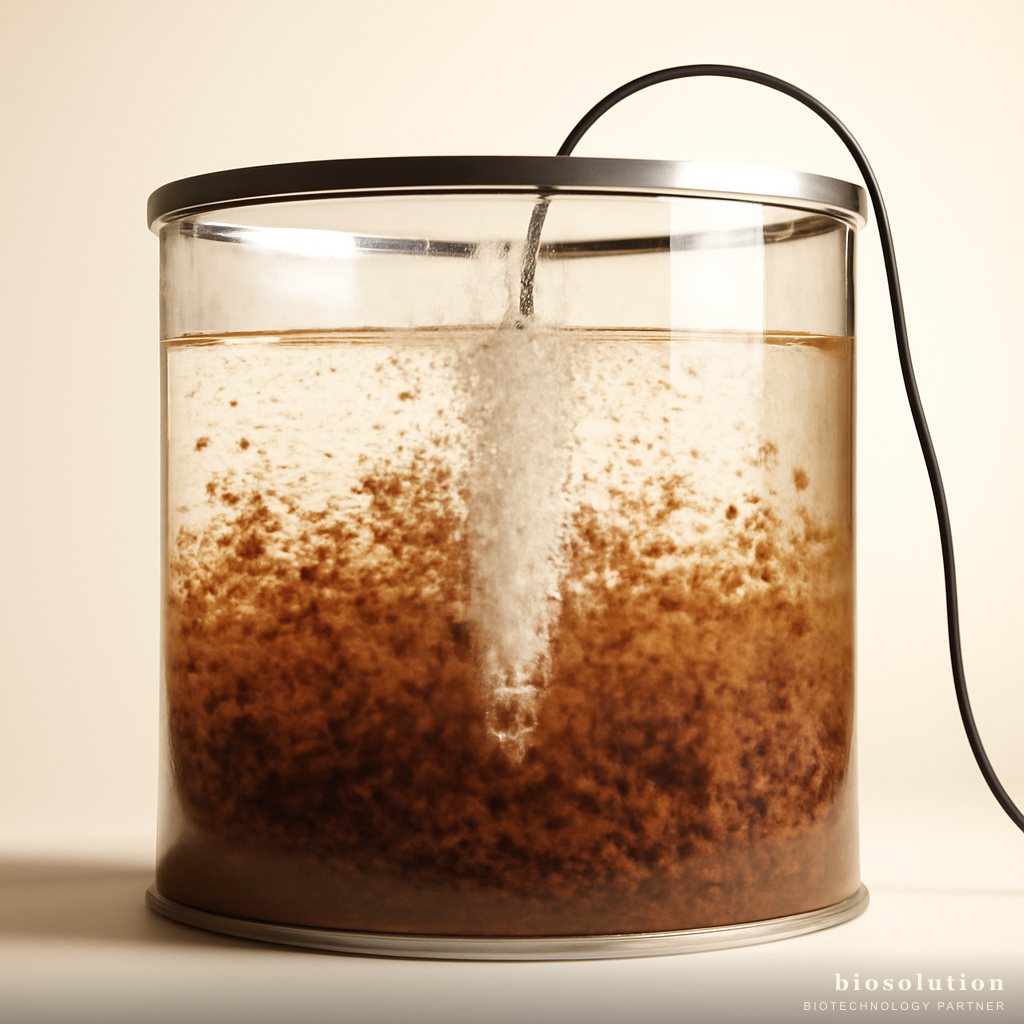
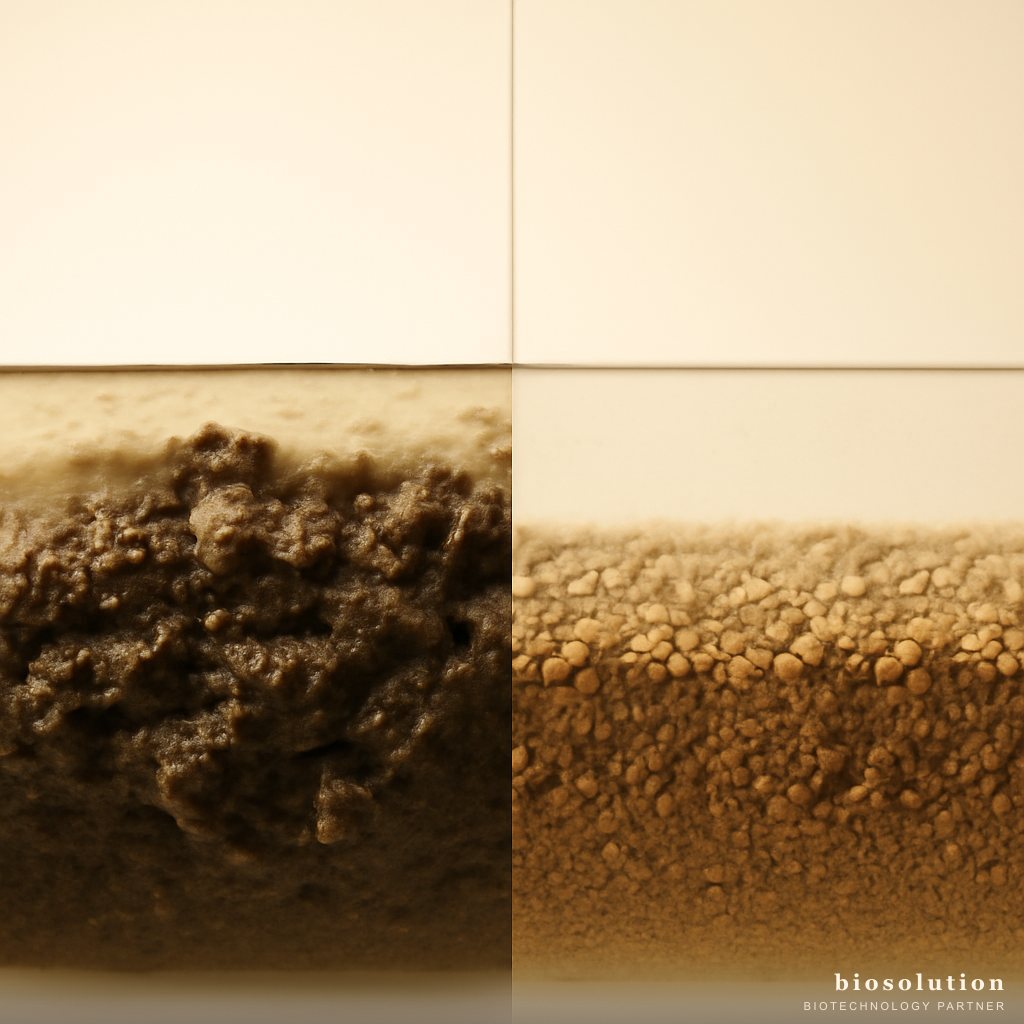
Extracellular enzymes produced by both bacteria work outside the cells, thus able to reach larger sludge particles. This process converts sludge into fine particles that are more easily decomposed and dissolved in water. The end result is a significant reduction in sludge volume, improved water quality, and reduced toxic gas emissions.
Advantages of Biosolution's Pond Bottom Sludge Decomposer Formula
Biosolution presents the Pond Bottom Sludge Decomposer Formula in a practical and effective tablet form. Here are its advantages:
Easy Application: Scatter Tablets on Pond Bottom
Each tablet contains a consortium of Bacillus subtilis and Bacillus licheniformis equipped with extracellular enzymes. Simply scatter the tablets evenly on the pond bottom at a dose of 1 tablet per 50 m². The tablets will sink and start working directly in the sludge area.
Scheduled Frequency: Every 14 Days
Regular use every 14 days ensures that the probiotic bacterial population remains stable and dominant. The best application time is in the morning when water temperature is still low, so bacteria are not stressed and enzyme activity is optimal.
Tangible Benefits
- Sludge decomposition: Sludge volume drastically reduces within 2-3 weeks.
- Significant ammonia reduction: Aerobic decomposition produces lower ammonia compared to anaerobic.
- No need to drain pond: Saves water, electricity, and labor costs.
- Operational cost savings: With only an investment in tablets, you can avoid losses due to poor water quality.
Case Study: Effectiveness of Sludge Decomposer Formula in Intensive Ponds
Although specific data from Biosolution has not been published, many scientific studies support the effectiveness of Bacillus spp. in managing pond sludge. Research from Bogor Agricultural University (IPB) showed that application of Bacillus subtilis and Bacillus licheniformis in vaname shrimp ponds reduced total ammonia nitrogen (TAN) by up to 40% and increased shrimp survival by 15% compared to controls (Source: Jurnal Akuakultur Indonesia, 2020).
Farmers in East Java who have used the Pond Bottom Sludge Decomposer Formula reported that after 4 weeks of regular application, pond bottom sludge decreased by up to 60%, and the draining frequency could be extended from 1 month to 3 months. This certainly saves significant operational costs.
Comparison with Conventional Methods
| Method | Cost | Effectiveness | Environmental Impact |
|---|---|---|---|
| Total draining | High (water, electricity, labor) | Immediate, but disrupts cycle | Liquid waste to environment |
| Additional aeration | Moderate | Helps oxygenation, but does not decompose sludge | None |
| Probiotics (Sludge Decomposer Formula) | Low | Gradual, but sustainable | Environmentally friendly |
Clearly, the use of microbial probiotics is the most efficient and sustainable solution.
Proper Application Method
- Calculate the pond bottom area: e.g., a 1000 m² pond requires 20 tablets.
- Scatter tablets evenly, especially in sludge accumulation areas.
- Apply in the morning, before feeding.
- Repeat every 14 days for optimal results.
- Monitor water quality regularly (ammonia, pH, DO) to track progress.
FAQ
Is the probiotic safe for shrimp/fish?
Yes, Bacillus subtilis and Bacillus licheniformis are non-pathogenic bacteria commonly used in aquaculture. They do not harm pond biota and actually help suppress pathogens.
How long does it take for sludge to start decomposing?
Usually within 1-2 weeks after the first application, you will see a decrease in sludge volume. Optimal effects are achieved after 3-4 weeks of regular use.
Do I need to stop aeration during application?
No. Aeration should continue because probiotic bacteria are facultative aerobes and require oxygen for optimal performance. In fact, aeration helps distribute the bacteria.
Can it be used together with feed probiotics?
Certainly. The Pond Bottom Sludge Decomposer Formula works on the pond bottom, while feed probiotics work in the digestive tract. They complement each other.
What if the pond already has very thick sludge?
For ponds with very thick sludge (>20 cm), it is recommended to mechanically reduce the sludge volume first, then continue with regular probiotic application.
Conclusion
Pond bottom sludge management does not always have to involve costly and troublesome draining. By utilizing microbial probiotics such as Bacillus subtilis and Bacillus licheniformis, you can decompose organic sludge naturally, reduce ammonia, and save operational costs. Biosolution's Pond Bottom Sludge Decomposer Formula offers an easy-to-use, effective, and environmentally friendly tablet solution. For maximum results, apply regularly every 14 days.
Interested in trying? Consult your pond conditions with Biosolution's expert team via WhatsApp at [link WhatsApp] or see product details Pond Bottom Sludge Decomposer Formula. Also get other interesting information in related articles.