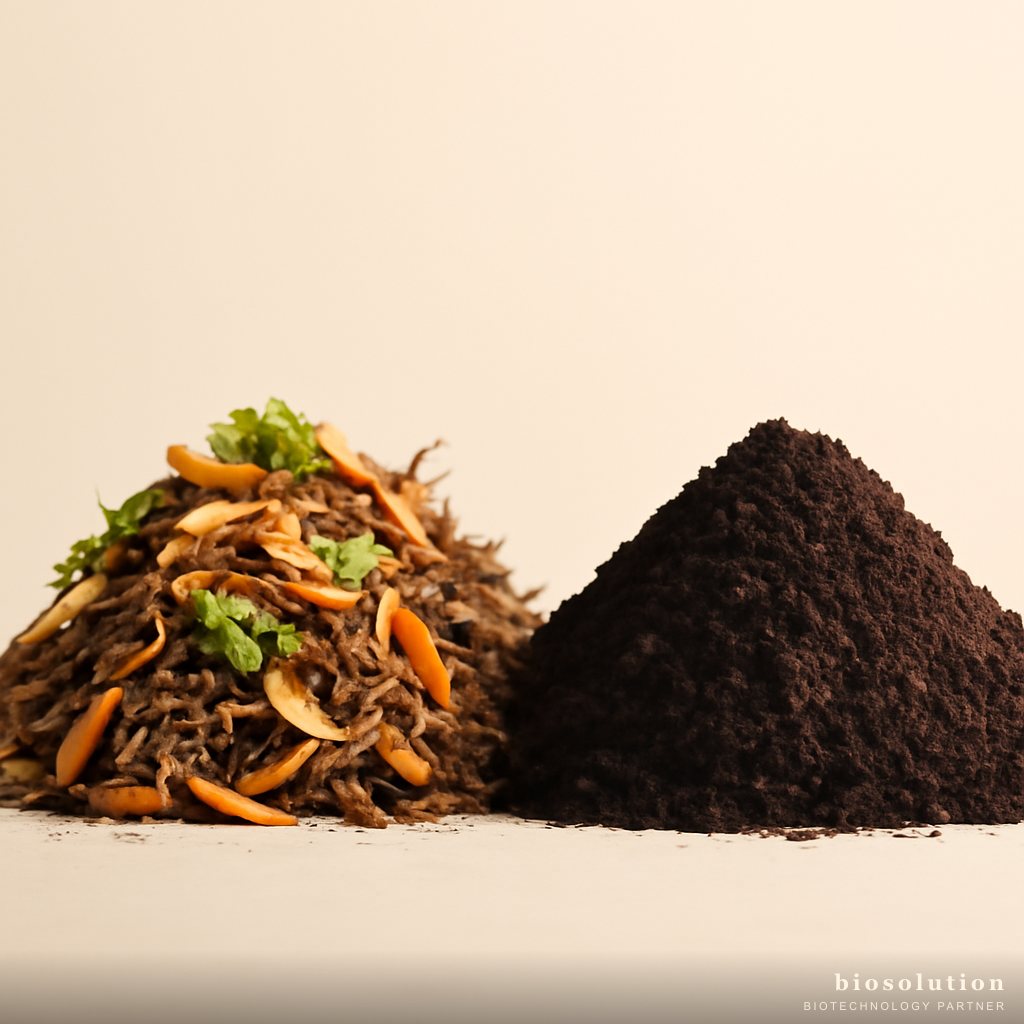
Post-Fire Biofertilizer: 3 Microbial Formulas to Improve Soil Structure
Land fires leave impacts far deeper than just smoke and ash. Beneath the surface, soil loses structure, porosity collapses, and beneficial microbes are destroyed. Post-fire soil recovery with microbes is an approach that not only improves soil physical properties but also restores its biological functions. Biosolution's post-fire biofertilizer, specially formulated for marginal land, offers a science-based solution for land rehabilitation that is more effective than conventional chemical fertilizers.
Why Is Post-Fire Soil Difficult to Restore with Chemical Fertilizers?
Land fires drastically alter soil. High temperatures burn organic matter, destroy soil aggregates, and evaporate soil water. As a result, soil becomes compact, prone to erosion, and loses its water-holding capacity. Chemical fertilizers do provide nutrients in inorganic form, but they cannot repair damaged soil structure. Compact soil makes it difficult for roots to penetrate, and applied nutrients are easily leached or volatilized. Moreover, chemical fertilizers do not restore the microbial life that is key to natural nutrient cycles. This is why a biological approach with post-fire biofertilizer is a more appropriate choice.
The Role of Microbes in Improving Soil Structure
Soil microbes have unique abilities that chemical fertilizers lack. They produce extracellular polymeric substances (EPS) that bind soil particles into stable aggregates, increasing porosity and aeration. Additionally, nitrogen-fixing microbes such as Azotobacter sp. and Azospirillum sp. provide nitrogen biologically, while Bacillus megaterium solubilizes fixed phosphate and potassium. The three work synergistically to restore soil health holistically.
Mechanisms of Azotobacter sp. and Azospirillum sp.
Azotobacter sp. is a free-living nitrogen-fixing bacterium that lives in the rhizosphere. Besides fixing N₂ from the air, it produces EPS that acts as a natural binder for soil particles. This EPS forms a biofilm that protects soil aggregates from disintegration by rainwater. Azospirillum sp. works similarly but excels in producing phytohormones such as auxin that stimulate root growth. Longer and more branched roots help improve soil structure mechanically.
Role of Bacillus megaterium in Phosphate Solubilization
Bacillus megaterium is a highly effective phosphate and potassium solubilizing bacterium. Post-fire soil often has phosphate in bound (unavailable) form. This bacterium produces organic acids that dissolve phosphate and potassium from soil minerals, making them available to plants. Thus, post-fire biofertilizer not only improves structure but also increases the availability of essential nutrients.
How Biosolution's Soil Structure Improvement Formula Works
Biosolution's Soil Structure Improvement Formula contains three superior strains that have been tested for effectiveness. This product is applied by drenching or spraying the soil during tillage, at a dose of 10 ml per liter of water. Application frequency is every 30 days for 3 times per season, ideally at the start of the rainy season or after tillage. Here is its mechanism of action:
- First application: Microbes begin colonizing the rhizosphere and producing EPS. Soil aggregates start forming within 2-3 weeks.
- Second application: Soil structure becomes more stable, porosity increases, and water-holding capacity improves.
- Third application: Soil reaches optimal condition with higher CEC and even nutrient availability.
As a result, previously compact and barren soil becomes loose, fertile, and ready for planting. This product has been tested on post-fire marginal land in several regions of Indonesia and has shown up to 40% increase in land productivity.
Advantages of Biological Approach Over Chemical
The biological approach with post-fire biofertilizer has several advantages:
- Permanently improves soil structure: Microbes build stable soil aggregates, not just patch them.
- Increases water-holding capacity: EPS and organic matter from microbial activity increase water retention by up to 30%.
- Improves CEC (Cation Exchange Capacity): Microbes increase soil CEC through production of humic and fulvic acids.
- Environmentally friendly: Leaves no chemical residues, safe for surrounding ecosystems.
Chemical fertilizers, on the other hand, tend to worsen soil structure in the long term because continuous use can cause salinization and pH decline. Therefore, for post-fire land, a biological approach is the answer.
Application Guide for Post-Fire Biofertilizer
Here is a practical guide for using Soil Structure Improvement Formula for land rehabilitation:
- Preparation: Shallow tillage (15-20 cm) to turn over remaining ash and aerate.
- Application: Mix 10 ml of product with 1 liter of water, drench evenly onto soil. For large areas, use a spray tank.
- Timing: Apply in the morning or late afternoon to avoid direct UV light that can kill microbes.
- Frequency: Repeat every 30 days for 3 times. After that, the soil is ready for planting.
- Maintenance: Maintain soil moisture with mulch or light irrigation.
For optimal results, combine with planting cover crops such as legumes that can accelerate recovery.
Conclusion
Restoring post-fire soil with microbes is a smart solution that addresses the root problem: damaged soil structure. Biosolution's post-fire biofertilizer, with its three superior microbial formulas, not only improves porosity and CEC but also restores soil life. This approach is more effective and sustainable than chemical fertilizers. If you are planning land rehabilitation, consult your needs with the Biosolution expert team via WhatsApp to get the right recommendations.