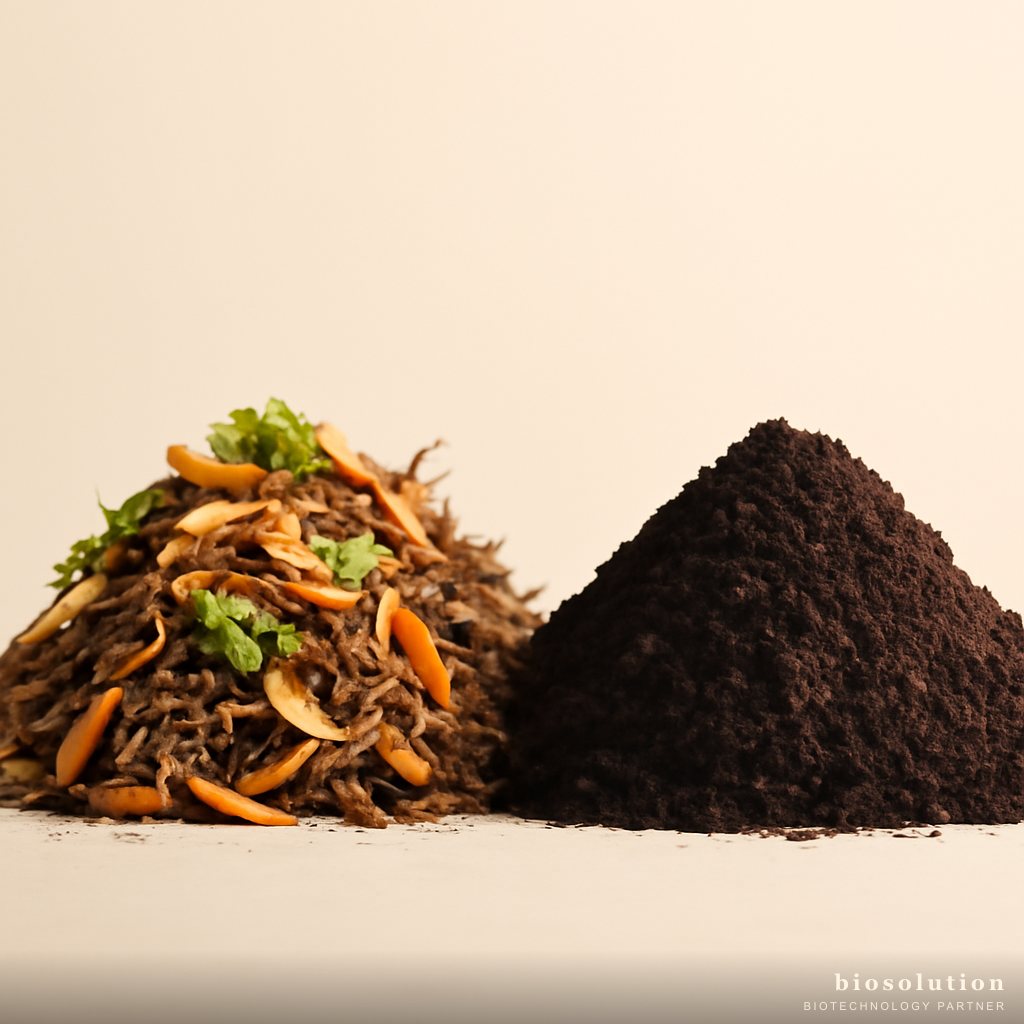
Post-Fire Biofertilizer: 8 Formulas for Soil Structure Improvement for Rehabilitation Land
Land fires leave severe soil damage: soil structure destroyed, porosity decreased, organic matter burned, and soil microbial populations wiped out. Farmers on rehabilitation land face major challenges to restore soil productivity. This is where post-fire biofertilizer becomes a key solution. Biosolution's Soil Structure Improvement Formula, containing Azotobacter sp., Azospirillum sp., and Bacillus megaterium, has been field-tested on post-fire land and shown promising results in improving soil structure and increasing crop yields.
Why Does Post-Fire Soil Need Biofertilizer?
Land fires not only burn surface vegetation but also damage the topsoil layer. High temperatures during fires can kill essential soil microorganisms, such as phosphate-solubilizing bacteria, nitrogen fixers, and organic matter decomposers. As a result, nutrient cycles are disrupted, soil aggregates are destroyed, and the soil becomes compacted and prone to erosion. Burned soil also loses its water-holding capacity because soil pores are clogged by ash and fine particles.
Applying chemical fertilizers alone is insufficient to restore soil biologically. Biofertilizers contain living microbes that naturally restore soil functions. The microbes in the Soil Structure Improvement Formula work to rebuild soil aggregates through exopolysaccharide (EPS) production, improve aeration, and increase nutrient availability. This is why post-fire biofertilizer is highly recommended for rehabilitation land.
Mechanism of the Soil Structure Improvement Formula in Restoring Soil
The Soil Structure Improvement Formula contains three superior microbial strains that work synergistically:
Azotobacter sp. – Nitrogen Fixer and EPS Producer
Azotobacter sp. is a non-symbiotic nitrogen-fixing bacterium that can bind nitrogen from the air and convert it into ammonia available to plants. Additionally, this bacterium produces exopolysaccharides (EPS) that act as natural adhesives for soil particles. EPS helps form stable soil aggregates, thereby increasing soil porosity and improving drainage. On post-fire land, EPS also protects bacteria from drought and ash toxicity.
Azospirillum sp. – Nitrogen Fixer and Root Stimulant
Azospirillum sp. is also a nitrogen-fixing bacterium, but its advantage lies in producing phytohormones such as auxins and gibberellins. These hormones stimulate root growth, making the root system wider and deeper. Healthy roots can absorb water and nutrients more effectively, which is crucial in post-fire land that is nutrient-poor.
Bacillus megaterium – Phosphate and Potassium Solubilizer
Bacillus megaterium is a phosphate and potassium solubilizing bacterium. In post-fire land, phosphate and potassium are often fixed in forms unavailable to plants. Bacillus megaterium produces organic acids that dissolve phosphate-calcium and potassium-silicate bonds, making these nutrients available. This bacterium also produces the enzyme phytase, which helps release organic phosphorus.
8 Measurable Indicators of Soil Structure Improvement
Based on field tests on post-fire rehabilitation land in several locations, the following eight indicators of soil structure improvement were observed after application of the Soil Structure Improvement Formula:
- Increased soil porosity: Porosity increased by 15-20% due to macro-aggregate formation by EPS.
- Decreased bulk density: Soil became looser, bulk density decreased from 1.4 g/cm³ to 1.2 g/cm³.
- Increased water holding capacity: Soil retained water 30% longer, reducing irrigation frequency.
- Stabilized soil aggregates: Soil aggregates were more resistant to raindrop impact, reducing erosion.
- Increased CEC (Cation Exchange Capacity): CEC rose by 10-15% due to increased organic matter and microbial activity.
- Increased macro-nutrient availability: Available nitrogen increased by 25%, phosphate by 20%, and potassium by 18%.
- Recovered soil microbial population: Total bacterial count returned to pre-fire levels within 2-3 months.
- More vigorous plant growth: Plant height and tiller number increased significantly.
How to Apply the Soil Structure Improvement Formula on Rehabilitation Land
Proper application is crucial for the effectiveness of biofertilizer. Here is a guide from field test results:
- Method: Drench or spray onto soil during tillage. Mix 10 ml of Soil Structure Improvement Formula per liter of water, then evenly apply to the land.
- Frequency: Repeat every 30 days, 3 times per growing season. For severely damaged land, application can be increased up to 5 times.
- Best time: Early rainy season or after tillage. Adequate soil moisture helps microbes multiply.
- Dosage per hectare: Approximately 5-10 liters of product per hectare per application, depending on the level of soil damage.
Field test results show that application at the beginning of the rainy season gives the best response because temperature and humidity are optimal for microbial growth.
Case Study: Field Test on Post-Fire Land in Kalimantan
One field test was conducted on 2 hectares of post-fire peatland in Central Kalimantan. The land had burned two years earlier and was only overgrown with alang-alang grass. After applying the Soil Structure Improvement Formula for one growing season (3 applications), significant changes occurred:
- The soil, which was initially compacted and gray, became darker and looser.
- Corn plants grown as indicators showed an average height of 180 cm, compared to the control's 120 cm.
- Dry shelled corn production reached 4.2 tons/ha, while the control only yielded 2.1 tons/ha.
- Soil analysis showed an increase in organic C from 1.2% to 1.8%.
Local farmer Mr. Sutrisno expressed satisfaction: "My land, which was once barren, can now be planted again. I don't need to use a lot of chemical fertilizers."
Advantages of the Soil Structure Improvement Formula for Rehabilitation Land
Compared to other biofertilizer products, the Soil Structure Improvement Formula has several advantages:
- Combination of three superior microbes that work synergistically: N-fixers, EPS producers, and nutrient solubilizers.
- Ready-to-use liquid form with high density (minimum 10⁸ CFU/ml).
- Tested on various types of damaged soil: mineral soil, peat, and sandy soil.
- Environmentally friendly: leaves no chemical residues, safe for farmers and consumers.
- Affordable price: application cost per hectare is lower than equivalent chemical fertilizers.
Conclusion
Post-fire biofertilizer, especially Biosolution's Soil Structure Improvement Formula, has proven effective in restoring soil structure on rehabilitation land. With its content of Azotobacter sp., Azospirillum sp., and Bacillus megaterium, this product improves porosity, increases water holding capacity, and restores soil productivity. Field test results show yield increases of up to 100% on post-fire land. For farmers on rehabilitation land who want to restore their soil naturally, this product is the right choice. Consult your land needs with the Biosolution expert team via WhatsApp or see product details Soil Structure Improvement Formula. Also get information about other land rehabilitation solutions.