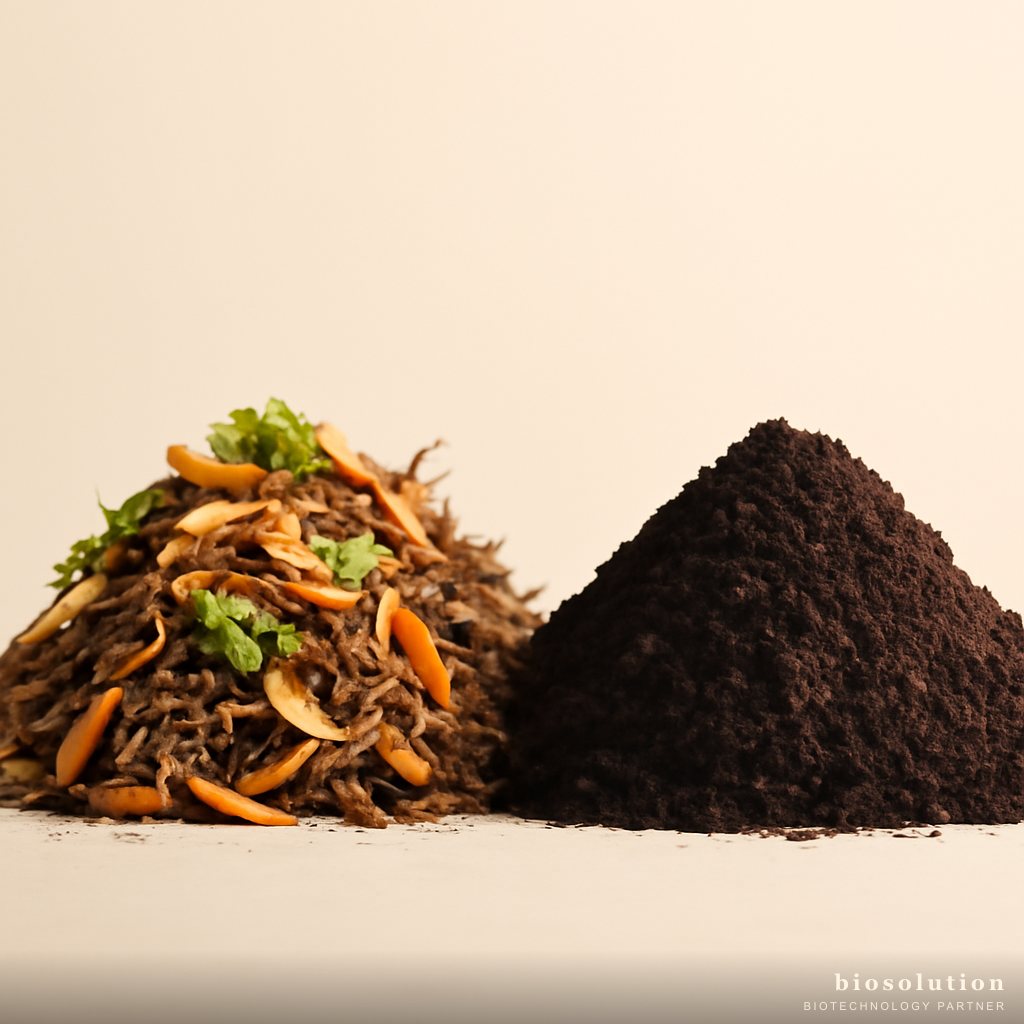
Potato Biofertilizer: POC Formula for Tuber Quality to Increase Harvest
Imagine planting potatoes in the Dieng highlands, hoping for a bountiful harvest, but often being disappointed by small tubers, flower drop, or short shelf life. This problem is common among highland potato farmers. However, there is a science-based solution: potato biofertilizer with the POC Formula for Tuber Quality from Biosolution. This article thoroughly explores how the consortium of PGPR, seaweed extract, and humic acid work synergistically to stimulate uniform tuber initiation, increase tuber weight by 15-25%, and reduce flower drop by up to 30%. Accompanied by a real case study of Dieng farmers who successfully applied it.
Why Biofertilizer is Important for Highland Potatoes?
Potato (Solanum tuberosum L.) is a tuber crop that requires fertile soil, good drainage, and optimal nutrient availability. In highlands like Dieng, cold temperatures and high rainfall often cause nutrient leaching, making conventional chemical fertilizers inefficient. This is where the role of biofertilizer becomes crucial.
Biofertilizers contain beneficial microorganisms that aid in nutrient cycling, produce growth hormones, and suppress pathogens. For potatoes, the tuber initiation and enlargement phase is strongly influenced by the availability of phosphorus, potassium, and cytokinin hormones. Potato biofertilizers like the POC Formula for Tuber Quality provide all of these naturally.
Specific Challenges of Potatoes in Highlands
- Excessive vegetative growth: Due to low temperatures, plants tend to focus on leaves, not tubers.
- Flower drop and small tubers: Micronutrient deficiencies, especially boron and zinc.
- Soil-borne diseases: Bacterial wilt and root fungi.
- Low shelf life: Tubers easily shrivel and rot.
The right biofertilizer can overcome these challenges through biological mechanisms.
Composition and Mechanism of the POC Formula for Tuber Quality
The POC Formula for Tuber Quality is a liquid biofertilizer (POC) specially formulated for the tuber initiation phase. Its content consists of three main components that work synergistically:
1. PGPR Consortium (Plant Growth-Promoting Rhizobacteria)
The PGPR consortium in this product consists of several rhizosphere bacterial strains such as Bacillus subtilis, Pseudomonas fluorescens, and Azospirillum spp. Their roles:
- Producing phytohormones: IAA (auxin), gibberellins, and cytokinins, which stimulate tuber cell division.
- Solubilizing phosphate: Converting bound phosphate into forms available to plants.
- Non-symbiotic nitrogen fixation: Providing additional nitrogen.
- Producing siderophores: Binding iron and suppressing pathogens.
2. Seaweed Extract
Seaweed extract (Ascophyllum nodosum or Sargassum sp.) is rich in natural cytokinins (zeatin), auxins, and micronutrients such as zinc, boron, and manganese. Cytokinins stimulate tuber cell division, while auxins accelerate enlargement. This combination reduces flower drop and improves tuber size uniformity.
3. Humic and Fulvic Acids
Humic and fulvic acids act as nutrient carriers and root stimulants. They:
- Increase soil cation exchange capacity (CEC), making nutrients more available.
- Stimulate lateral root growth, expanding the absorption area.
- Bind heavy metals, reducing toxicity.
Synergistic Mechanism
These three components are applied via foliar spray or drench. Within 7-10 days, PGPR begins colonizing the rhizosphere, humic acids improve soil structure, and seaweed extract is directly absorbed by leaves. The result: more uniform tuber initiation, larger size, and increased harvest quality.
Case Study: Dieng Potato Farmers Succeed with POC Formula for Tuber Quality
Mr. Slamet, a potato farmer in Sembungan Village, Kejajar District, Dieng, has been planting potatoes for 10 years. Before using biofertilizer, he routinely relied on NPK and urea fertilizers. The results: small tubers (average 60-80 grams), many flower drops, and a shelf life of only 2 weeks. In the 2025 planting season, he tried potato biofertilizer POC Formula for Tuber Quality.
Application
- Dosage: 4 ml per liter of water (according to recommendation of 3-5 ml/L).
- Method: Foliar spray every 10 days, starting when plants are 30 DAP (early tuber initiation phase).
- Time: Morning at 07.00-09.00.
Results
After 3 applications, Mr. Slamet observed:
- Uniform growth: Flowers did not drop, almost 90% became tubers.
- Larger tuber size: Average 120-150 grams per tuber.
- Total weight: Increased by 20% compared to the previous season (from 15 tons/ha to 18 tons/ha).
- Shelf life: Tubers remained firm for up to 4 weeks in room temperature storage.
Mr. Slamet said production costs decreased because he reduced chemical fertilizer by 30%. "I only used half the NPK dose, the rest was replaced by this biofertilizer. The results were even better," he said.
Advantages of POC Formula for Tuber Quality Compared to Conventional Fertilizers
| Aspect | Conventional Chemical Fertilizer | POC Formula for Tuber Quality |
|---|---|---|
| Mechanism | Direct nutrient supply | Triggers hormones & improves soil |
| Effect on tubers | Variable size, often small | Uniform, large, consistent |
| Flower drop | High | Reduced by 30% |
| Shelf life | 1-2 weeks | 3-4 weeks |
| Environmentally friendly | Potentially polluting | Organic, safe |
| Certification suitability | Difficult | Supports organic farming |
Additionally, this product is easy to apply (foliar or drench), low dosage (3-5 ml/L), and suitable for integration with other biofertilizers such as Solid Biofertilizer for land preparation.
Proper Application for Maximum Results
For the potato biofertilizer to work optimally, follow these guidelines:
Application Timing
- Start when plants are 25-30 DAP (tuber initiation phase).
- Repeat every 7-10 days until 2 weeks before harvest.
- Avoid application during rain or direct sunlight.
Dosage and Method
- Foliar spray: 3-5 ml per liter of water, spray evenly on all leaves (underside and top).
- Drench: 5 ml per liter of water, pour 200 ml per plant around the stem base.
- Ensure spray equipment is clean from chemical pesticide residues.
Integration with Other Products
For optimal results, combine with Initial Planting POC Formula during the vegetative phase, and use Solid Biofertilizer during soil cultivation. This system is called the "Potato Biofertilizer Package" which has been proven in various regions.
FAQ About Potato Biofertilizer
Can biofertilizer completely replace chemical fertilizers?
Not completely. Biofertilizer acts as a supplement that increases nutrient uptake efficiency, not a total substitute. At the start of planting, a low dose of base fertilizer (e.g., NPK 15-15-15) is still needed. However, with biofertilizer, chemical fertilizer doses can be reduced by 30-50% without decreasing yield.
How long does it take to see the effects of biofertilizer?
Initial effects are usually visible after 2-3 applications (2-3 weeks), indicated by greener leaves, sturdier stems, and less flower drop. Increased tuber weight is only noticeable at harvest, around 60-70 DAP.
Is it safe for other plants nearby?
Yes, biofertilizer is specific and does not harm other plants. The microorganisms inside are non-pathogenic strains that have been tested. In fact, its residues can enrich the soil for subsequent crops.
How to store diluted biofertilizer?
The biofertilizer solution should be used immediately after dilution. If necessary to store, keep in a shaded place and use within 24 hours. Do not store in metal containers as it can disturb the microorganisms.
Are there side effects if the dosage is excessive?
Excessive dosage (more than 10 ml/L) can cause leaf burn due to the salt content from humic acid. Always follow the recommended dosage of 3-5 ml/L. If overdose occurs, rinse the plants with clean water to reduce concentration.
Conclusion
Potato biofertilizer POC Formula for Tuber Quality offers a science-based solution for highland potato farmers. With a consortium of PGPR, seaweed extract, and humic acid, this product can increase tuber weight by 15-25%, reduce flower drop by 30%, and extend shelf life. The case study of Dieng farmers proves its effectiveness in real field conditions. For maximum results, apply according to dosage and schedule, and integrate with other Biosolution biofertilizer products.
Interested in trying? Consult your land needs with our expert team via WhatsApp. Get the right product recommendations for your planting season. [Click here for free consultation] or see the product POC Formula for Tuber Quality for more details.
This article is written based on technical product data and interviews with Biosolution partner farmers. Harvest results may vary depending on land conditions and management.