Productive Peatland: 10 Oil Palm Biofertilizer Formulas
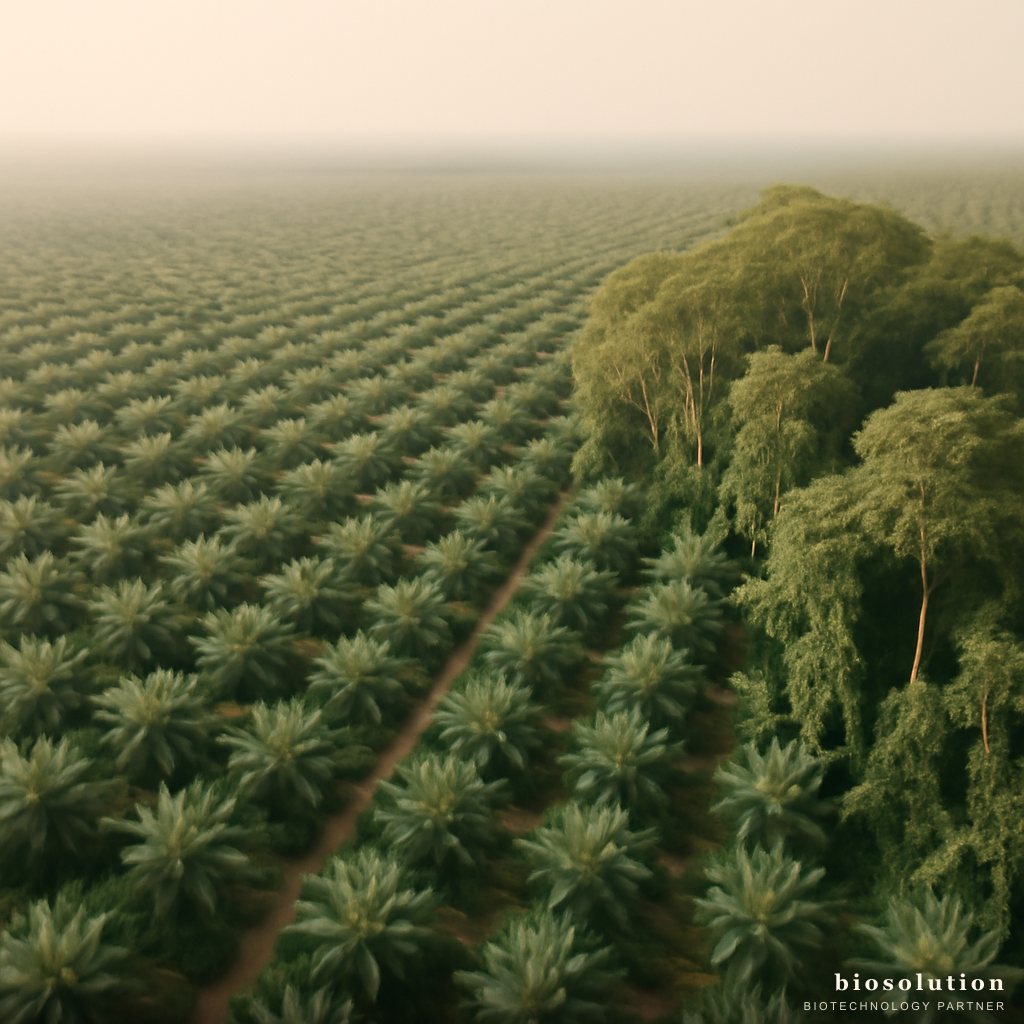
Peatland is often considered marginal land that is difficult to cultivate, yet with the right approach, productive peatland can be achieved without burning. The key is to utilize soil microbes through biofertilizers specifically designed for peat ecosystems. This article presents 10 scientifically proven oil palm biofertilizer formulas that can transform peatland into productive land while preserving the environment.
Why Is Peatland Often Unproductive?
Peatland has unique characteristics that make it prone to degradation. Peat is acidic (pH 3-4), nutrient-poor, and has low cation exchange capacity. Additionally, poor drainage and the presence of soil-borne pathogens such as Ganoderma boninense are major challenges for oil palm farmers. Clearing land by burning exacerbates damage, releases large amounts of carbon, and triggers recurring fires.
Conventional approaches with high doses of chemical fertilizers are often ineffective because nutrients are easily leached. As a result, production costs swell while yields stagnate. This is where the role of microbes becomes crucial: microbes can biologically provide nutrients, suppress pathogens, and improve peat structure.
The Role of Microbes in Regenerative Agriculture on Peatland
Regenerative agriculture focuses on restoring soil health through biological activity. On peatland, microbes such as Trichoderma harzianum, Azotobacter sp., and Bacillus subtilis are key agents of transformation.
Trichoderma harzianum is known as an effective biocontrol agent against Ganoderma — the main cause of basal stem rot in oil palm. This fungus also stimulates root growth through IAA hormone production and solubilizes phosphate. Azotobacter sp. is a non-symbiotic nitrogen-fixing bacterium capable of fixing N₂ from the air, which is crucial in nitrogen-poor peat. Bacillus subtilis solubilizes phosphate and potassium, and produces antimicrobial compounds that protect roots from pathogen attack.
These three microbes work synergistically to form a consortium that accelerates organic matter decomposition, increases nutrient availability, and strengthens plant resistance to both biotic and abiotic stresses.
10 Oil Palm Biofertilizer Formulas for Productive Peatland
1. Basic Formula: Trichoderma + Azotobacter + Bacillus
This combination is the foundation of oil palm biofertilizer. Trichoderma harzianum controls Ganoderma while stimulating root growth. Azotobacter sp. provides nitrogen, while Bacillus subtilis solubilizes phosphate. Application dose: 20 ml per tree every 3 months using the palm circle drench method.
2. FFB Production Enhancement Formula
Add Pseudomonas fluorescens to solubilize potassium and induce flowering. Field trials show a 10-15% increase in fresh fruit bunches (FFB).
3. Ganoderma Anticipation Formula
Increase the dose of Trichoderma harzianum to 30 ml per tree in Ganoderma-endemic areas. Combine with Streptomyces sp. which produces chitinase enzymes.
4. Peat Structure Improvement Formula
Use Aspergillus niger and Penicillium chrysogenum to accelerate peat fiber decomposition. These microbes produce organic acids that lower pH and improve soil aggregation.
5. Chemical Fertilizer Reduction Formula
Combine Azotobacter sp. with Rhizobium sp. to maximize nitrogen fixation. As a result, urea fertilizer use can be reduced by 30%.
6. Root Enhancement Formula
Trichoderma harzianum plus Glomus mosseae (mycorrhiza) form a mutualistic symbiosis that expands nutrient and water uptake. Suitable for dry peatland.
7. Waterlogging Tolerant Formula
Certain strains of Bacillus subtilis are tolerant to anaerobic conditions. Add Enterobacter cloacae which can reduce iron and manganese into available forms.
8. Complete Biofertilizer Formula
Combine Azotobacter, Bacillus, Pseudomonas, and Trichoderma in one formula. Regular application every 3 months improves soil fertility holistically.
9. Soil Pest Control Formula
Bacillus thuringiensis var. israelensis is effective in controlling Oryctes beetle larvae. Mix with the basic formula for dual protection.
10. Post-Fire Land Recovery Formula
Trichoderma harzianum and Aspergillus niger help neutralize toxic compounds from fire ash and accelerate vegetation regrowth.
Proper Application Method for Oil Palm Biofertilizer
Oil palm biofertilizer is applied using the palm circle drench method. A dose of 20 ml per tree is mixed with 5-10 liters of water and drenched evenly in the root zone. The best time is morning or evening when temperatures are not too hot. Application frequency is every 3 months, coinciding with organic fertilization.
It is important to ensure that the peat soil pH is not too extreme. If pH is below 3.5, apply 1-2 kg of dolomite per tree two weeks before biofertilizer application. Avoid using broad-spectrum chemical pesticides that can kill microbes.
Case Study: Success of Oil Palm Farmers in Kalimantan
Oil palm farmers in Pulang Pisau Regency, Central Kalimantan, succeeded in increasing FFB production from 12 tons/ha/year to 15 tons/ha/year after consistently applying the oil palm biofertilizer formula for two years. Ganoderma attacks decreased drastically, and chemical fertilizer needs were reduced by 30%. The previously dry and brittle peat soil began to show improved structure.
This success proves that productive peatland is not a myth. With a microbe-based approach, farmers can harvest optimal yields without harming the environment.
Conclusion
Managing peatland to be productive without burning is very possible by utilizing oil palm biofertilizers containing Trichoderma harzianum, Azotobacter sp., and Bacillus subtilis. The oil palm biofertilizer formulas have been proven to increase FFB production, reduce Ganoderma attacks, improve peat soil quality, and reduce dependence on chemical fertilizers. With regular application every 3 months, peatland can be transformed into a productive and sustainable asset.
For more information about the Oil Palm Biofertilizer Formula product or free consultation, contact the Biosolution team via WhatsApp. We are ready to help you realize productive peatland.