Productive Peatland: 5 Biofertilizer Formulas for Oil Palm to Manage Without Burning
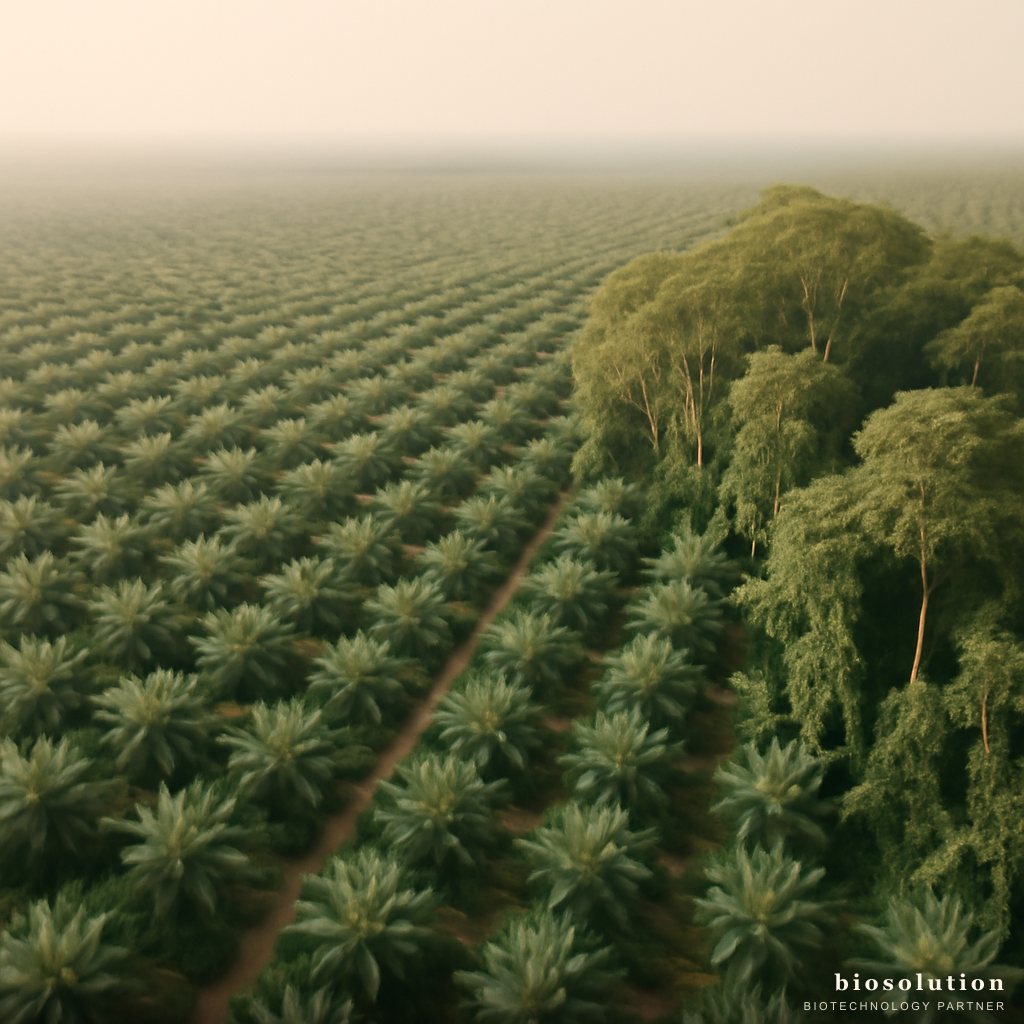
Managing peatland to be productive without burning is both a challenge and an opportunity for oil palm growers in Sumatra and Kalimantan. So far, clearing peatland has often been done by burning because it is considered cheaper and faster. However, this practice damages the ecosystem, causes carbon emissions, and carries legal risks. The good news is that with a microbiology-based biological approach, peatland can be managed productively without burning, and even more cost-efficient in the long term. This article will compare the costs of conventional vs. biological management, and introduce 5 oil palm biofertilizer formulas that are the mainstay of Biosolution.
Why Peatland Needs a Special Approach?
Peat is a wetland rich in organic matter but poor in nutrients, especially nitrogen (N) and phosphorus (P). Acidic conditions (pH 3-4) and poor drainage make nutrients difficult for plants to access. In addition, peat is susceptible to Ganoderma boninense, a pathogenic fungus that causes basal stem rot in oil palm.
Conventional approaches usually rely on high-dose chemical fertilizers and synthetic fungicides. However, the cost of chemical fertilizers continues to rise, while their effectiveness is low because most are leached or fixed in peat. In contrast, biofertilizers contain microbes that can fix N, solubilize P, and control pathogens naturally. Thus, productive peatland can be achieved without burning and at a lower cost.
Cost Comparison: Conventional vs. Biological
Conventional Costs (per hectare per year)
- Chemical fertilizers (Urea, SP-36, KCl): IDR 6,000,000 – 8,000,000
- Synthetic fungicides (3-4 applications): IDR 1,500,000 – 2,000,000
- Labor application: IDR 1,000,000
- Total: IDR 8,500,000 – 11,000,000
Biological Costs (per hectare per year)
- Biosolution Oil Palm Biofertilizer Formula (1 liter @IDR 150,000, dose 20 ml/tree, 136 trees/ha, 4 applications): IDR 136,000 x 4 = IDR 544,000
- Reduced chemical fertilizers by 30%: IDR 4,200,000 – 5,600,000
- Labor application (same): IDR 1,000,000
- Total: IDR 5,744,000 – 7,144,000
Savings: IDR 2,756,000 – 3,856,000 per hectare per year (25-35%).
In addition to lower costs, biofertilizers also increase FFB production by 10-15%, thus increasing gross income. Assuming an FFB price of IDR 2,000/kg, an increase of 1 ton/ha gives an additional IDR 2,000,000.
5 Oil Palm Biofertilizer Formulas for Productive Peatland
1. Trichoderma harzianum – Biocontrol of Ganoderma and PGPR
Trichoderma harzianum is an antagonistic fungus that inhibits Ganoderma growth through mycoparasitism and competition. In addition, T. harzianum also acts as a Plant Growth-Promoting Rhizobacteria (PGPR) by producing growth hormones and increasing nutrient availability. On peatland, regular application of T. harzianum can suppress basal stem rot attacks by up to 60%.
2. Azotobacter sp. – Natural Nitrogen Fixer
Azotobacter is a non-symbiotic nitrogen-fixing bacterium that lives freely in the soil. On N-deficient peat, Azotobacter converts atmospheric N₂ into ammonia that can be absorbed by oil palm. A dose of 20 ml per tree per application can contribute the equivalent of 50-100 kg of Urea per hectare per year. This significantly reduces the need for chemical N fertilizers.
3. Bacillus subtilis – Phosphate Solubilizer and Biocontrol
Bacillus subtilis produces phosphatase enzymes and organic acids that solubilize bound phosphate in peat. Available phosphorus increases flower and fruit formation. In addition, B. subtilis also produces antibiotics that suppress soil-borne pathogens such as Fusarium and Phytophthora.
4. Synergistic Formula: Combination of Three Strains
Biosolution's Oil Palm Biofertilizer Formula product combines the three strains above in one formula. The synergy of T. harzianum, Azotobacter, and B. subtilis creates a healthy rhizosphere ecosystem. Drench application around the weeding circle every 3 months (morning or afternoon) at a dose of 20 ml per tree is sufficient to maintain productivity.
5. Integration with Organic Matter
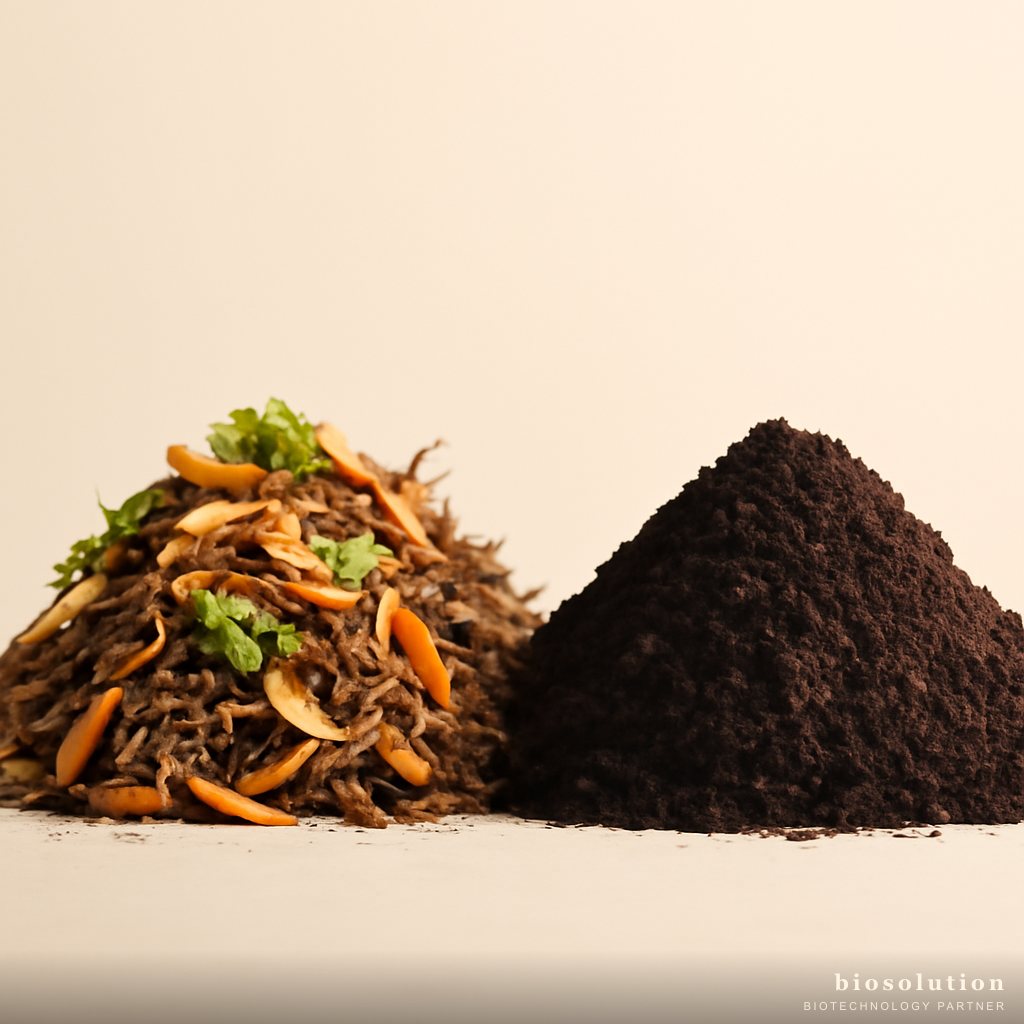
For optimal results, biofertilizers should be combined with organic matter such as empty fruit bunch compost or manure. Organic matter provides a substrate for microbes and improves peat structure. A compost dose of 5-10 tons/ha per year is adequate.
How to Apply Biofertilizers on Peatland
- Preparation: Mix 20 ml of biofertilizer formula with 1 liter of clean water (not chlorinated water). Stir well.
- Application: Pour the solution around the oil palm weeding circle, within a 1-meter radius from the trunk. Avoid waterlogging.
- Timing: Do it in the morning (before 9 AM) or afternoon (after 3 PM) to avoid UV rays that can damage microbes.
- Frequency: Every 3 months, or 4 times a year.
- Integration: Reduce chemical fertilizers by 30% from the recommended dose, especially N and P.
Measurable Results
Oil palm growers in Riau who applied the biofertilizer formula for 2 years recorded:
- FFB production increased by 12% (from 18 tons/ha to 20.2 tons/ha)
- Ganoderma attacks decreased by 55%
- Fertilization costs decreased by 35%
- Soil quality improved: pH rose from 3.8 to 4.5, organic C increased.
These data show that productive peatland without burning is not a myth, but a reality that can be achieved with biological technology.
Conclusion
Managing peatland to be productive without burning is a smart economic and environmental step. By using Biosolution's Oil Palm Biofertilizer Formula containing Trichoderma harzianum, Azotobacter sp., and Bacillus subtilis, growers can save costs up to 35% while increasing production by 10-15%. This technology is a sustainable solution for peatlands in Sumatra and Kalimantan. Interested in trying? Consult your needs with the Biosolution team via WhatsApp or see product details here.
FAQ
1. Is biofertilizer safe for the peat environment?
Yes, biofertilizers contain natural microbes that actually improve peat quality. Microbes like Azotobacter and Bacillus do not damage the ecosystem, but instead increase soil fertility. There are no harmful chemical residues.
2. How long does it take to see results from biofertilizer use?
Changes usually start to be seen after 3-4 months of application. FFB production increases in the next harvest, while a decrease in Ganoderma attacks is seen after 1-2 years of regular use.
3. Can biofertilizer be mixed with chemical fertilizers?
Yes, but it is best not to mix them directly. Apply chemical fertilizers first, then after 1-2 days apply biofertilizer. Alternatively, reduce the chemical fertilizer dose by 30% and use biofertilizer as a supplement.
4. Is the dose of 20 ml per tree appropriate for all ages of oil palm?
For immature oil palm (TBM), the dose can be reduced to 10 ml per tree. For mature oil palm (TM) over 5 years, a dose of 20 ml per tree is appropriate. Consult with a Biosolution technician for adjustments.
5. Where can I buy the Oil Palm Biofertilizer Formula?
The product is available at Biosolution partner agricultural stores or can be ordered directly via WhatsApp. For more information, visit the product page.