Productive Peatland: 9 Biofertilizer Formulas for Oil Palm Without Burning
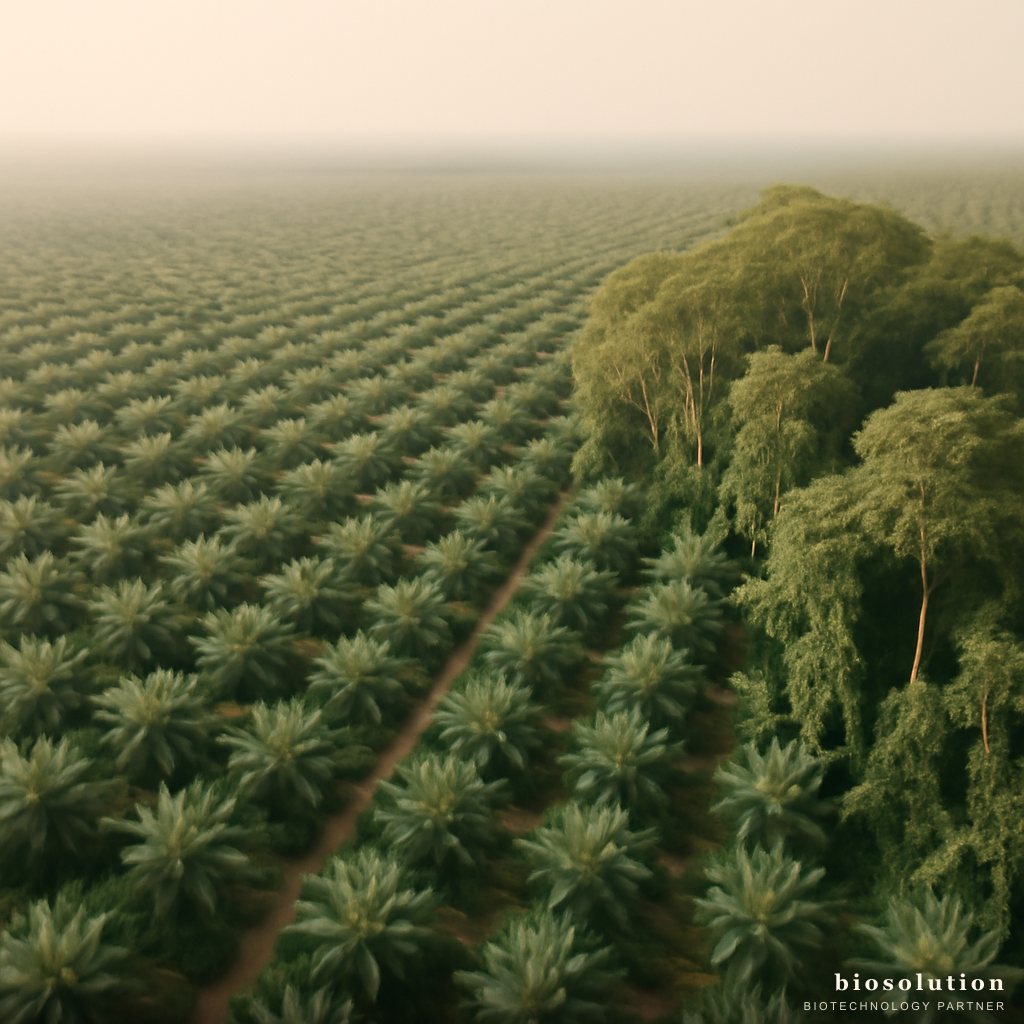
Productive peatland is the dream of every oil palm farmer in Sumatra and Kalimantan. However, managing peatland to be productive without burning is not just a trend, but an urgent need due to the ban on land clearing by fire and the threat of soil degradation. Biofertilizers are a smart solution to naturally increase peat fertility. This article explores the criteria for selecting the best biofertilizer, the roles of superior microbes, and recommendations for Biosolution's Oil Palm Biofertilizer Formula that has been field-tested.
Why Is Peatland Difficult to Make Productive Without Burning?
Peatland has unique characteristics: low pH (3-4), high organic matter content but tightly bound macronutrients (N, P, K), and poor drainage. Burning does release nutrients instantly, but it damages the peat ecosystem and causes recurring fires. Without burning, farmers must rely on ameliorants and biofertilizers to trigger soil microbial activity. This is where biofertilizers act as catalysts.
Biofertilizers contain living microbes that help dissolve phosphorus, fix nitrogen, and suppress pathogens. For example, Azotobacter sp. can fix nitrogen from the air in acidic peat conditions, while Bacillus subtilis dissolves phosphate bound by iron and aluminum. Without these microbes, chemical fertilizers are difficult for oil palm roots to absorb.
Criteria for the Best Biofertilizer for Peatland
Choosing an oil palm biofertilizer cannot be done carelessly. Here are the criteria that must be considered:
1. Contains Peat-Adaptive Microbes
Microbes must tolerate low pH, high humidity, and low oxygen availability. Trichoderma harzianum strains, for example, are known to survive in peatland and also act as biocontrol for Ganoderma.
2. Certified and Officially Registered
Ensure the product has a distribution permit from the Ministry of Agriculture. Certification guarantees microbial viability, correct dosage, and biosafety. Avoid products without clear labels.
3. Has Field Efficacy Data
A good biofertilizer must be supported by trials on peatland. For example, Biosolution's Oil Palm Biofertilizer Formula has been tested and can increase FFB by 10-15% and reduce chemical fertilizers by up to 30%.
4. Compatible with Other Ameliorants
Peat usually requires dolomite lime or oil palm empty fruit bunch ash. The biofertilizer must be stable when mixed or applied alternately with ameliorants.
5. Practical Application
Dosage and frequency should be easy to follow. Biosolution recommends drenching 20 ml per tree every 3 months in the morning or afternoon.
Roles of Trichoderma harzianum, Azotobacter sp., and Bacillus subtilis
These three microbes are the mainstays of Biosolution's Oil Palm Biofertilizer Formula. Let's break down their roles one by one:
Trichoderma harzianum: Biocontrol and PGPR
Trichoderma harzianum is a fungus that inhibits the growth of Ganoderma boninense through mycoparasitism and nutrient competition. Additionally, it produces growth hormones like IAA that stimulate oil palm root growth. On peatland, Trichoderma also helps decompose organic matter, releasing bound nutrients.
Azotobacter sp.: Natural Nitrogen Fixer
Azotobacter is a non-symbiotic nitrogen-fixing bacterium capable of converting N₂ from the air into ammonia. On nitrogen-poor peat, its role is vital. This bacterium also produces organic compounds that improve peat soil structure.
Bacillus subtilis: Phosphate Solubilizer and Resistance Inducer
Bacillus subtilis dissolves phosphate bound by Al and Fe in peat through the production of organic acids. It also produces antibiotics that suppress root pathogens. Moreover, this bacterium triggers systemic resistance in plants against environmental stress.
Proper Application Method for Biofertilizer Formula
Applying biofertilizer on peatland requires special techniques to keep microbes alive and effective. Here is a guide from Biosolution:
Drenching Method
- Mix 20 ml of Oil Palm Biofertilizer Formula per tree with 10 liters of clean water (non-chlorinated).
- Drench evenly around the oil palm circle (radius 1-1.5 m from the trunk base).
- Apply in the morning or afternoon to avoid direct UV light.
- Repeat every 3 months, especially at the start of the rainy season.
Success Tips
- Avoid applying simultaneously with chemical fungicides.
- Ensure adequate soil moisture (not flooded or dry).
- For very acidic peatland (pH <3.5), spread dolomite 2-4 tons/ha 2 weeks before biofertilizer application.
Case Study: Increasing Peatland Productivity Without Burning
In Rimba Makmur Village, Riau, a group of farmers applied Biosolution's Oil Palm Biofertilizer Formula on 50 hectares of peatland. Results:
- FFB production increased by an average of 12% over 2 harvest seasons.
- Ganoderma attacks dropped drastically from 25% to 5%.
- Use of chemical fertilizers (Urea, SP-36, KCl) decreased by 30%.
- Fertilization costs per hectare fell by IDR 1.5 million per year.
Farmers also reported that the peat soil became looser, less prone to drying, and oil palm leaves appeared greener. This proves that productive peatland can be achieved without burning.
Advantages of Biosolution's Biofertilizer Formula for Peatland
Biosolution formulates a special formula for peatland with three superior strains that work synergistically. Its advantages:
- Multi-function: Biocontrol, PGPR, and nutrition in one product.
- High concentration: 10⁸ CFU/ml per strain, ensuring effectiveness.
- Stable: Liquid formula with a carrier that protects microbes during storage.
- Officially registered: Permit from the Indonesian Ministry of Agriculture.
Compare with other products that contain only one strain or are not tested on peat. With Biosolution's Oil Palm Biofertilizer Formula, you get a comprehensive solution for productive peatland.
Conclusion
Managing peatland to be productive without burning is a smart and sustainable choice. The key is selecting the right biofertilizer, containing peat-adaptive microbes such as Trichoderma harzianum, Azotobacter sp., and Bacillus subtilis, and being officially certified. Biosolution's Oil Palm Biofertilizer Formula has been proven to increase productivity, reduce disease attacks, and lower chemical fertilizer costs. For further consultation, contact the Biosolution team via WhatsApp or visit our product page.
FAQ
1. Is biofertilizer safe for the peat environment?
Yes, biofertilizers contain natural microbes that do not damage the peat ecosystem. On the contrary, microbes like Trichoderma and Bacillus help improve soil structure and reduce greenhouse gas emissions by suppressing excessive anaerobic decomposition. Ensure the product is officially registered and does not contain pathogens.
2. How long does it take to see results from using biofertilizer?
Improvements are usually visible after 3-6 months of regular application. Oil palm leaves will be greener, root growth better, and FFB production will start to increase in the next harvest. Maximum effects are achieved after 1-2 years of consistent application.
3. Can biofertilizer be mixed with chemical fertilizers?
Yes, but it is best not to mix them directly in one container. Apply biofertilizer first, then wait 1-2 days before applying chemical fertilizers. Avoid mixing with chemical fungicides or bactericides as they can kill the microbes.
4. Is Biosolution's product suitable for peatland with very low pH?
Yes, because the Azotobacter and Bacillus strains used tolerate pH 3-4. However, it is recommended to apply dolomite 2-4 tons/ha one month before biofertilizer to raise the pH to 4-5, so the microbes are more optimal.
5. Where can I buy the Oil Palm Biofertilizer Formula?
The product is available at Biosolution's official distributors in Sumatra and Kalimantan. You can also order directly through the Biosolution website or contact the WhatsApp number listed on the product page.