Productive Peatland with 4 Oil Palm Biofertilizer Formulas
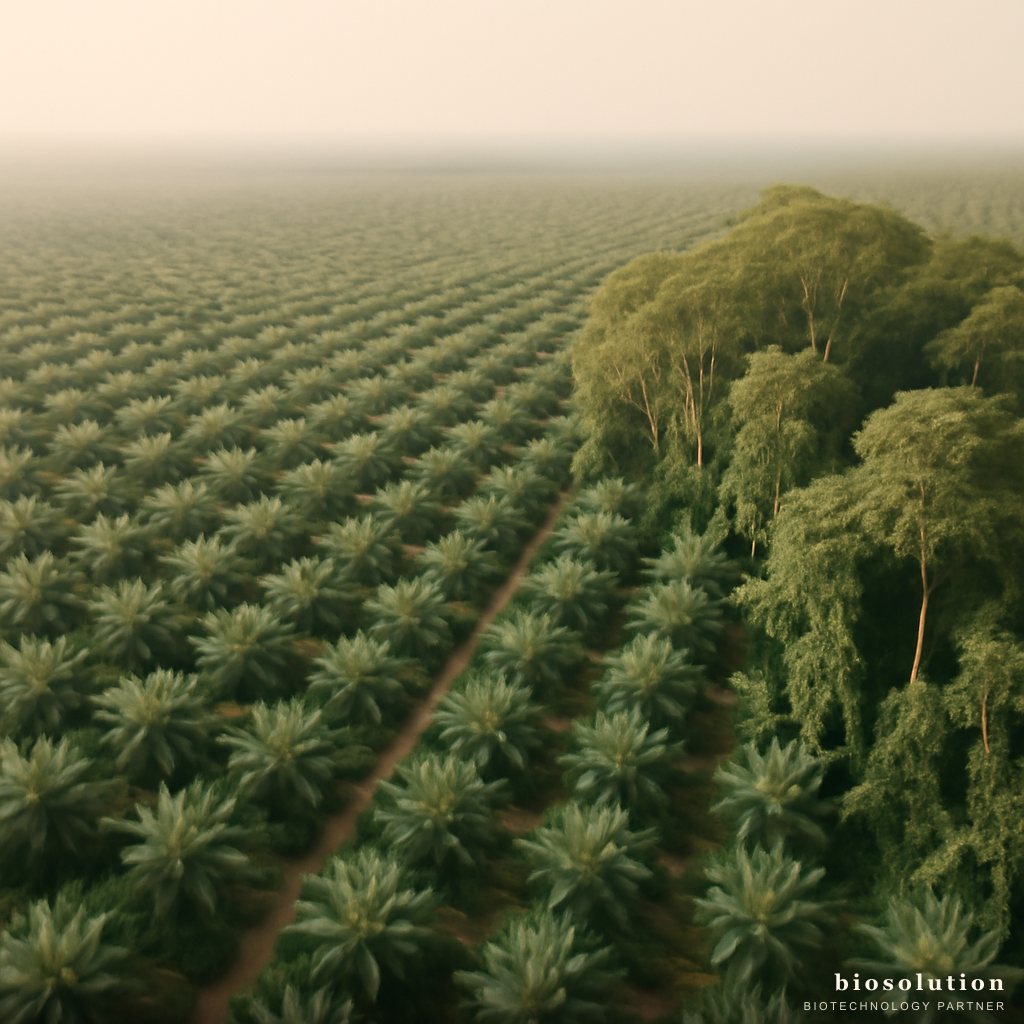
Managing productive peatland without burning is both a challenge and an opportunity for oil palm growers in Sumatra and Kalimantan. Naturally fertile peat often faces constraints such as low pH, poor drainage, and Ganoderma attacks that are difficult to control. However, with a modern microbiological approach, peatland can be transformed into a productive asset. The Oil Palm Biofertilizer Formula from Biosolution is the right solution. This article will discuss the correct application method: dosage, frequency, timing, and the working mechanism of the microbes within.
Why Peatland Requires a Special Approach?
Peatland has unique characteristics: high organic matter content, acidic pH (3-5), and low nutrient availability, especially phosphorus and nitrogen. Additionally, peat is prone to subsidence if drainage is not managed. Burning peat for land clearing damages the ecosystem, releases carbon, and is strictly prohibited. A sustainable solution is to utilize beneficial microbes that can work in acidic and anaerobic conditions.
Challenges of Oil Palm Cultivation on Peat
- Nutrient availability: Nitrogen and phosphorus are bound in unavailable forms.
- Ganoderma: This pathogenic fungus is highly adaptive on peat.
- Drainage: Excess water causes root rot.
Advantages of Biofertilizer
Biofertilizer contains living microbes that help nutrient cycling, produce growth hormones, and suppress pathogens. With regular application, peat soil quality gradually improves.
Composition of the Oil Palm Biofertilizer Formula
This product contains three superior microbial strains that work synergistically:
Trichoderma harzianum
An antagonistic fungus effective in controlling Ganoderma through mycoparasitism and competition. Additionally, Trichoderma produces enzymes that decompose peat organic matter into available nutrients.
Azotobacter sp.
A non-symbiotic nitrogen-fixing bacterium capable of fixing N₂ from the air and converting it into ammonia. It is highly beneficial in nitrogen-deficient peat.
Bacillus subtilis
A phosphate-solubilizing bacterium and producer of antimicrobial compounds. Bacillus also produces phytohormones such as auxin that stimulate root growth.
How to Apply the Oil Palm Biofertilizer Formula on Peatland
To be effective, application must be precise in dosage, frequency, and timing. Here is the complete guide:
Dosage: 20 ml per Tree
Each productive oil palm tree requires 20 ml of Biofertilizer Formula dissolved in clean water (1:10) and then drenched onto the weeded circle. This dosage is sufficient to inoculate the root zone with an optimal microbial population.
Frequency: Every 3 Months
Regular application every 3 months maintains a high microbial population. This schedule aligns with the rainy season so that microbes develop quickly in moist soil.
Best Time: Morning or Evening
Microbes are sensitive to UV light. Application in the morning (06:00-09:00) or evening (15:00-17:00) when temperatures are cooler increases viability. Avoid application during heavy rain as microbes may be washed away.
Method: Drenching the Weeded Circle
Dissolve 20 ml of biofertilizer in 200 ml of water (or as needed). Pour evenly onto the weeded circle as wide as the canopy. Ensure the soil is moist before application.
Benefits of Regular Application for Productive Peatland
With consistent application, growers will experience:
Increased FFB Production by 10-15%
Microbes aid nutrient absorption and hormone production, resulting in heavier fruits and increased bunch count.
Reduced Ganoderma Attacks
Trichoderma harzianum colonizes roots and inhibits Ganoderma. Reports from South Sumatra show a reduction in Ganoderma incidence by up to 40% after 1 year of application.
Improved Peat Soil Quality
Azotobacter and Bacillus improve soil aggregation, increase porosity, and add available nitrogen. Peat becomes looser and more aerobic.
Reduced Chemical Fertilizer by 30%
With biological nutrient supply, NPK fertilizer dosage can be reduced. This saves costs and reduces greenhouse gas emissions.
Conclusion
Managing productive peatland without burning is no longer a dream. With the Oil Palm Biofertilizer Formula, growers can increase oil palm productivity while protecting the environment. Regular application of 20 ml/tree every 3 months in the morning or evening is the key to success. For optimal results, consult your land conditions with the Biosolution team via WhatsApp or visit the product page Oil Palm Biofertilizer Formula.
FAQ
1. Is the biofertilizer safe for very acidic peat? Yes, the microbes in the Biofertilizer Formula such as Trichoderma harzianum and Bacillus subtilis are tolerant to low pH (3-5) and remain active. Regular application actually helps gradually increase soil pH through the production of organic compounds.
2. Can it be combined with chemical fertilizers? Certainly. Biofertilizer and chemical fertilizers can be applied together, but allow a 1-2 day interval if using chemical pesticides. To reduce chemical fertilizer, decrease NPK dosage by 30% after 3 months of biofertilizer application.
3. When will results be visible? Soil condition improvement is usually seen after 2-3 months. Increased FFB production becomes apparent at the next harvest (4-6 months). The effect of Ganoderma suppression requires 6-12 months of regular application.
4. Does it need special storage? Store in a cool, shaded place, avoid direct sunlight. Ideal storage temperature is 15-25°C. Do not freeze. In a sealed package, the product lasts 6 months.
5. What is the application cost per hectare? With a population of 136 trees/ha, the biofertilizer requirement is about 2.7 liters per application. The price is affordable, and the 30% savings on chemical fertilizer make it more economical in the long run.