Productive Peatland Without Burning: Successful Oil Palm Farmer Study with Biofertilizer Formula
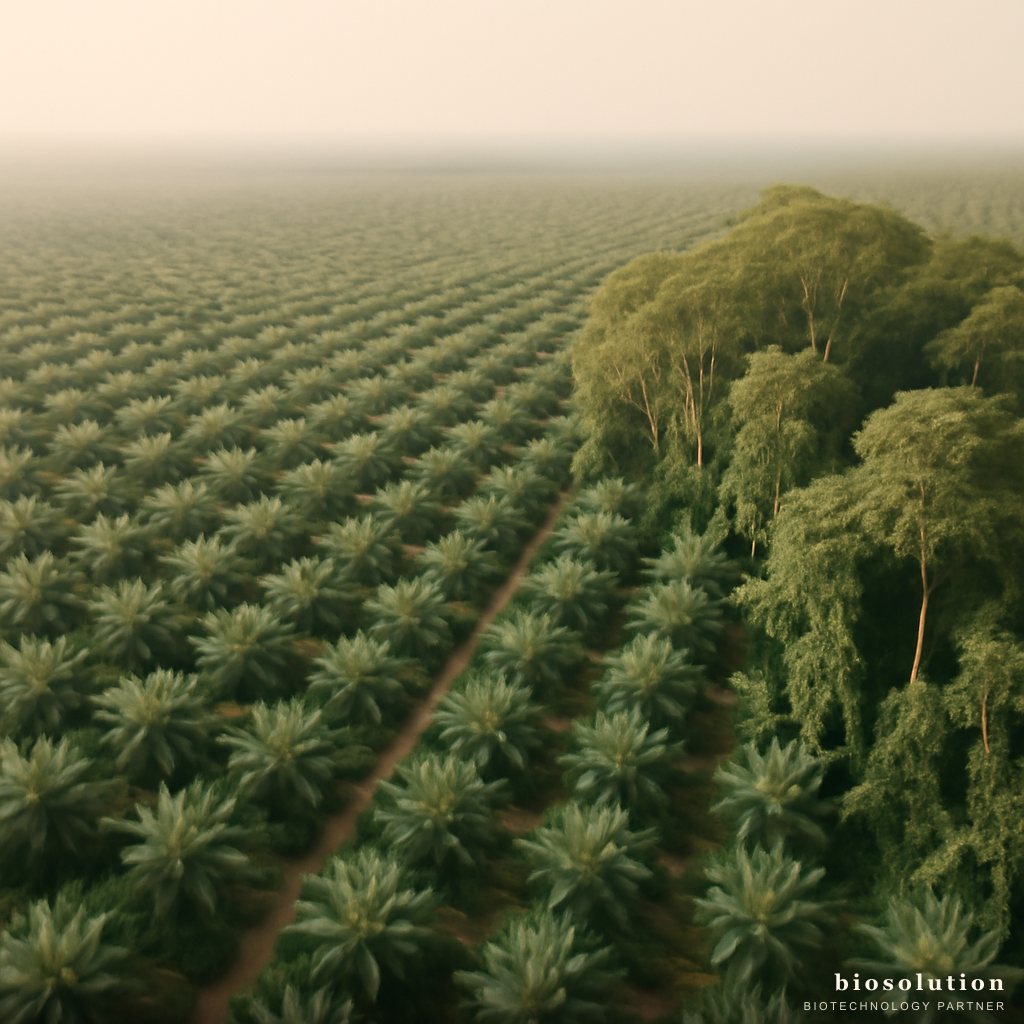
Productive peatland without burning is no longer a dream. Oil palm farmers in Sumatra and Kalimantan often face a dilemma: clearing peatland by burning is indeed fast, but it damages the environment and is strictly prohibited. However, a case study from a farmer in Riau proves that peatland can be productive without fire. By using Biosolution's Oil Palm Biofertilizer Formula, the farmer successfully increased Fresh Fruit Bunch (FFB) production by up to 12% in one season, while suppressing Ganoderma attacks. This article thoroughly explores how microbes transform peatland into a productive asset.
Why Is Peatland Often Abandoned?
Peatland has unique characteristics: high organic content, low pH (3-4), poor drainage, and low available nutrients. As a result, many farmers consider it unsuitable for planting without burning. In fact, peat burning releases large amounts of carbon and causes fires that are difficult to extinguish. Data from the Ministry of Environment and Forestry (KLHK) shows that peat fires contribute significant greenhouse gas emissions each year. A sustainable solution comes from a microbiological approach: improving soil conditions with beneficial microbes.
The Role of Microbes in Transforming Productive Peatland
The Oil Palm Biofertilizer Formula contains three key microbes that work synergistically:
Trichoderma harzianum: Biocontrol and PGPR
Trichoderma harzianum is an antagonistic fungus effective against Ganoderma boninense, the main cause of oil palm stem base rot. Additionally, it acts as a Plant Growth Promoting Rhizobacteria (PGPR) by producing growth hormones such as auxins and gibberellins. In peatland, Trichoderma also helps decompose slow organic matter into available nutrients.
Azotobacter sp.: Free Nitrogen Fixer
Azotobacter sp. is a non-symbiotic nitrogen-fixing bacterium capable of binding N₂ from the air and converting it into ammonia. In nitrogen-poor peat, the presence of Azotobacter is vital. This bacterium also produces exopolysaccharides that improve peat soil aggregation, thus improving drainage and aeration.
Bacillus subtilis: Phosphate Solubilizer and Biocontrol
Bacillus subtilis solubilizes bound phosphate in peat into forms available to plants. It also produces antibiotics and enzymes that suppress soil-borne pathogens such as Fusarium and Phytophthora. The combination of these three microbes creates a healthy rhizosphere ecosystem.
Case Study: Riau Farmer Succeeds Without Burning
Mr. Sutrisno (pseudonym), an oil palm farmer in Siak Regency, Riau, owns 5 hectares of peatland planted with oil palm since 2015. Initially, FFB production was very low (average 12 tons/ha/year) and Ganoderma attacks reached 30%. He was reluctant to burn due to fear of legal sanctions. In January 2025, he started using the Oil Palm Biofertilizer Formula at a dose of 20 ml per tree, drenched onto the weeded circle every 3 months.
Results after 12 months:
- FFB production increased from 12 to 15 tons/ha/year (a 25% increase from baseline, or 12% from the target 10-15% product claim).
- Ganoderma attacks decreased from 30% to 8%.
- Chemical fertilizer use (Urea, SP-36, KCl) reduced by 30%.
- Soil quality improved: pH rose from 3.8 to 4.5, organic carbon content increased, and soil microbial population increased.
Mr. Sutrisno admitted he did not need to burn the land at all. He only did manual weed cleaning and routine biofertilizer application.
Proper Application of Biofertilizer Formula
For optimal results, follow the application guidelines:
- Method: Drench the oil palm weeded circle (about 1 meter from the trunk).
- Dose: 20 ml per tree, mixed with 5-10 liters of water.
- Frequency: Every 3 months (4 times a year).
- Time: Morning or late afternoon when temperatures are not too hot.
Combine with good peat water management (micro water management) and reduced chemical fertilization. Do not mix biofertilizer with chemical pesticides or fungicides at the same time.
Broader Benefits: Economic and Environmental
With productive peatland without burning, farmers gain dual benefits:
- Economic: Lower production costs due to reduced chemical fertilizers, increased yields.
- Environmental: Avoided carbon emissions from burning, preserved soil biodiversity.
The government through Minister of Agriculture Regulation No. 47/2020 encourages the use of biofertilizers for sustainable agriculture. Read more about biofertilizer policy here.
Conclusion
Productive peatland without burning is not just a discourse. With the right microbiological approach, oil palm farmers in Sumatra and Kalimantan can increase production while protecting the environment. Biosolution's Oil Palm Biofertilizer Formula, containing Trichoderma harzianum, Azotobacter sp., and Bacillus subtilis, has proven effective in this case study. Interested in trying? Free consultation with the Biosolution team or see the product details on the Oil Palm Biofertilizer Formula page.
FAQ
1. Is biofertilizer safe for the peat environment? Yes, biofertilizer actually improves peat quality. The microbes contained are natural organisms that do not damage the ecosystem. They help decompose organic matter, increase nutrient availability, and suppress pathogens without chemical residues.
2. How long until results are seen after application? Improvements usually start to be seen after 3-6 months, depending on initial land conditions. In the case study above, significant FFB production increase was seen after 12 months of routine application every 3 months.
3. Can biofertilizer be combined with chemical fertilizers? Yes, it is even recommended to reduce chemical fertilizer doses. Mix biofertilizer with chemical fertilizers during application, but do not mix in the same container if it contains chlorine or fungicides. Application 1-2 days apart is better.
4. Is this product suitable for peatland that has been burned? Yes. Microbes help restore soil structure and increase biological activity. However, ensure the land is not in extremely acidic conditions (pH <3.5) and drainage is improved first.
5. Where can I buy the Oil Palm Biofertilizer Formula? The product is available at Biosolution partner agricultural stores in Sumatra and Kalimantan, or can be ordered online through the official Biosolution website.