Introduction
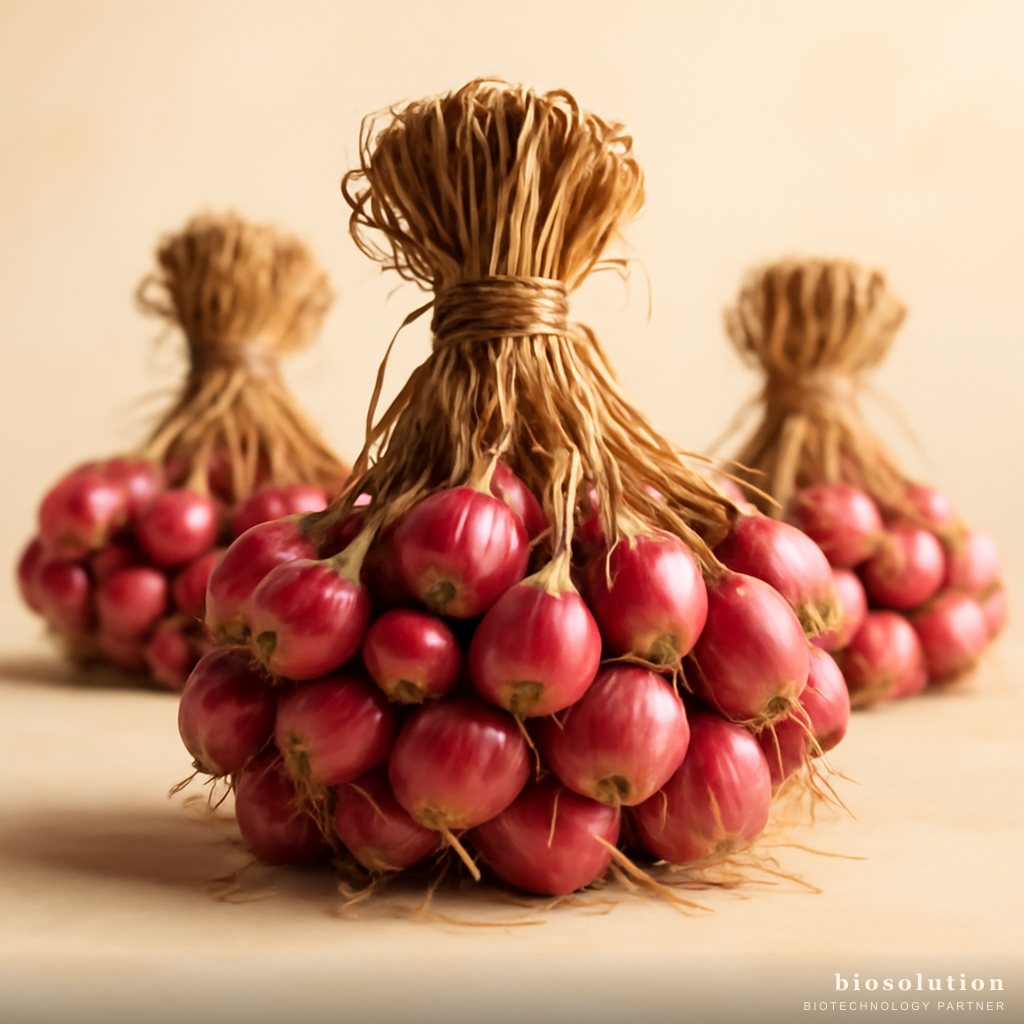
Red onion farmers in Brebes face classic challenges: rising chemical fertilizer costs, yet harvests are often suboptimal—small bulbs, prone to rot during storage, and susceptible to disease. This is where red onion biofertilizer becomes a strategic solution. Not only is it more environmentally friendly, but biofertilizer has also been proven to increase bulb weight by 15-25% and extend shelf life. This article will thoroughly examine the cost comparison between conventional methods and the biofertilizer approach, complete with technical data and product recommendations from Biosolution.
Why Red Onion Biofertilizer is More Economical?
Lower Input Costs
Synthetic chemical fertilizers provide quick results, but in the long run, their usage costs balloon. For example, for 1 hectare of red onion, conventional farmers spend IDR 4-6 million per season on NPK, urea, and KCl fertilizers. Not to mention fungicide costs to control diseases caused by chemical residues. In contrast, using biofertilizer for red onions such as Formula POC Bulb Quality (dosage 3-5 ml/L water, application every 7-10 days) only costs about IDR 1.5-2 million per season. Savings reach 50-60%!
Labor Efficiency
Biofertilizer is applied by spraying (foliar) or drenching, making it faster and eliminating the need for burying like chemical fertilizers. Application time is also shorter, in the morning before 10 AM, allowing farmers to work larger areas in the same amount of time.
Reduced Crop Failure Risk
Biofertilizer contains a consortium of PGPR (Plant Growth Promoting Rhizobacteria) that triggers natural growth hormones and increases micronutrient availability. As a result, plants are more stress-tolerant, bulbs form uniformly, and flower drop risk is reduced by up to 30%. This means fewer losses due to crop failure.
Mechanism of Biofertilizer in Improving Bulb Quality
Role of PGPR Consortium
The PGPR consortium in Formula POC Bulb Quality works by:
- Producing phytohormones such as auxins and cytokinins that stimulate bulb cell division.
- Solubilizing phosphate and potassium bound in the soil, making them available to plants.
- Producing siderophores that bind iron, inhibiting soil pathogens.
Seaweed Extract
Seaweed extract is rich in natural cytokinins and micronutrients (Zn, Mn, Fe) essential for bulb formation. Cytokinins promote cell division and delay leaf senescence, so photosynthesis lasts longer and bulbs fill completely.
Humic & Fulvic Acids
Humic and fulvic acids act as nutrient carriers, increasing root nutrient uptake. They also stimulate lateral root growth, allowing plants to explore a larger soil volume.
Case Study: Conventional vs Biofertilizer Cost Comparison in Brebes
Here is a cost simulation for 1 hectare of red onion over one growing season (70 days):
| Cost Component | Conventional (IDR) | Biofertilizer (IDR) |
|---|---|---|
| Base fertilizer | 1,500,000 | 500,000 (compost + biofertilizer) |
| Top dressing | 3,000,000 | 1,200,000 (Formula POC) |
| Fungicide | 2,000,000 | 500,000 (only if needed) |
| Labor | 1,500,000 | 1,000,000 |
| Total | 8,000,000 | 3,200,000 |
With an average yield of 10 tons (conventional) vs 12 tons (biofertilizer), the net profit for biofertilizer farmers is higher even at the same selling price. Not to mention the harder bulb quality and longer storage life of up to 2-3 weeks, reducing post-harvest losses.
Product Recommendation: Formula POC Bulb Quality from Biosolution
Biosolution presents Formula POC Bulb Quality, a liquid biofertilizer specially formulated for the bulbing phase of red onions. This product contains a consortium of PGPR, seaweed extract, and humic and fulvic acids. It is easy to use: spray 3-5 ml per liter of water every 7-10 days in the morning. Field trials show a 15-25% increase in bulb weight and up to 30% reduction in flower drop. Suitable for farmers seeking organic results and ready for certification.
For more details, visit the product page Formula POC Bulb Quality or also see Complete Liquid 5-in-1 Biofertilizer Formula as a companion.
Proper Application for Maximum Results
Timing and Frequency
- Start application when plants are 2 weeks after planting.
- Repeat every 7-10 days until 1 week before harvest.
- Avoid application during rain or intense sunlight.
Dosage
- 3-5 ml per liter of water, spray evenly over all leaf surfaces and soil around bulbs.
- For 1 hectare, approximately 10-15 liters of spray solution per application is needed.
Combination Tips
- Mix with other biofertilizers such as Bacillus subtilis to enhance disease resistance.
- Do not mix with chemical fungicides, as they can kill beneficial bacteria.
Conclusion
Red onion biofertilizer is not just a trend, but an economical and sustainable solution for Brebes farmers. With 60% lower costs, 15-25% larger bulbs, and longer storage life, switching to biofertilizer is a smart decision. Biosolution is ready to assist you with the proven Formula POC Bulb Quality product. Consult your land needs by contacting our team via WhatsApp for a more personalized recommendation.
FAQ
Is biofertilizer safe for red onions?
Yes, biofertilizers like Formula POC Bulb Quality use natural microbes and organic extracts that are safe for plants, soil, and humans. They leave no harmful chemical residues, so the harvest is safe for consumption and meets organic certification requirements.
How many times should biofertilizer be applied during the growing season?
For red onions, application is done every 7-10 days starting from 2 weeks of age until 1 week before harvest. A total of about 6-8 applications per season, depending on weather conditions and soil fertility.
What is the difference between biofertilizer and chemical fertilizer?
Chemical fertilizers provide direct nutrients but are quickly lost and damage the soil. Biofertilizers work biologically: increasing natural nutrient availability, stimulating growth hormones, and improving soil structure. The results are more sustainable and environmentally friendly.
Can biofertilizer be mixed with pesticides?
It is best not to mix with chemical pesticides as they can kill beneficial microbes. If pesticides are necessary, apply them separately with at least a 2-day interval. For pest control, use botanical pesticides or biopesticides that are compatible.
Where can I buy Formula POC Bulb Quality?
The product is available at Biosolution partner agricultural stores or can be ordered directly through the official website. For bulk purchases, contact our team for special offers.