Stimulating Flowers and Fruits with Generative Phase POC: More Flowers, More Fruits
Every fruit farmer certainly dreams of trees that bloom profusely and bear abundant fruit. However, this generative phase is often hindered by internal and external factors, such as hormonal imbalance, nutrient deficiency, or environmental stress. This is where the role of generative phase POC becomes crucial. Liquid organic fertilizer (POC) specially formulated can naturally stimulate flowers and fruits, increasing the quantity and quality of the harvest. This article will thoroughly discuss how to choose the best biofertilizer to trigger the generative phase, complete with criteria and certifications to consider.
Why Does the Generative Phase Need a Special Stimulant?
The generative phase is a critical period in the life cycle of fruit plants. During this phase, the plant transitions from vegetative growth (leaves, stems, roots) to the formation of flowers, fruits, and seeds. For this transition to be successful, the plant requires the right nutrient intake and hormonal signals. Unfortunately, many modern agricultural lands are poor in micronutrients and soil microbiological activity, making it difficult for plants to enter the generative phase optimally.
Key Hormones: Cytokinins and Gibberellins
Two main hormones that play a role in stimulating flowers and fruits are cytokinins and gibberellins. Cytokinins promote cell division and flower bud formation, while gibberellins stimulate cell elongation and fruit development. Unfortunately, these hormones are not always available in sufficient quantities within the plant, especially if soil conditions are not supportive. Therefore, applying POC containing natural sources of cytokinins, such as seaweed extract, can be an effective solution. Seaweed extract is rich in cytokinins, auxins, and amino acids that are directly absorbed by the plant through leaves or roots.
Role of Microbes: PGPR as Hormone Triggers
In addition to exogenous hormones, plants can also be stimulated by beneficial microbes living in the rhizosphere. Plant Growth Promoting Rhizobacteria (PGPR) are a group of bacteria capable of producing growth hormones, such as IAA (auxin), gibberellins, and cytokinins. When PGPR are applied through POC, they colonize the roots and trigger the production of endogenous plant hormones. As a result, plants enter the generative phase faster and produce more flowers. The PGPR consortium in Biosolution's Flower & Fruit Trigger POC Formula, for example, consists of several strains selected to stimulate flowering and fruiting.
Criteria for the Best Biofertilizer for Generative Phase Stimulation
Not all POC on the market can effectively stimulate flowers and fruits. Here are criteria to consider when choosing a biofertilizer for the generative phase:
1. Content of Natural Hormones and Precursors
A good generative phase POC must contain sources of natural hormones, such as cytokinins from seaweed extract, or hormone precursors like amino acids and vitamins. Avoid products that claim to contain high doses of synthetic hormones, as they can cause imbalance and actually cause flower drop. Certified organic products usually list the levels of natural cytokinins or gibberellins on their labels.
2. Superior Microbial Consortium
The presence of PGPR or phosphate-solubilizing microbes is very important. These microbes help provide phosphorus nutrients essential for flower and fruit formation. Choose POC that contains at least 3-5 microbial strains with a minimum density of 10^8 CFU/ml. Ensure the strains have been scientifically proven to stimulate flowering, such as Bacillus subtilis, Pseudomonas fluorescens, or Azospirillum.
3. Humic and Fulvic Acid Content
Humic and fulvic acids act as nutrient carriers, increase soil cation exchange capacity, and stimulate root development. Healthy roots absorb nutrients more efficiently, supporting flower and fruit formation. POC containing humic acids also helps reduce the impact of environmental stress, such as drought or salinity.
4. Certification and Legality
Ensure the product is registered with the Ministry of Agriculture and has a distribution permit. Organic certification (e.g., from LSO-INA or international) guarantees the product is free from harmful chemicals and safe for the environment. Products that have efficacy test data (e.g., 15-25% increase in fruit weight, 30% reduction in fruit drop) are more trustworthy.
Mechanism of Action of Generative Phase POC
To understand how POC stimulates flowers and fruits, we need to look at its mechanism of action in detail. Here are three main pathways:
Hormonal Pathway: Cytokinins and Auxins
Seaweed extract in POC is rich in cytokinins, especially zeatin and zeatin riboside. When sprayed on leaves, cytokinins are directly absorbed and translocated to growing points, triggering the differentiation of vegetative shoots into generative shoots. Meanwhile, PGPR produce auxins (IAA) that stimulate lateral root formation and enhance nutrient uptake. The right balance of cytokinins and auxins is key to triggering synchronized flowering.
Nutritional Pathway: Availability of Phosphorus and Potassium
Phosphorus (P) is crucial for ATP formation and energy required during flowering and fruiting. Potassium (K) plays a role in translocating photosynthates to fruits, increasing fruit size and quality. Phosphate-solubilizing PGPR such as Bacillus megaterium convert bound phosphorus into available forms. Humic acids also bind cations like K+, Mg2+, and Ca2+, making them more easily absorbed.
Protection Pathway: Reducing Stress
Abiotic stress such as drought, extreme temperatures, or pathogen attack can trigger flower and fruit drop. PGPR produce antioxidant enzymes (catalase, superoxide dismutase) and metal-chelating compounds that protect plants from oxidative stress. Seaweed extract also contains betaine and mannitol that act as osmoprotectants, maintaining cell turgor pressure. Thus, plants remain healthy and able to retain flowers until they become fruits.
Proper Application of POC for Maximum Results
Although generative phase POC is well-formulated, its success greatly depends on the application method. Here are technical guidelines based on the Flower & Fruit Trigger POC Formula product:
Application Timing
Start application when the plant enters the flower initiation phase (usually 2-4 weeks before flowering). For seasonal fruit plants, the first application is done when signs of flower buds appear. Continue every 7-10 days until fruits reach optimal size. Avoid application during very hot weather or heavy rain.
Dosage and Method
Recommended dosage: 3-5 ml per liter of water. Spray evenly over the entire leaf surface (foliar spray) or drench the root zone. For mature plants, adjust spray volume according to canopy size. Ensure the nozzle produces fine droplets for maximum absorption. Morning application (before 10 AM) gives the best results because stomata are still wide open.
Integration with Base Fertilization
POC is not a substitute for base fertilizer, but a supplement. Ensure the plant receives sufficient macronutrients (N, P, K) through chemical or organic fertilizers. Reduce N dosage during the generative phase to avoid excessive vegetative growth that actually inhibits flowering.
Case Study: Increased Fruit Yield with PGPR POC
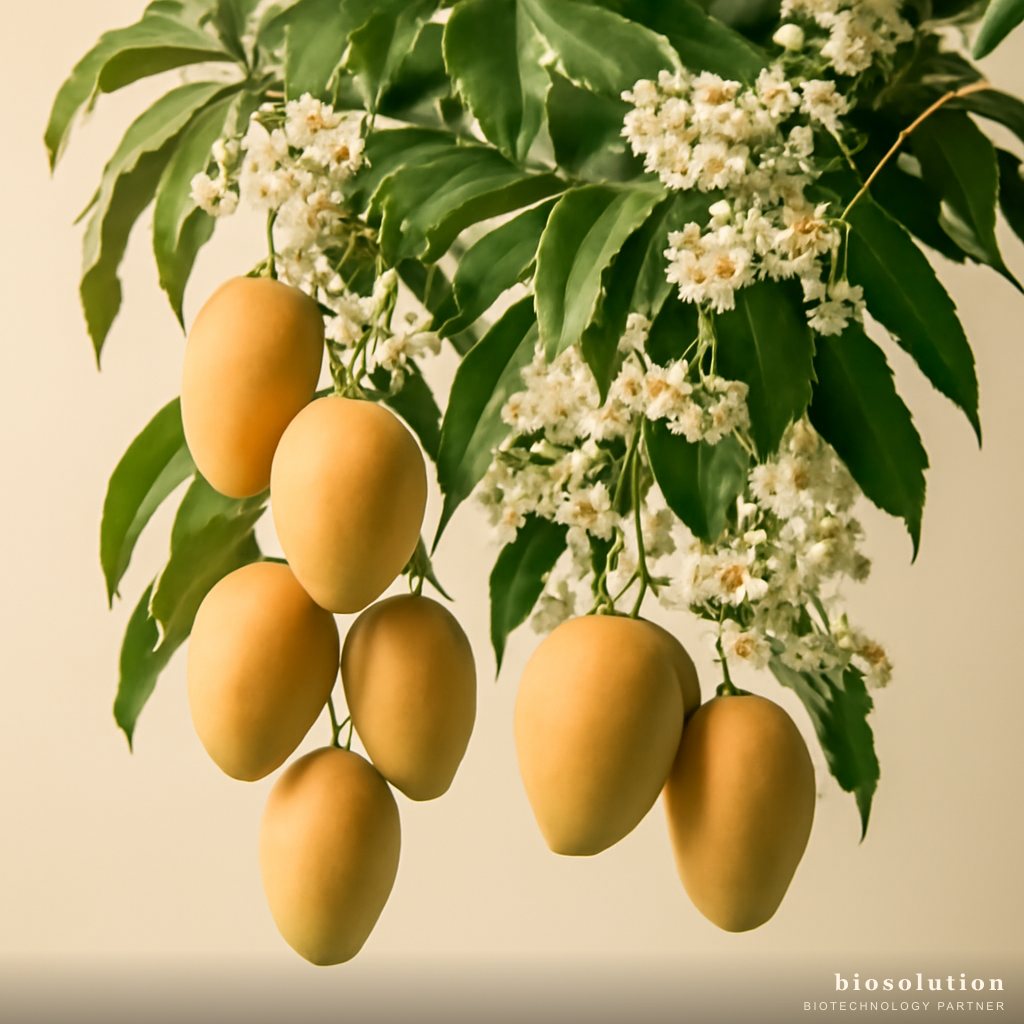
A trial on mango plants in East Java showed that application of POC containing a consortium of PGPR and seaweed extract increased the number of flowers per panicle by up to 40% and reduced young fruit drop by up to 30%. Fruit weight per tree increased by 20% compared to the control. Farmers reported that fruits were more uniform in size and had a sweeter taste. These data align with the claims of the Flower & Fruit Trigger POC Formula product, which records a 15-25% increase in yield weight and a 30% reduction in fruit drop.
Conclusion
Stimulating flowers and fruits naturally is no longer difficult thanks to advances in biofertilizer technology. Generative phase POC containing PGPR, seaweed extract, and humic acids has been proven to trigger synchronized flowering, reduce fruit drop, and improve harvest quality and quantity. The key to success lies in choosing the right product—with natural hormone content, superior microbial consortium, and official certification—as well as consistent application according to recommended dosage and timing.
For best results, choose a product that has been tested and certified. If you would like further consultation on using generative phase POC for your fruit plants, the Biosolution team is ready to assist via WhatsApp. Also get our flagship product, Flower & Fruit Trigger POC Formula, specially formulated to optimally stimulate the generative phase.